Youth Voices | Rachel Ward
This Youth Voices blog was written by Rachel Ward, Jones College Prep student and Teen Arts Pass Council member.
The film Candyman sounds like a Pennywise style horror about children but instead tells an important story of Chicago history. Thankfully, Chicago Humanities Festival saw the revived and upcoming 2020 adaptation of Candyman as an opportunity to tell a version of public housing history. They invited panelists to come and talk about their own experience with the Cabrini Green neighborhood and the public to enjoy the original film on October 26. Whether the speaker lived there, worked there, or researched the area, the impact this neighborhood had on each person showed through their different funky personalities in that downtown theater. Because of this, their compelling words will stay riveting with us for a long while.
But, the talk about public housing isn’t a new one. People have been passionate about telling their stories of inspiration and love underneath the grime and graffiti in the buildings for throughout Cabrini’s underwhelming life. “The projects” were a housing development made for people who couldn’t afford the costly city lifestyle. Surrounded by River North and an otherwise less colorful crowd, the families who made Cabrini their home were left to make due with what the city left for them. As a black student myself, never from the projects, or visiting family or friends, I knew they were there and was familiar with the struggle of the residents. I listened to the message of the panelists and writers behind the movie engrossed in the language they used. The panelists each spoke from their different backgrounds and seemed just as interested in learning as we, the audience, did from the discussion. I got a chance to sit down and interview the panelists beforehand so I might be a bit biased, but from my understanding, people are working so hard to show the world, and our kids, how to be better.
When I was introduced to the people on the panel, we just sort of talked about the Chicago area and how much it has changed. Like incoming gentrification, including new buildings and homeowners moving in. The topic moved to how business also helped to change the landscape of these new areas. One specifically, towards the Gold Coast/ Cabrini Green area. And because I was not old enough to watch these changes unfold, I just saw the aftermath of this diaspora of Black residents. Businesses like upscale recreation venues and expensive dog stores popped up left and right attracting a different demographic to its homes.
We spoke about the huge changes that have taken place along the lakefront and additional schools added to the area. Walter Payton High School being one huge change. Condos that start at $300,000 and up. We talked about how the Park District still has the same building and pool in its original condition from the 1980’s and 1990’s. The Church that once had its seats filled each Sunday and chicken dinner sits now empty boarded up. With the famous mural in fear of being torn down with the building. Aldermen and government don’t seem to mind the history of Cabrini, or other housing units like it, because in order to bring in revenue the city needs to pretend like it didn’t happen. Upgrades and money only seem to touch a certain demographic in the city. The only way to solve this gaping problem, is to hold conversations like this one, and to take steps to close up that hole.
The four panelists, Lisa Yun Lee, Nick Rafferty, Michael Orange, and PHENOM all have projects to increase awareness and bring light and love to Chicagoland. The goal has been, and will always be, to finish making Chicago great and a place we all want to live. Which, from my perspective, is something we can all learn from.
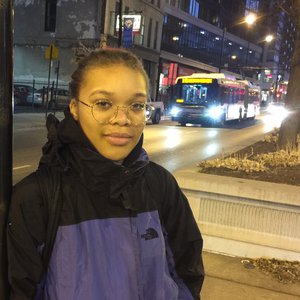
Rachel Ward
Rachel Ward is a Junior at Jones College Prep. She loves the magic of theater and live performance because the smallest and most intricate details take planning and care to bring into reality. She works on the Teen Arts Pass Council to make live theater available to teens around Chicago.
Support from our members and donors helps us compensate students for their written work.
Become a Member
Being a member of the Chicago Humanities Festival is especially meaningful during this unprecedented and challenging time. Your support keeps CHF alive as we adapt to our new digital format, and ensures our programming is free, accessible, and open to anyone online.
Make a Donation
Member and donor support drives 100% of our free digital programming. These inspiring and vital conversations are possible because of people like you. Thank you!