Youth Voices | Quamasia O'Neal
This Youth Voices blog was written by Richards Career Academy, Local School Council Student Representative, and The Gate News reporter Quamasia O'Neal.
Chyann, a young Black teenager, takes the stage wearing a red hoodie. Behind the podium, she shares that she is a member of Good Kids Mad City, a group of students advocating for less gun violence in city streets. She shares that the Chicago Humanities Festival is celebrating its 30th anniversary “surrounding smart conversations in our cities.” As she exits, Alex Kotlowitz, trails by Lolly Bowean, assumes a seat on the stage, facing a crowd of silver and white-haired white people. Bowean is a reporter for The Chicago Tribune and a member of the National Association of Black Reporters. Kotlowitz is an Emmy winning filmmaker, journalist, and author of There Are No Children Here, An American Summer, and other works. As the applause dies down, Bowean asks her first question.
What ensues is a storytelling session. Kotlowitz shares with us the stories of Pharaoh and Lafayette, characters from one of his books, who grew up in public housing, unfortunate observers of acts of violence so heinous they are almost unbelievable. When Pharaoh told Kotlowitz about a man being gunned down in a hallway, his first reaction was disbelief. He was promptly taken by the arm and shown the blood stain that remained. Kotlowitz also shares the story of Seretha White, who was shot at her birthday party, and one of the brothers’ childhood friend being killed. Prior to her death, she had asked a school counselor to place a letter in her casket. He tells us of a young man that watched his close friend die. Bound to the codes of the street, he refuses to testify. An audience member and youth attendee, Ladasia O’Neal said, “These stories are important to share because it brings awareness to the violence that affects people in Chicago.” Again and again, Kotlowitz shows us just how horrendous the violence in Chicago is.
Kotlowitz also touches on the trauma of Black people not being taken seriously. Kotlowitz states that Black people who experience gun violence will continuously grapple with those events and that we should view them as we do members of the military who are now back in the United States after experiencing war and the post-trauma of war. However, I would have liked to see this idea expounded upon. The United States’ deep history of racism has long ago wrapped its manacles around our ideas of Black people’s emotional and mental strength, as well as our health system.
In Chicago, organizations like Good Kids Mad City are leading the charge on ending gun violence. Continuously, teen activists are starting conversations on how policy affects them and their lives. Teens who are no strangers to nightmarish narratives of violence are everywhere. After Kotlowitz’s talk, I spoke to a 16-year-old young man. He says, “The stuff he was saying was relatable. A lot of it was familiar. I grew up where he was talking about.”
In a room of silver and white-haired white people, I found the citizens of Chicago are incredibly sensitive to and aware of the violence that ravages less fortunate areas of the city. In that audience, I observed the burning desire to learn what was previously hidden from view. In Chicago, we have looked at our gritty reality and decided enough is enough. We are ready for a change. Perhaps best of all, it is beginning with the youth.
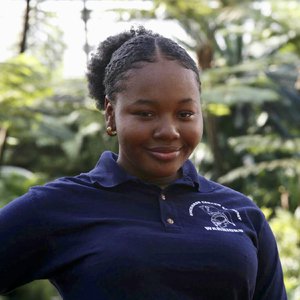
Quamasia O’Neal
Quamasia O’Neal is a 17-year-old Junior attending Richards Career Academy. She’s her school’s Local School Council Student Representative. She participates in the after-school visual art and poetry classes provided by the National Museum of Mexican Art. Most recently, Quamasia curated, “Take Me Serious”, a youth group show at the Arts Incubator. O’Neal is also a poet and an intern at The Gate Newspaper, a local publication in Back of the Yards. O’Neal believes in helping her community.
Support from our members and donors helps us compensate students for their written work.
Become a Member
Being a member of the Chicago Humanities Festival is especially meaningful during this unprecedented and challenging time. Your support keeps CHF alive as we adapt to our new digital format, and ensures our programming is free, accessible, and open to anyone online.
Make a Donation
Member and donor support drives 100% of our free digital programming. These inspiring and vital conversations are possible because of people like you. Thank you!