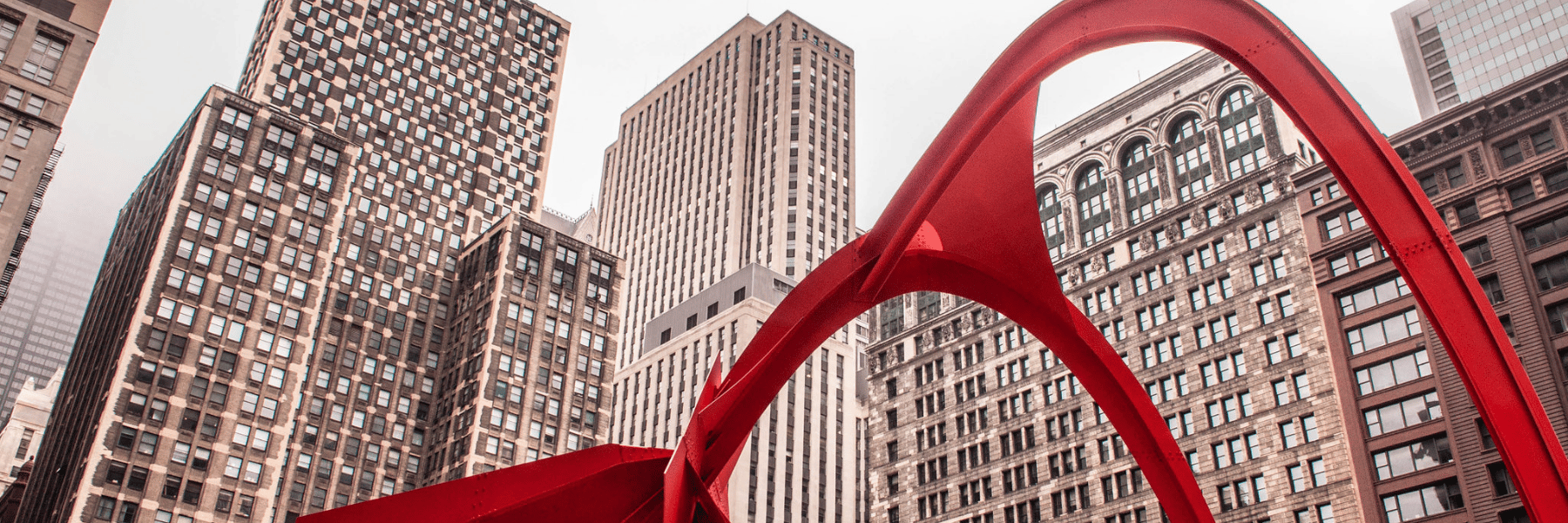
How bookstores, artists, architecture, community centers, and other visible places evoke power in the City of Big Shoulders.
“Chicago is a city that doesn’t ever have to measure itself against any other city. Other places have to measure themselves against it. It’s big, it’s outgoing, it’s tough, it’s opinionated, and everybody’s got a story.” —Chef and travel documentarian, Anthony Bourdain
As part of our 2019 year-long investigation of Power, the Chicago Humanities Festival is thinking about power as it relates to our city. Affectionately referred to as the second city, the third coast, and the city of big shoulders, so much of Chicago’s power is visible: in the skyscrapers (some of the tallest in the world), the lake (the third largest body of water in North America), and the politicians (like Barack Obama, 44th president of the United States). Chicago is a city of stories, found in the pages of neighborhood bookstores, spray painted on highway underpasses, told in community centers, and literally built into its architecture. Of course, power is not always visible, but when it is, what do we think of? How do we see power at work in Chicago?
1) LITERARY POWERHOUSES: CHICAGO BOOKSTORES
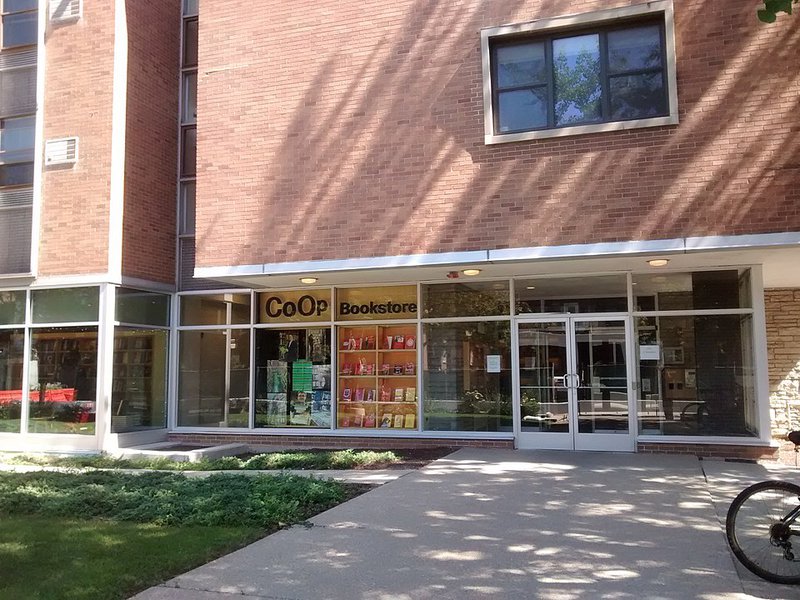
Seminary Co-op︱Wikimedia Commons
Why are books powerful? Why is reading important? In what ways do bookstores shape discourse?
“A place is not really a place without a bookstore.” —Author and screenwriter, Gabrielle Zevin
CHF partner The Seminary Co-Op and 57th Street Books are customer-owned co-operative bookstores located near the University of Chicago in Hyde Park. The Co-Op is heralded as a “valuable place of discovery...where browsing and conversation are nurtured.”
Powell’s Books is Chicago’s “largest independent dealer in quality used, bargain, antiquarian, and out of print books.”
Founded in 1979, Women & Children First is one of America’s largest feminist bookstores, celebrated for its diversity, queer-friendliness, and commitment to “promoting the writing of women and other marginalized voices.”
Open Books is a used bookstore located in Chicago’s Literacenter, America’s “first nonprofit shared workspace dedicated to literary.” Open Books provides literacy programs and book grants to Chicago schools.
Quimby’s Bookstore specializes in “unusual publications, aberrant periodicals, saucy comic booklets, and assorted fancies,” in addition to a robust collection of independent zines. Need a break from Twitter? Quimby’s promises to “satisfy the soul beaten flat by our mainstream culture’s relentless insistence on dumb pictures and insulting syntax.”
Unabridged Bookstore is known for its award-winning children’s section and collection of LGBTQ+ literature. Searching for a way to engage and “stay sane in these crazy political times”? Check out Unabridged Bookstore’s monthly series Reading for the Resistance.
Do you like food and books? So do we! Read It & Eat is a culinary bookstore “dedicated to providing food lovers with exceptional culinary experiences.” Come buy a cookbook, meet your favorite chef at a book signing, or try your hand in the kitchen!
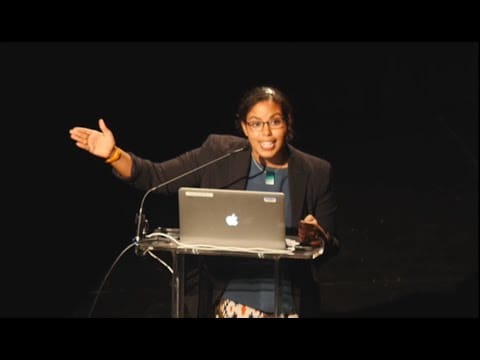
If you’re a literary nerd, you’ve come to the right place. Check out these CHF archival videos to learn all about what’s happening in the world of books:
2) POWERFUL CHICAGO ARTISTS
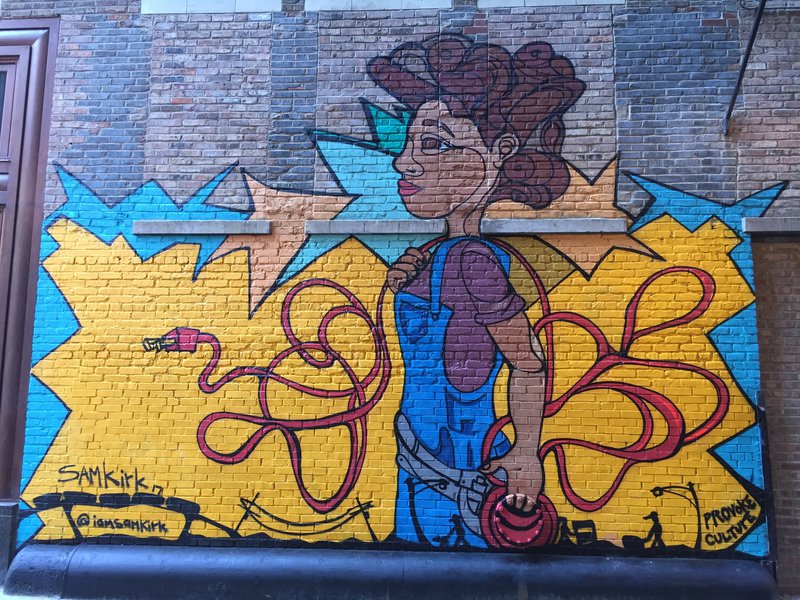
Power to the People, Chicago mural by Sam Kirk
How does art visualize power? What is the power dynamic between artists and exhibition spaces? How does street art challenge power structures within the art scene?
Sam Kirk uses her powerful artistic voice to shape Chicago’s public spaces into dialogues around equality and visibility for underrepresented cultures, identities, and communities. Kirk hopes her artistic legacy will involve being “remembered as an artist that used their work to help desegregate Chicago.”
“An image can be only as powerful as it is viewed. Look at an image and ask it what it is. It will tell you everything.” —Street Artist, Goons
Goons began his career as a Chicago street artist. Addicted Chicago describes his style as “bright-eyed, big-lipped, quirky wheat pastings.” Goons attributes the power of street art to a “forgotten image” “stuck in time,” saying, “I make my art to create a lasting image in people’s mind[s].”
Jay Ryan, AKA “the guy that draws animals,” is a Chicago artist and founder of The Bird Machine print shop. Ryan is known for band posters and animal drawings, crafted in his hand drawn style via a computer-free design process. On the subtle power of art, Ryan told A.V. Club, “there’s a point where people become aware of the thing they see in the background all the time.”
Self-identified as a “vaguely anonymous human from Chicago,” street artist Don’t Fret gravitates towards art scenes that privilege DIY methodology and abandoned spaces with an attitude of “if you wanna have an art show, let’s clear out a room and have an art show.”
Nice One came to street art by skateboarding around the city, “when he began looking how to use his environment to his advantage.” He co-ran HOTBOX Mobile Gallery, a truck turned gallery “for unconventional artists” and “for people that work in the public space.”
Like Nice One, Cody Hudson learned about art and design through skateboarding: “making ‘zines, stickers on Xerox machines, drawing on our boards, painting on ramps.” Thinking about the power of an artist’s own experiences in their art, Hudson told Huckberry magazine that the art he’s doing now resembles “something I would have cut out of grip tape.” He adds, “I was so focused on art and design for a while that I didn’t realize how connected some of it was to my past.”
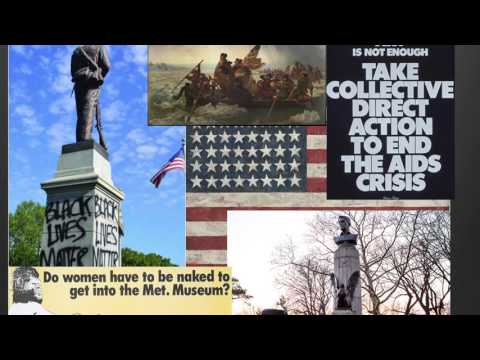
Chicago is a political city and its art scene is no exception. Scroll through our video playlist to learn about how Chicago’s art can send a powerful political message, and check out the awesome posters these local artists made for CHF.
3) CENTERS OF COMMUNITY
Grant Park︱Wikimedia Commons
How do community spaces becomes centers of power? How can connecting with your community be empowering? In what ways does community foster a sense of belonging?
“Use whatever place you are at to ask questions...[don't] take for granted the status quo, the way the city is right now...The way that we are separated, segregated doesn't mean it has to be that way. We believe in change." —Urban Designer, Paola Aguirre
Young Chicago Authors introduces young people from “every corner of the city” to Chicago’s vibrant literary community, encouraging them to recognize the importance of their own stories and those of others” through educational programming, such as workshops, open mics, and the largest youth poetry festival in the world: Louder Than a Bomb.
American Indian Center (AIC) is “social and cultural space of gathering” for Chicagoland's diverse, multi-tribal community of nearly 65,000 American Indians. AIC’s mission is to “create bonds of understanding and communication between Indians and non-Indians in the city” and to “advance the general welfare of American Indians into the metropolitan community life.”
The South Side Community Art Center (SSCAC) is the oldest African American art center in the country, dedicated to conserving, preserving, and promoting “the legacy and future of African American art and artists.” SSCAC is a Chicago landmark, located in the city’s historic Bronzeville neighborhood.
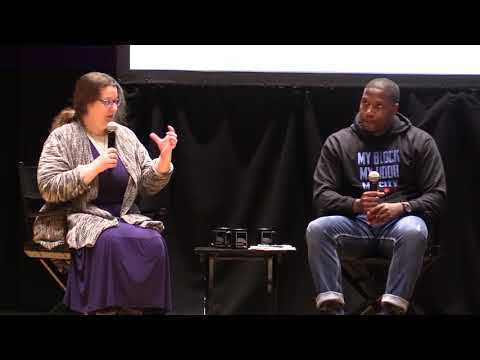
On a mission to mission is to build a more interconnected Chicago, Jahmal Cole founded My Block My Hood My City on the pillars of service and education. One of the city’s fastest-growing social impact organization, My Block My Hood My City provides underprivileged youth with an awareness of the world and opportunities beyond their neighborhood through explorations focused on STEM, Arts & Culture, Citizenry & Volunteerism, Health, Community Development, Culinary Arts, and Entrepreneurism.
The Chicago River began as part of Native American lands, through colonization was overtaken by European settlers, and became the the banks of a major American city. It flows into Lake Michigan, the third largest of the Great Lakes, and is the seat of city attractions such as the Chicago riverwalk, water taxis, and architectural tours.
You may have thought that DC is the only city in the US known for Japanese cherry blossom trees. Chicago’s Jackson Park also boasts an orchard that blooms each spring! Jackson Park is famous for its landscaping by Frederick Law Olmsted and Calvert Vaux, the designers of New York’s Central Park, and as the location of 1890 World’s Columbian Exposition.
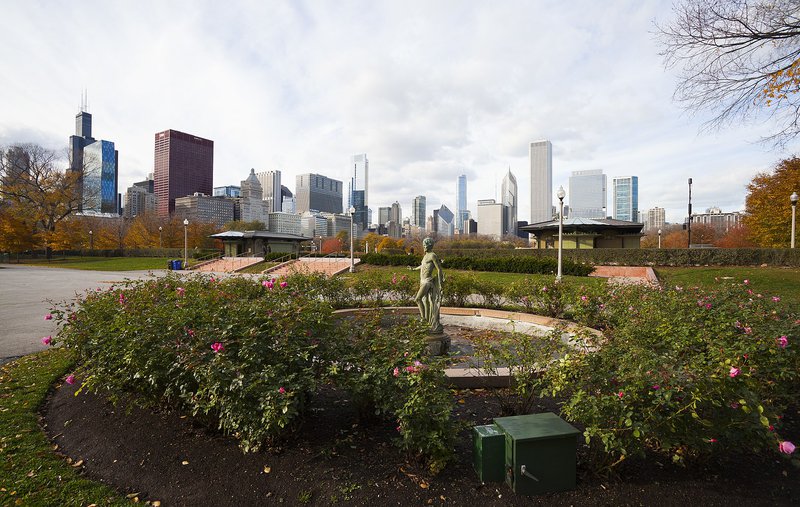
Grant Park (otherwise known as “Chicago’s Front Yard”) includes Millennium Park, Maggie Daley Park, Buckingham Fountain, the Art Institute of Chicago, and the Museum Campus. Grant Park hosts festivals including Lollapalooza, the Grant Park Music Festival, and The Taste of Chicago.
Known as “the last hold-out of the rebel club,” The Hideout is a Chicago bar for “irregular folks who just don’t fit in.” While it is located as close as a city building can get to the middle of nowhere, surrounded by factories in the industrial quarter, the Hideout is at the center of Chicago’s counterculture pulse: “The Hideout is music, art, performance, plays, poetry, rock and rebellion.”
“I adore Chicago. It is the pulse of America.” —Actress Sarah Bernhardt
RufugeeOne is “the largest resettlement agency in Illinois,” committed to welcoming refugees to Chicago, assisting the adjustment to life in the US and facilitate families in the process of becoming “self-supporting member[s] of their new community.” Similarly, GirlForward is an organization that works with provides friends, mentors, and safe spaces to young girls who “identify as refugees, immigrants, and asylum seekers.”
The Wing, “a network of work and community spaces designed for women,” opened a Chicago branch in April 2019. Their mission is “the professional, civic, social, and economic advancement of women through community.”
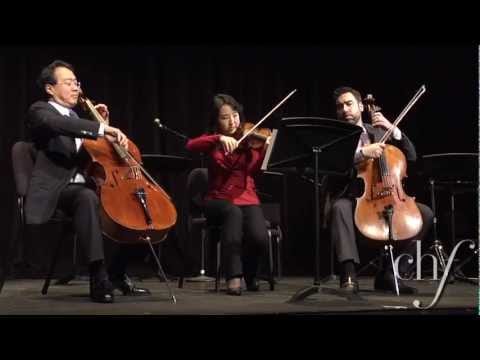
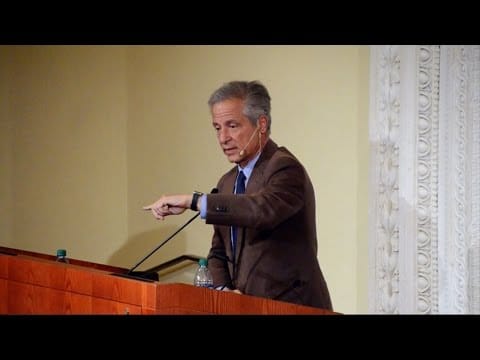
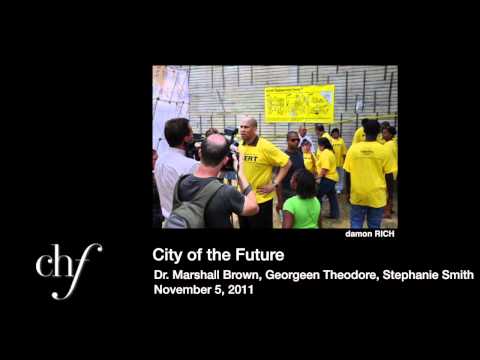
Passionate about community activism? Browse the following CHF archival videos.
4) CHICAGO'S POWERFUL ARCHITECTURE AND LITERARY MONUMENTS
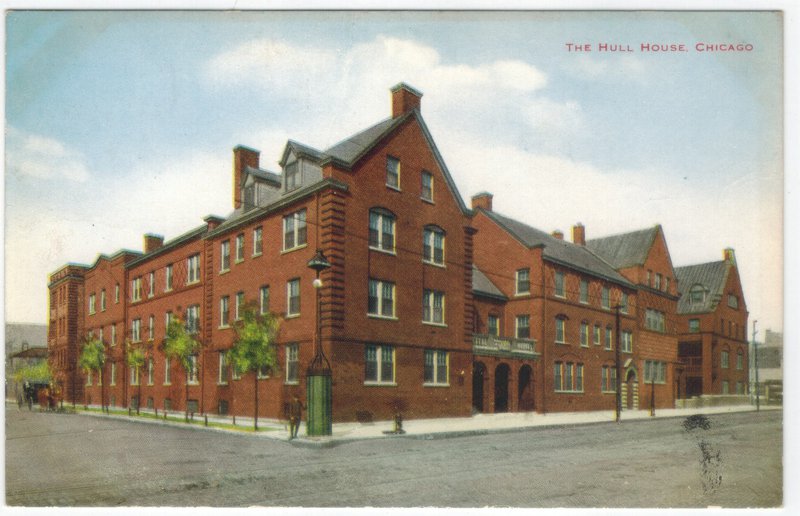
Hull House︱Wikimedia Commons
What makes buildings, monuments, and historical landmarks powerful? What stories do these places tell? Why are they important to history?
“There is an eloquence to stone and steel.” —Businessman and philanthropist, Charles H. Wacker wrote of Tribune Tower
Praised as “the world’s most beautiful office building,” the 34-story Tribune Tower was home to the Chicago Tribune newspaper from its opening in 1925 to 2018.
The original location of Chicago’s first central public library, the Chicago Cultural Center was crafted “to create an architectural showplace.” It is home to “the world’s largest stained glass Tiffany dome,” a calendar of free public events, and exhibitions highlighting the city’s history.
Chicago’s first social settlement, Hull-House, was founded in 1889 by social reformer, activist, and Nobel Peace Prize recipient Jane Addams. As a cultural center, Hull-House provided its diverse community with day care facilities, educational opportunities, an employment bureau, art gallery, and library.
“Our Southside is a place apart: each piece of our living is a protest.” —Lorraine Hansberry
A monument to the Chicago Black Renaissance, the Lorraine Hansberry House is named after author of A Raisin in the Sun, the first play written by an African American woman to be produced on Broadway. The house’s purchase in 1937, during a time of legal housing discrimination, lead to the Supreme Court Case Hansberry v Lee.
The Flatiron Arts Building is often referred to as the central hub and historic center of Chicago’s Wicker Park neighborhood. A triangle shaped building, the Flatiron is located at the intersection of three main Chicago avenues: Milwaukee, North and Damen. The Flatiron is made up of artist studios open to the public.
Looking for a taste of London in Chicago? Visit Alta Vista Terrace District in Lakeview, where Samuel Eberly Gross and Joseph C. Brompton, inspired by European architecture, “re-created the character of London row houses.”
“Eventually, I think Chicago will be the most beautiful great city left in the world.” —Architect, Frank Lloyd Wright
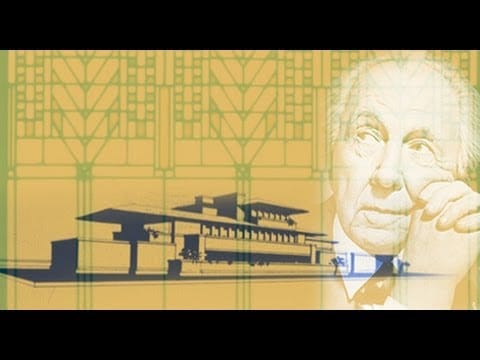
Want to learn more about Chicago architecture? We recommend these videos from the CHF archive:
Become a Member
Being a member of the Chicago Humanities Festival is especially meaningful during this unprecedented and challenging time. Your support keeps CHF alive as we adapt to our new digital format, and ensures our programming is free, accessible, and open to anyone online.
Make a Donation
Member and donor support drives 100% of our free digital programming. These inspiring and vital conversations are possible because of people like you. Thank you!