Stephanie LeMenager is Barbara and Carlisle Moore Professor of English and Environmental Studies at the University of Oregon. She thinks and writes about energy, climate, culture, and the role of arts and humanities at the edge of the Holocene. We spoke with her in advance of her panel conversation with Bill McKibben and Cheryl Johnson to learn more about the Environmental Humanities, student activism, and how the humanities can power conversation–and action–around climate change.
“One of the great gifts of the Humanities has always been to remind people that we do get to participate in our futures.”
How do you define the environmental humanities for people who haven’t heard this term before?
Sure. The Environmental Humanities is a multidisciplinary field where we study the History, Literature, Philosophy, and Anthropology of environmental problems, such as climate change. Those of us who founded and practice in this interdisciplinary field believe that we have to bring all of the Humanities toolkits to bear on our most pressing problems...without ethical decision making skills, without storytelling ability, without knowledge of history or of how culture works, we can't collaborate with our friends in the natural and social sciences to address climate change adaptation, the transition away from fossil fuels, anti-racist and decolonial conservation strategies, or any of the multiple ecological issues that threaten humanity and other life.
Using one or two of your books as examples, can you talk about how the Environmental Humanities is enriched by a multidisciplinary approach?
I guess I'd look to my book Living Oil: Petroleum Culture in the American Century, and my co-edited Collection, Teaching Climate Change in the Humanities, to best answer this question. The Teaching Climate Change book brings together historians, philosophers, literary scholars, indigenous studies scholars and others to answer the not-so-simple question: how do we teach a scientific crisis (global climate change) with serious policy implications (the realm of social science) in humanities classes? This "how" stems from a "why." Why we teach climate change in Humanities classes is because climate change is a cultural problem in addition to being a political and physical one. Without viable–and thrilling–visions for what kinds of futures humanity might have in a shifting climate, we can't mobilize. One of the great gifts of the Humanities has always been to remind people that we do get to participate in our futures, that futures are collaborative and never inevitable, much as the powers that be might want to make us think that we have no agency, no voice. My book Living Oil–which combines interviews with the study of literary and cultural history–is very much about how dominant storylines (in this case, the story of fossil fuels as the foundation of an American way of life) create psychological barriers to necessary change.
Does your humanities background give you a unique perspective on climate change? How has it informed your understanding of environmentalism and ecology?
I got a dual undergraduate degree in Anthropology and English, and it always has been natural for me to consider storytelling, fiction-making, and cultural performance as central to the making of what is considered reality. (This may also have to do with the fact that half of my family is Southern...) So environmentalism and ecology for me are bound up in storytelling, in cultural practice, in what humans variously believe and imagine to be possible. That said, I also am a firm believer in science as both a knowledge-seeking method and as a way of verifying or even speaking for what exists in the world that is not made by humans. The Humanities announce themselves as distinct from natural science in being solely about what humans think and make, but that isn't really the case, at least not since fields like multi-species ethnography have come into being, to remind us that humans co-create culture with non-human animals, with trees, with varied forms of life. I think my Humanities background makes me both more humble about what humans are and more optimistic about human possibility than I might be if I came from a positivist discipline–I get it that we might invest in bad imaginaries (e.g. Ayn Rand, Donald Trump), that we both try and fail to see each other (e.g. environmental racism, settler colonialism), and that we have much to grieve about what being human has come to mean in our current moment. Being human also means having an almost endless ability to change the human story, at small scales if not planetary ones.
“Environmentalism and ecology are bound up in storytelling, in cultural practice, in what humans variously believe and imagine to be possible.”
How have your experiences with students shaped your views of the environmental humanities and activism?
My primary activism is my teaching, and as teachers will tell you, what happens in the classroom is a two-way street–giving and receiving. My students have radicalized me in various ways, both because I see in them a beauty and fragility that I want to protect, and because they understood, before I did, how much racism and other forms of anti-humanist hate have shaped the huge environmental problems we now face, namely global climate change. Very few young people that I've dealt with are not now attuned to the necessity of environmental justice, to the histories of settler colonialism, to the denaturing of gender expressions as old as the planet itself in the name of normativity. Justice is at the center of most of my students' agenda in a radical way. At the same time, many of them struggle with debt, mental health issues, and just plain fear of what is to come. It seems to me like we have the most promising generation in terms of justice, and its psychological cousin, empathy, coming of age in one of the most dire (if not the most dire) present moments. Many of them are born tired and wise.
The Green New Deal seems to have energized public conversation about climate change: how do you see the Environmental Humanities intersecting with policy initiatives?
The Green New Deal gives me hope about Washington DC as someday–if not today or tomorrow–being an engine of life-giving instead of catastrophic political change. Those who created it and envisioned it and championed it in Congress truly understand that we have to change the story, in a big way. The fact that it has met with so much cynicism and "pragmatic" criticism underlines how entrenched many politicians and pundits are in a status quo that will be broken by planetary physics, if not by youthful and imaginative politicians. The Environmental Humanities celebrates the ability to change the story (which is always open to humans and one reason why humans are, biologically, fiction-makers and artists). It also is a field that treasures historical knowledge–in this case, Environmental Humanists would remind us of what the New Deal was, why it came into being (in part related to a major ecological crisis, the Dust Bowl), and how it quickly changed life for many Americans. In my own research career, I'm engaged in a co-authored oral history of Oregon's public lands, where various stakeholders tell the story of how the public lands came into being, how they have been mismanaged and effectively managed, how to make them more accountable to colonialist histories: this current project attempts to reach out to policy makers in the varied agencies responsible for resource management with policy ideas from everyday people, our best experts in some cases on how things work.
What is your superpower? What are the superpowers of the humanities?
The only superpower is legitimate collaboration with others–that does require some skills that the humanities bring us, such as knowing the histories of where we work and those with whom we work, co-authoring narratives so that the story is the richest and most complex one that it can be–so that it will survive over time, rather than merely reflecting one point of view, and, perhaps most importantly, listening.
Presenter Recommendations
What are some books to read, films to watch, podcasts to listen to, or other resources you’d recommend to help people explore the role of arts and culture in environmentalism and confronting climate change?
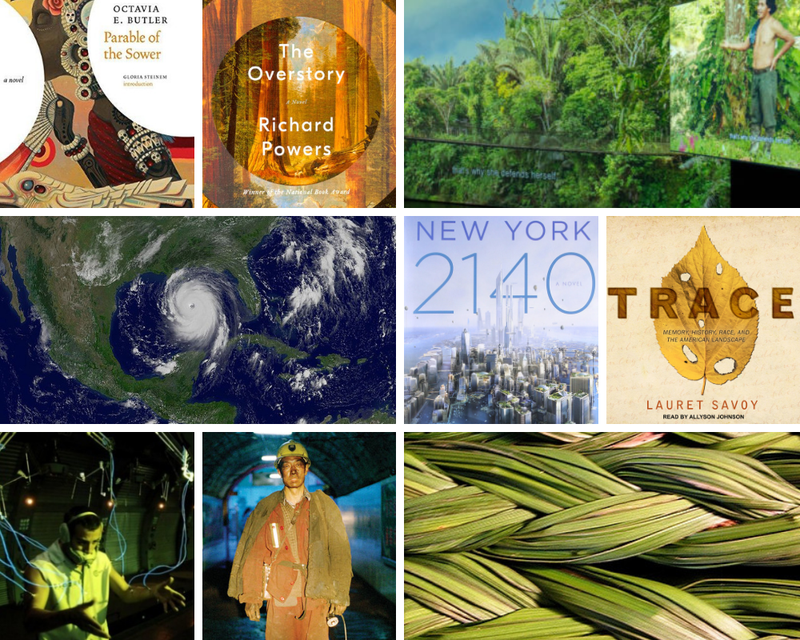
Recommended books: Richard Powers' The Overstory, Octavia Butler's Parable of the Sower and Parable of the Talents, Mark Nowak's Coal Mountain Elementary, Lauret Savoy's Trace, Robin Wall Kimmerer's Braiding Sweetgrass, Patricia Smith's Blood Dazzler, Kim Stanley Robinson's New York 2140.
Favorite relevant film: Alex Rivera's Sleep Dealer, a sci-fi thriller about immigration and labor in the era of climate change.
My favorite Environmental Humanities podcast: The Cultures of Energy podcast from the Center for Energy and Environmental Research in the Human Sciences (CENHS) at Rice University. It all comes down to energy–all problems of social power/imbalance of power begin there, in my view, and this podcast will show you how and why and even offer some ideas about what to do about it.
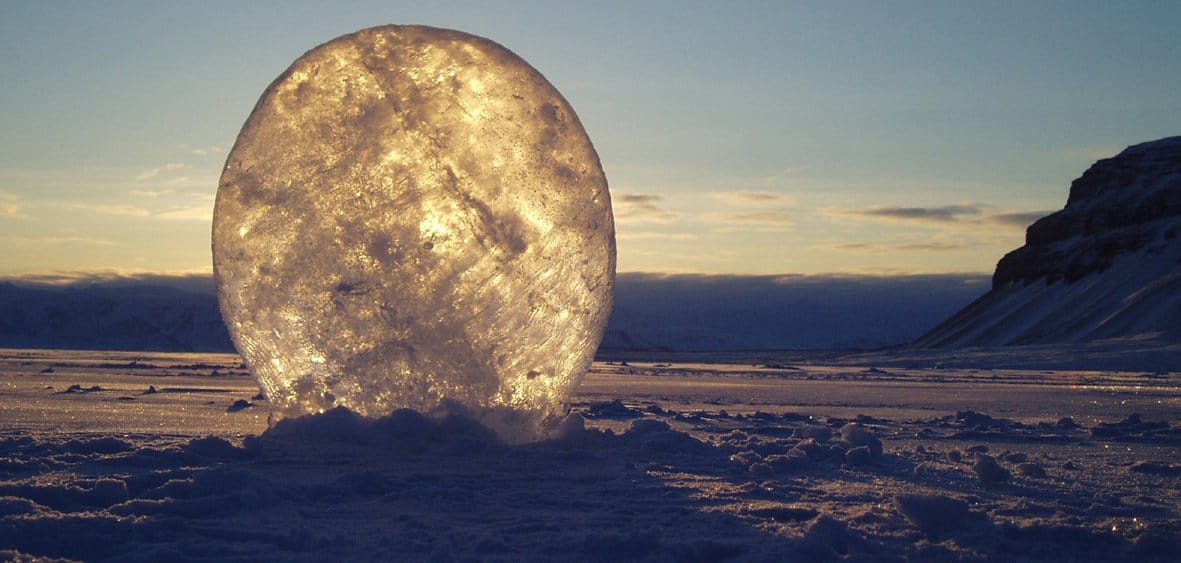
Header Image Credit: "Vanishing Ice" | Ackroyd and Harvey
Watch our program with Stephanie LeMenager, Bill McKibben, and Cheryl Johnson on Climate Survival:
This program is presented in partnership with the Metropolitan Planning Council. This program was recorded on May 4, 2019.
Become a Member
Being a member of the Chicago Humanities Festival is especially meaningful during this unprecedented and challenging time. Your support keeps CHF alive as we adapt to our new digital format, and ensures our programming is free, accessible, and open to anyone online.
Make a Donation
Member and donor support drives 100% of our free digital programming. These inspiring and vital conversations are possible because of people like you. Thank you!