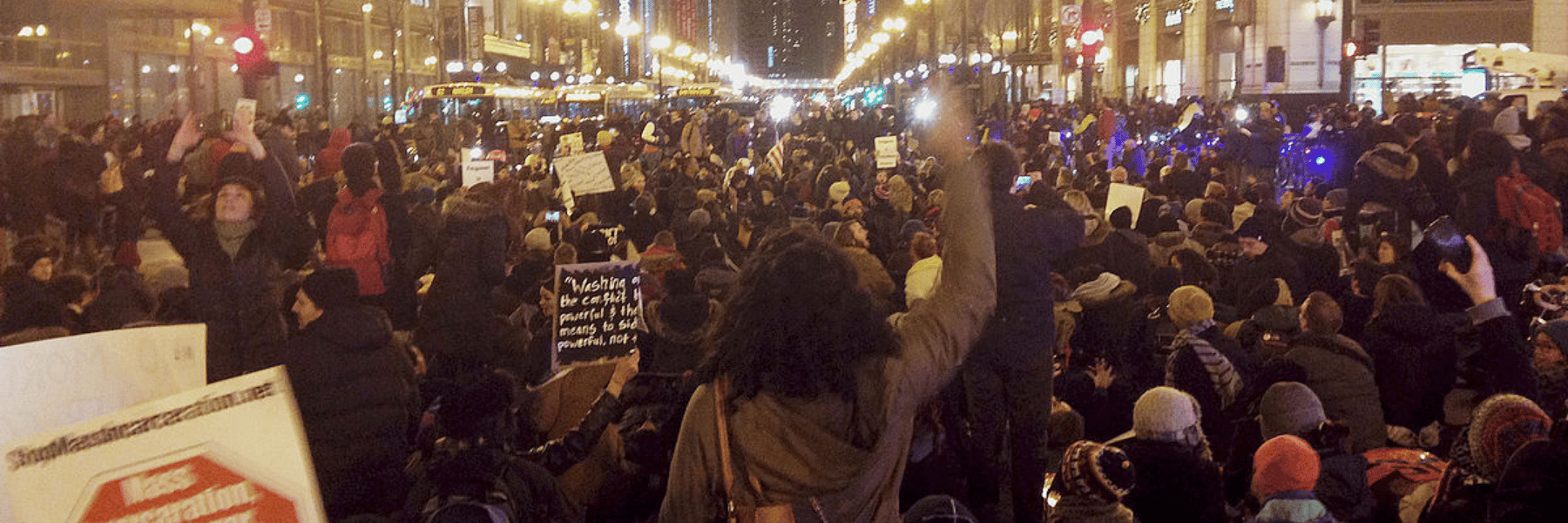
How speeches, protests, and rebellions have shaped power dynamics–sometimes without leaving a visible trace–all around Chicago.
...I was an ugly phoenix
but our dirt was our own. As the sun rises
now I know what we do is right. Unafraid
I stand before the skinny boy with the
bayonet & say “before I’ll be an ashen ghost, black
gone gray at your hand like our dead philosopher,
I’ll burn my own, you see, just the way I want, & you will
know it’s mine.” Goodbye, Madison.
—"April 5, 1968" by scholar, poet, and cultural organizer, Eve L. Ewing
As part of our 2019 year-long investigation of Power, the Chicago Humanities Festival is thinking about power as it relates to our city. We're offering up a few ways into this question–both the hyper-visible and invisible ways that power manifests itself in urban spaces. Here, we're looking at how sites of political speeches, protests, and activism in Chicago can foreground power that is often invisible, especially after the fact: the power of the people.
Eve Ewing’s poem "April 5, 1968" is about the Chicago riots following the assassination of Martin Luther King Jr., in which homes and businesses on the West Side were destroyed and Madison Avenue was set on fire. Ewing characterizes her protestor-protagonist as “an ugly phoenix,” rising from the ashes of Madison Avenue, powerfully claiming her city, her agency, her conviction that “what we do is right.” In asking the question, what are the sites of Chicago’s invisible power, we invite you to consider the spaces where phoenixes have risen from the ashes–places where people spoke truth to establishment power. How is it possible for the politically disenfranchised to aggregate enough power to create change? What happens when we privilege the protestor’s narrative? And how do we sense power around us, even when it’s invisible?
1) POWERFUL CHICAGO SPEECHES
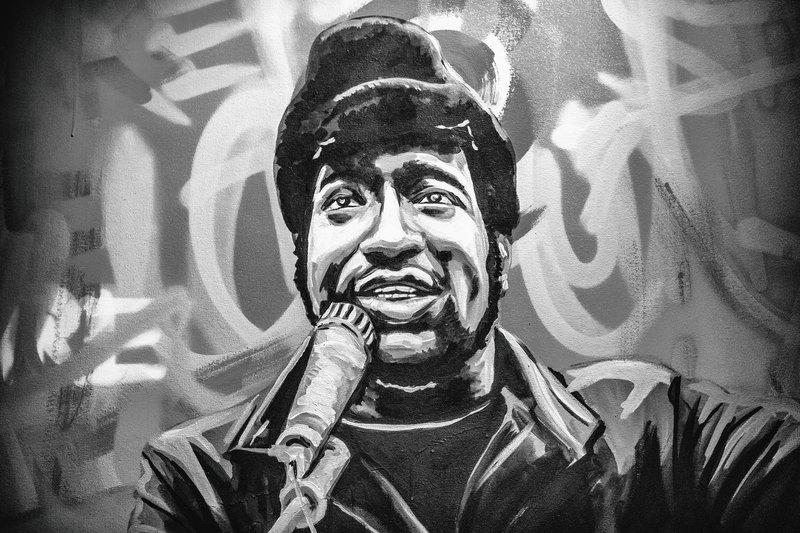
Fred Hampton│Flickr Creative Commons
How is language harnessed as a tool of power? In what ways do public speech acts interrogate the idea of power? What is the power of narrative storytelling? What does it mean to have a platform on which speak truth to power?
In 1900, Ida B. Wells, early leader of the Civil Rights Movement and one of the founders of the NAACP, gave a speech in Chicago “On Lynch Law in America.” Wells defined lynching as America’s “national crime,” sanctioned by de facto “unwritten laws,” which emboldened white mobs to abuse their social and political power by murdering Black bodies without regard to the concept or practice of justice.
“When I leave, you’ll remember I said, with the last words on my lips, that I am a revolutionary. And you’re going to have to keep saying that. You’re going to have to say that I am a proletariat; I am the people.” —Black Panther Party leader, Fred Hampton
“Power anywhere there’s people,” Black Panther leader Fred Hampton told Chicago in 1969. Evoking Martin Luther King's image of the mountaintop, Hampton noted that the Black Panther Party “understand[s] that there’s work to be done in the valley, and when we get through with this work in the valley, then we got to go to the mountaintop.”
In “Speech to the Young Speech to the Progress-Toward,” Chicago poet Gwendolyn Brooks redefined a speech as a poem. Written to the “down-keepers,” “sun-slappers,” “self-soilers,” and “harmony-hushers,” Brooks’ poem promises that “even if you are not ready for day / it cannot always be night.”
“Let me tell you something. I’m from Chicago. I don’t break.” —President Barack Obama
Barack Obama became the first African American President-elect on November 4, 2008. In his victory speech, delivered in Chicago’s Grant Park, Obama told the story of Ann Nixon Cooper, the 106 year-old black women, born a generation after slavery, who saw the dawn the New Deal, World War II, and the Civil Rights Movement, who lived and voted by the American Creed “Yes We Can.”
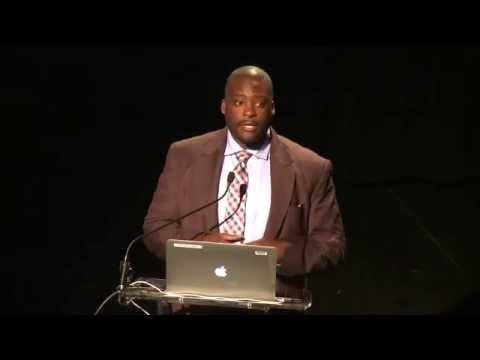
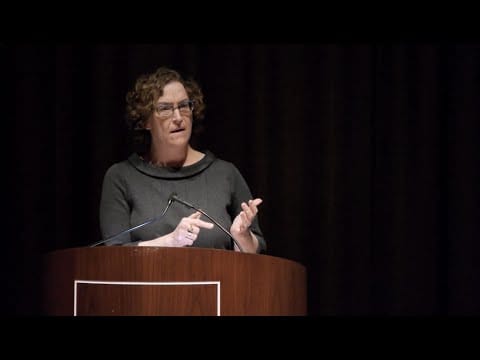
Watch the playlist below to learn more about the lives of these powerful Chicago leaders.
“We shall give them tools, a golden shovel to dig a revolution.” —Poet Brenda Càrdenas
2) POWERFUL CHICAGO PROTESTS
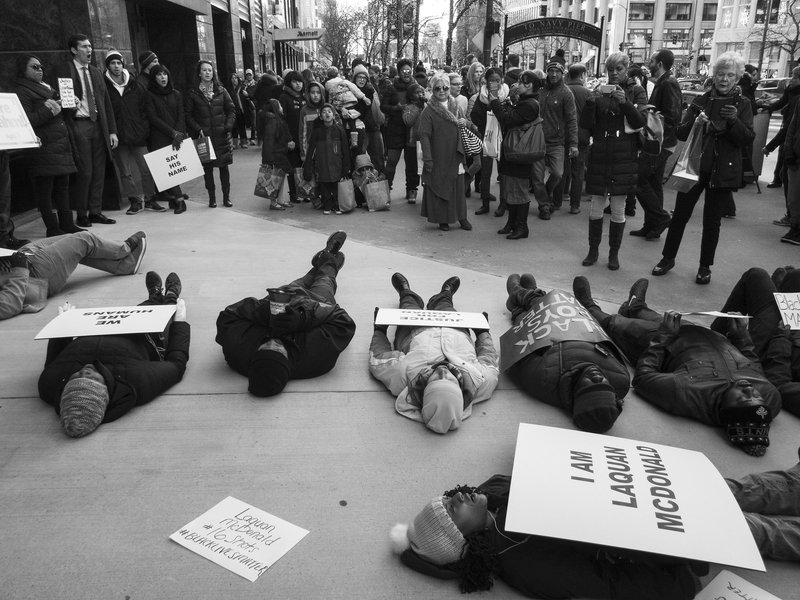
I Am Laquan McDonald│Flickr Creative Commons
How do people-powered movements transform democratic participation? Can individual citizens challenge power structures? How do we build solidarity? Why are protests powerful?
Occupy Chicago, an outgrowth of New York’s 2011 Occupy Wall Street protests against economic inequality and corporate greed, took place on the corners of LaSalle Street and Jackson Boulevard, surrounded by powerful financial institutions including the Board of Trade, Bank of America, and the Federal Reserve Building.
“16 shots and a cover up.” —Protesters chant in response to the murder of Laquan McDonald
In 2014, Laquan McDonald, an unarmed African American teenager, was shot 16 times and killed by police officer Jason Van Dyke. McDonald’s murder ignited renewed national scrutiny to the police brutality, racial discrimination, and imbalance of power demonstrated by the Chicago Police Department. Protestors marched on Daley Plaza, Michigan Avenue, Cook County Building, and Mayor Rahm Emanuel’s home.
In March 2016 then presidential-candidate Donald Trump was forced to cancel a campaign rally at the University of Illinois at Chicago’s Pavilion due to thousands of protestors objecting to Trump’s platform, rhetoric, and abuses of power.
“I am no longer accepting the things I cannot change. I am changing the things I cannot accept.” —Angela Davis, quoted on Chicago Women’s March protest sign
The day after Trump’s 2017 inauguration, 250,000 Chicagoans crowded around Trump Tower, into Grant Park and the surrounding streets for the 2017 Women’s March to protest powerful systems and their figureheads, seeking to oppress the political power of diverse women in all the intersections of their identities. The march was held again in 2018.
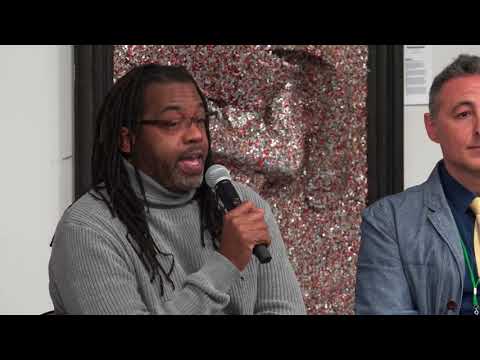
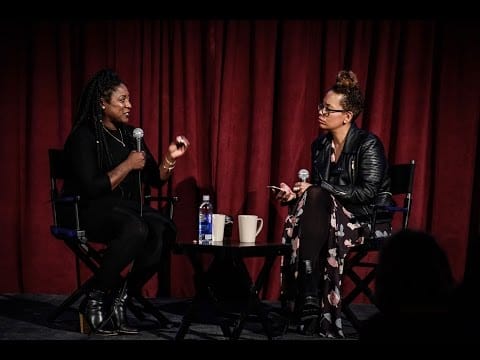
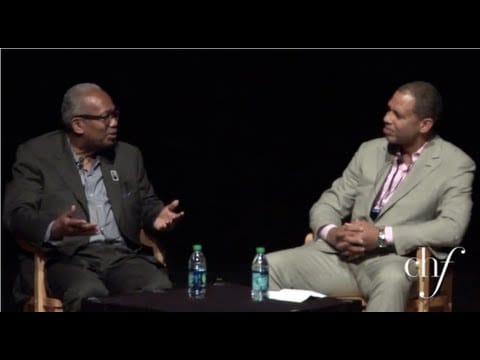
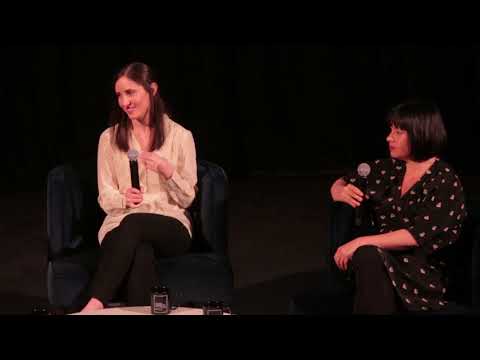
For more information on the protest movements that have shaped Chicago politics, we recommend the following lectures from the CHF archive:
“Chicago is a place that is super inspiring to me because it is using electoral organizing in the service of movement building...It’s dope. I have a serious organizing crush on Chicago.” —Alicia Garza, co-founder of Black Lives Matter
3) POWERFUL CHICAGO REBELLIONS
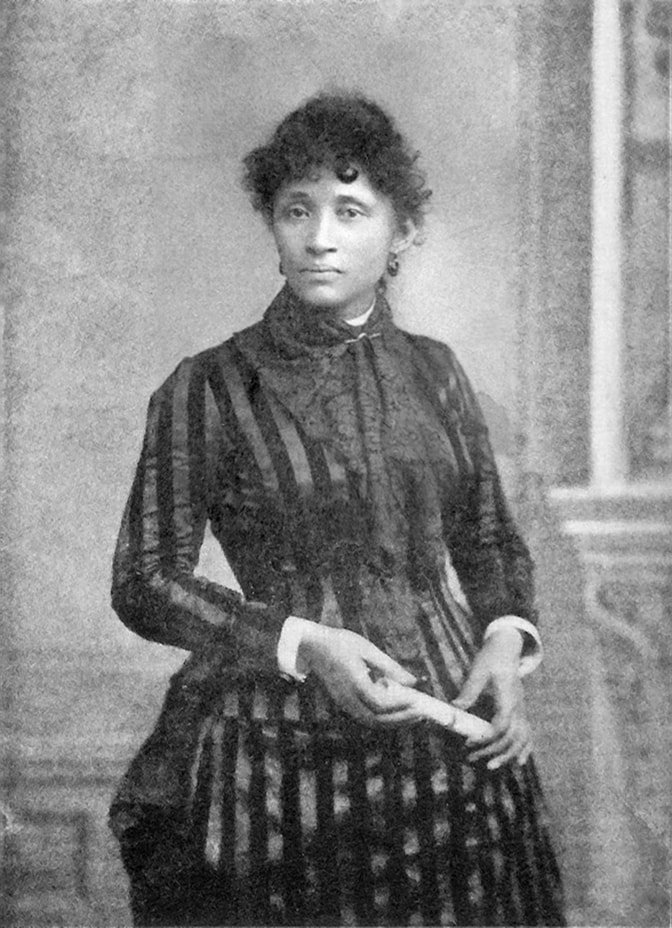
Lucy Parsons│Wikimedia Commons
“Anarchists know that a long period of education must precede any great fundamental change in society, hence they do not believe in vote begging, nor political campaigns, but rather in the development of self-thinking individuals.” ―Labor Organizer Lucy Parsons
As part of the 1915 Chicago Hunger Demonstration, activist Lucy Parsons led a march of over 15,000 people from Jane Addam’s Hull House through Chicago. The protestors marched against mass unemployment, demanding “comprehensive social change for the city’s poor and working class.” Parson was a labor activist, founding member of the International Workers of the World, and widower of Haymarket trial defendant Albert Parsons. No doubt threatened by Parsons’ power as an organizer and as a woman of color in a segregated city, Chicago police labeled Parsons an “anarchist,” “more dangerous than a thousand rioters.”
The Chicago Race Riots took place the summer after World War I ended, in the midst of the Great Migration, housing shortages, and industrial labour competition in Chicago. The riots were instigated when a African American teenager, swimming in the “whites only” side of a city beach drowned after being stoned by white men. After police refused to arrest the perpetrator, violence broke out, lasting from July 27th to August 3rd 1919, killing 38 people, injuring 500, and leaving 1,000 residence homeless, due to damaged property. In the aftermath of the riots, Chicago considered formally segregating workplace and housing, but after significant backlash, the city instead created the Chicago Commission on Race Relations. For more history on the Chicago Race Riots and the “thin line” connecting them to the city's current political moment, read Eve Ewing’s new book of poetry, 1919.
“Now it’s on to Chicago.” —Presidential candidate Robert Kennedy before his assassination in 1968
The 1968 Democratic National Convention was held in Chicago in the aftermath of Martin Luther King and Robert Kennedy’s assassinations and in the midst of the Vietnam War. Activists converged on Grant and Lincoln Parks to voice opposition to the Democratic establishment. Gatherings turned violent when police began using tear gas and clubs on protestors. Mayor Daley sent in the National Guard. Eight protestors, including Black Panther member Bobby Seale were arrested and charged with conspiracy and crossing state lines to incite a riot, charges were later dropped, but not before Seale, after requesting to choose his own lawyer (as was his right), was brought before a jury gagged and chained to his chair.
“Feminism is the radical notion that women are people” —Activist and academic Cheris Kramarae
On Mother’s Day weekend, 1980, 20,000 activists marched down Columbus Drive in Chicago in support of the Equal Rights Amendment (ERA). The ERA is a proposed amendment to the United States constitution “designed to guarantee equal legal rights for all American citizens regardless of sex; it seeks to end the legal distinctions between men and women in terms of divorce, property, employment, and other matters.” Illinois did not ratify the ERA before the 1982 deadline set by Congress. Thirty-six years later, however, Illinois became the 37th state to ratify. One more state is required to ratify in order for the ERA to be brought before Congress again.
In 1991, during the height of the AIDS crisis, the American Medical Association (AMA) hosted their annual convention in Chicago. Outside Michigan Avenue’s Hilton Hotel, where the conference was being held, Chicago’s chapter of ACT UP (Aids Coalition to Unleash Power) organized protests to raise public awareness regarding the AMA’s lack of effective and dignified treatment and discriminatory policies. Activists chanted, “AMA your guilty,” “Healthcare is a right, not just for the rich and white,” and “AIDS education, not AIDS segregation.” Their activism promoted research towards finding a treatment and cure for AIDS, in addition to contributing to visibility for the LGBTQ+ community.
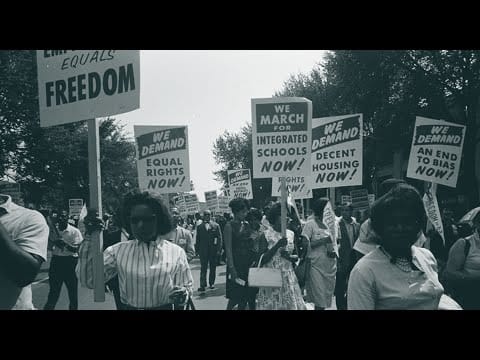
Check out the archival video below to learn more about activism in Chicago:
“There’s a power in telling stories, and a greater power in telling your story.” —Author Alex Kotlowitz
Header image│Wikimedia Commons
Become a Member
Being a member of the Chicago Humanities Festival is especially meaningful during this unprecedented and challenging time. Your support keeps CHF alive as we adapt to our new digital format, and ensures our programming is free, accessible, and open to anyone online.
Make a Donation
Member and donor support drives 100% of our free digital programming. These inspiring and vital conversations are possible because of people like you. Thank you!