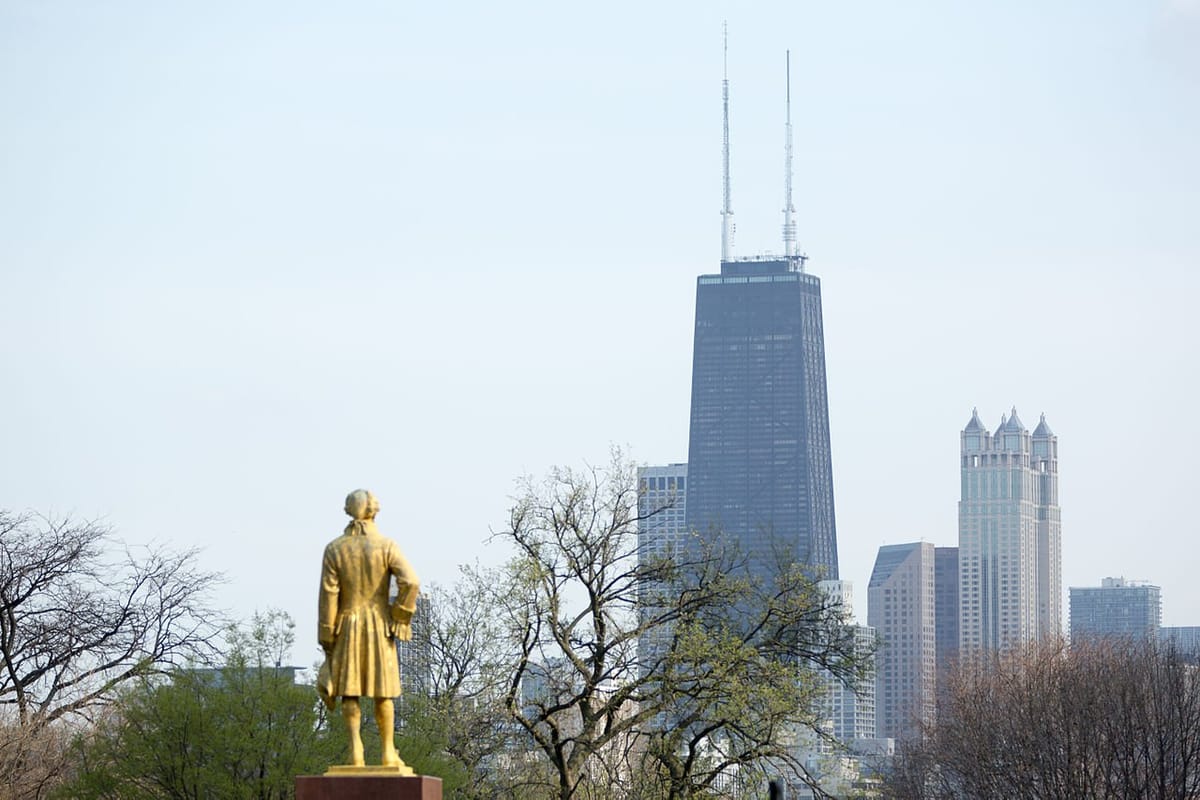
The theme for 2018 is Graphic!, which is, among many other things, a call to think about visual objects, but also to think about the visual as a method. Accordingly, we ask, what are different ways of visualizing place, space, and a sense of home?
Here are three possible frameworks for thinking about representing a place:
1) Monuments
Monuments need not be monumental. Rather, what is undeniable is their evocation of a shared past and invocation of a communal future. Here in the US, much ink has been spilled over controversial monuments across the country. And we don't have to travel far to see how this issue strikes close to home. Indeed the crucial question rings loudly and persistently: How should our collective present treat the seemingly ever-present past? Whatever the response, it's near impossible to deny how monuments are influential in constructing location.
2) Maps
Rumor has it that medieval cartographers would label unexplored areas with the ominous phrase, "here be dragons." While perhaps of suspect validity, this factoid is helpful in identifying a role that maps play in shaping our sense of place. Maps function as a tool of familiarity and expertise, as a graphic (and even aesthetically pleasing) manifestation of knowledge. The unknown is precisely and necessarily outside the purview of mapping. Here in Chicago, a local artist subverts these expectations for a powerful statement about segregation in the Folded Map project.
3) Palimpsests
The word palimpsest usually refers to a recycled piece of parchment, but it also denotes a notion of layered complexity, a sense of subterranean meaning and significance. Urban scholars, in fact, have convincingly argued for seeing a city as a palimpsest. It's helpful and even heartening to conceptualize even the most concrete of objects as sites of renewal. Chicago exemplifies this idea considering that it is famously layered.
Become a Member
Being a member of the Chicago Humanities Festival is especially meaningful during this unprecedented and challenging time. Your support keeps CHF alive as we adapt to our new digital format, and ensures our programming is free, accessible, and open to anyone online.
Make a Donation
Member and donor support drives 100% of our free digital programming. These inspiring and vital conversations are possible because of people like you. Thank you!