Digital Spring Festival 2020 Recap
We hope our first-ever digital festival brought a sense of solidarity, hope, and some laughs to your screens.
CHF checked in with community leaders in Chicago’s Englewood neighborhood– Asiaha Butler and Tonika Johnson—to discuss how COVID-19 has affected Englewood residents, and spoke to sociologist Eric Klinenberg about the importance of social solidarity during this time. Historian Adam Hochschild cautioned against “magic solutions” to any crisis, suggesting instead to “plant the seeds” for a better world. Musician Tori Amos offered music and compassion as tools of resistance. Author Veronica Roth and comedian Cameron Esposito got real about the challenges of being a creative (and a person!) during this time.
Read our recap of spring fest 2020, watch your favorite programs, and explore our presenter recommendations, Q&As, video clips below, round-ups and playlists below!
It is my vision that the arts will be elevated to their rightful status as being a really useful, meaningful, healing, educational tool in life. —Tonika Johnson
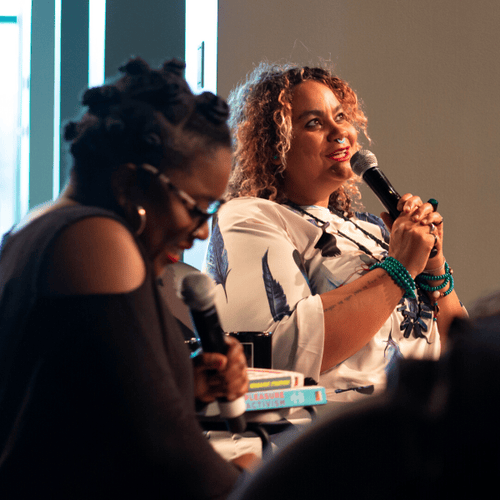
Residents of Englewood Tonika Johnson and Asiaha Butler hope that art will be appreciated and valued for sustaining people through COVID-19. They see art as one of the tools to address the social and economic inequities highlighted by this crisis. Butler reminds us that these concerns are longstanding and systemic: the pandemic has put a light on the conditions people have already been living in.
This is a moment where there are enormous numbers of people who have real needs and real vulnerabilities. What they need is social solidarity. —Eric Klinenberg
Eric Klinenberg has a message for Chicago: Solidarity is getting resources to the communities in our city that need it most. Like Johnson and Butler, Klinenberg recognizes that profound inequality shapes everyone's experience of the pandemic differently. He urges us to ask the question: After this crisis, do we have a chance to rebuild a more equitable society so that everyone, including essential workers, has access to healthcare and job security?
I wish I could say they changed the world, they didn’t. But, perhaps through their eyes we can see a world that needed changing and that still does today. —Adam Hochschild
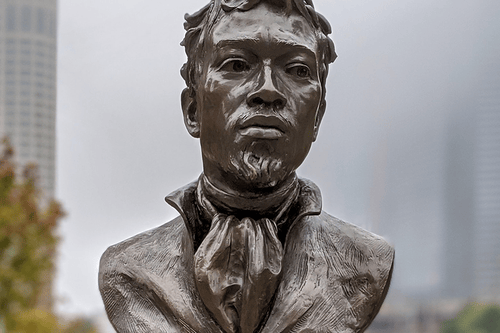
You may not have heard of Rose Pastor Stokes until now, but 20th century New York society was fascinated by her. Why? Because the marriage of a sweatshop worker to millionaire Graham Phelps Stokes seemed like a Cinderella story come to life: Prince Charming rescuing Cinderella from her humble hearth and bringing her home to his castle. But Stokes had no desire to be a princess living in a castle—instead she became an organizer whose activism serves as an example for today’s leaders.
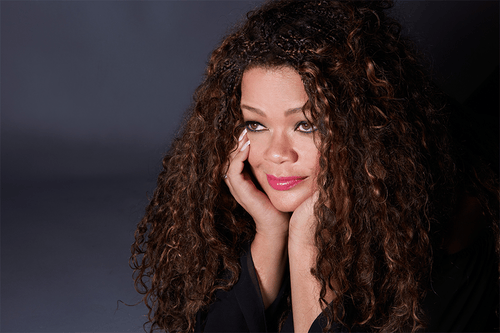
It is about resisting the idea of giving up. It is about resilience, passion to hold leaders accountable. We have to remember that there is a democracy at stake. —Tori Amos
During this time when “people are going through so much,” the questions Amos asks are: “What is this pandemic teaching us? What kind of world do we want to live in? What kind of leaders do we want to have?” She reminds us that our minds and our emotions are powerful tools of resistance. Amos suggests that one way to process social distancing is to write your way through the difficult moments.
I’ve heard from a lot of creative people that it’s hard to make things right now. I think that’s because we’re still inside what is essentially a cultural traumatic experience. —Veronica Roth
Veronica Roth suspects we’ll begin processing the pandemic six months from now “and then start making things that are weird and reflective of this time.” In the meantime, it’s okay if we aren’t feeling very artistic or imaginative: “It’s been dramatic,” Roth admits, “even if it doesn’t look so interesting from the outside that I haven’t put on real pants for three weeks, it’s still a very intense change in the world around me.”
We shouldn’t only show the bread making, we can also show the absolutely delirious eyeballs. —Cameron Esposito
Cameron Esposito wants to say openly that living and working through the pandemic can feel impossible. She’s tired all the time and her eyes hurt from staring at a computer. Esposito recommends self-care in the service of community caring: “[I’m] being honest with myself a much as I can, so that I can be of greater service to my community...This is a time to have real conversations with your friends…[and] real conversations on the internet.”







Thank you for joining CHF’s Digital Spring Festival! We look forward to seeing you back on our screens this summer and fall for more “real conversations on the internet,” and in the meantime, stay safe, connected, and well!
Become a Member
Being a member of the Chicago Humanities Festival is especially meaningful during this unprecedented and challenging time. Your support keeps CHF alive as we adapt to our new digital format, and ensures our programming is free, accessible, and open to anyone online.
Make a Donation
Member and donor support drives 100% of our free digital programming. These inspiring and vital conversations are possible because of people like you. Thank you!