Presenter Q&A: Not the Only One —Richard E. Cytowic Recalls Memorable Cases of Synesthesia
Picture a world in which you can not only hear language, but taste its flavor, feel its shape, and see its color. According to pioneering neurologist Richard E. Cytowic we all possess the multisensory perception known as synesthesia, but only a few of us are consciously aware of that power. Here are some of those people:
We asked Cytowic to tell us about some of his favorite historical cases of synesthesia.
MICHAEL WATSON: THE MAN WHO TASTED SHAPES (1979)
Cytowic: A new neighbor invited me to dinner to meet some friends. He delayed our seating with the apology, “there aren’t enough points on the chicken.” He turned to me to explain that whatever he tasted he also felt on his face and in his hands. “A feeling sweeps down my arm and I feel weight, shape, texture, and temperature as if I’m actually grasping something,” he said. Trying merely to be polite I said, “Oh, you’ve got synesthesia,” to which Michael responded, “You mean there’s a name for what I do?”
How could he not know, I wondered? And there began decades of research. Sharing a root with an–esthesia, meaning “no sensation,” syn–esthesia means “coupled sensation.” Individuals are born with two, three, or all five of their senses hooked together such that my voice is not only something that they hear but also see, taste, or feel as a physical touch. Individuals blessed with the trait are shocked to discover not everyone perceives the world as they do. They assume everyone does until they make an offhand comment like, “My letter ‘A’ is the most beautiful pink I’ve ever seen; what does your ‘A’ look like?” and receive only withering looks in return.
“It’s astonishing that a small change in one’s DNA completely alters how you see the world.”
MARTI PIKE: “MONEY MAPS” (1984)
Cytowic: Once I began speaking about synesthesia at scientific conferences and to the press, a flood of individuals who had the trait wrote about what they experienced. A film librarian at a major Hollywood studio sent 25 single–spaced pages along with crayon drawings to explain how she “saw” the alphabet, numerals, time, days of the week, centuries, and similar sequences as they looped around her body in three–dimensional space.
She described perfectly the “Number Forms” Sir Francis Galton had written about a century earlier. What triggers this kind of synesthesia are sequences, especially overlearned ones like the alphabet, counting numerals, and days of the week. Any ordinal concept from alphabets to baseball averages can latch onto a synesthetic frame of location. My Wednesday Is Indigo Blue co–author David Eagleman eventually discovered a new brain area in the right temporal lobe that is intensely interested in sequences. Marti’s experience turned out to be prescient.
SEAN DAY AND JAMES WANNERTON: SPATIAL SENSE OF FLAVOR
Cytowic: For Sean Day, Professor of Linguistics in South Carolina, blue–tasting foods are the most intense, particularly oranges, spinach, and milk. Blue foods also come in different shades—beef is dark blue, bison meat is darker and tinged with purple, while chicken is a light sky blue. A favorite concoction is “chicken à la mode with orange sauce,” which he developed by layering specific synesthetic textures and hues. The dish consists of a baked chicken breast topped with a scoop of vanilla ice cream and orange juice concentrate. A bed of pumpkin pie purée adds a medium–purple with little multicolored sparkles. “It’s quite delicious,” says Sean.
James Wannerton tastes words—words that he speaks, hears, or merely thinks about. The sensation, localized in his mouth, is involuntary, and not all tastes are pleasant. The word “college” tastes like sausage, as do similar works with the /idg/ ending. But “jail” tastes like cold, hard bacon, while “Derek” tastes like earwax! For a while James ran a London pub, but when the tastes induced by customers talking proved too disagreeable, he sold it.
These two individuals have helped me better understand the interplay of two elements common in all synesthetes: a genetic propensity to cross–connect different brain areas more than usual, and early childhood exposure to cultural artifacts such as alphabets, numerals, clock reading, and the names of foods one eats.
“You are the only person who believed me.”
CAROL STEEN: “I THOUGHT I WAS THE ONLY ONE IN THE WORLD.”
Cytowic: Grown men and women have called, in tears, grateful to learn there is a name for their experience, that I believed them, and that they were not alone. “I thought I was the only one in the world,” is typical. Carol Steen, a well–known New York artist and sculptor, contacted my office after hearing me on WNYC’s Book Talk. Like so many others, she had been told she was making it up, simply seeking attention, merely remembering refrigerator magnets for her letter–color pairings, or else was having residual hallucinations from earlier (assumed) drug use in her youth. The unkindest cut was that she was an artist, and in America everyone knew that artists were weird if not crazy. Carol is now a board member of the American Synesthesia Association, which has organized annual scientific conferences since 2000. Similar organizations now exist worldwide and are flourishing.
“You saved my life,” so many have said. For a writer or scientist, it doesn’t get better than that.
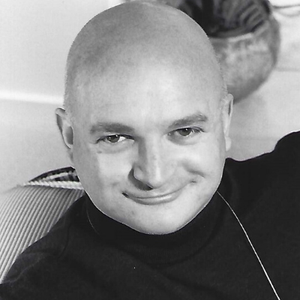
Richard E. Cytowic is best known for having rediscovered synesthesia—the involuntary coupling of the senses—and returning the phenomenon to mainstream science. He and David Eagleman received the Montaigne Medal for Wednesday Is Indigo Blue. Cytowic writes “The Fallible Mind” column at Psychology Today, authors TED lessons, and has spoken at the Library of Congress, the Smithsonian, and others. A three–time Fellow of the DC Commission on the Arts and Humanities, Cytowic is also Clinical Professor of Neurology at George Washington University. His current book is Digital Distractions: Your Stone–Age Brain on Screens & How They Kill Your Social Skills.
Header image credit: Unsplash
Become a Member
Being a member of the Chicago Humanities Festival is especially meaningful during this unprecedented and challenging time. Your support keeps CHF alive as we adapt to our new digital format, and ensures our programming is free, accessible, and open to anyone online.
Make a Donation
Member and donor support drives 100% of our free digital programming. These inspiring and vital conversations are possible because of people like you. Thank you!