Inside Cartoons: The New Yorker, DIY Black Punk Zines, and More
Exclusive Interview, Live Event
S3E10: Asher Perlman, James Spooner
Apple Podcasts • Spotify • Overcast • Pocket Casts
The New Yorker’s Asher Perlman swings by the Chicago Humanities Tapes studio to chat with podcast host Alisa Rosenthal about the inner workings of comedy writing for cartoons, plus graphic memoirist James Spooner with artist Damon Locks live from the Ramova Theatre on books “Black Punk Now” and “The High Desert.”
Read the Transcript
[Theme music plays]
[Cassette tape play clicks open]
ALISA ROSENTHAL: Hey guys what’s going on, thanks for checking out Chicago Humanities Tapes. We are the audio version of Chicago Humanities, whose Spring and Fall Festivals have been running for 35 years. I’m Alisa Rosenthal, and I’m here to bring you the best of our live chats direct from the festival circuit, plus, exclusive interviews coming direct from our studio to you. Today is the best of both worlds: New Yorker cartoonist Asher Perlman is in the house, to chat with me on the inner workings of comedy writing for cartoons and his Chicago improv background, and then we have some great nuggets of wisdom with a short selection from our recent live event with graphic novelist and founder of the Afropunk music festival James Spooner, joined by artist Damon Locks for some insight into Spooner’s new book “Black Punk Now” and his process making the graphic memoir “The High Desert.”
Asher Perlman is a writer/performer for “The Late Show with Stephen Colbert,” and his new compilation of New Yorker cartoons “Well, This is Me” is available now.
[Theme music plays]
ALISA ROSENTHAL: Asher Perlman. Welcome to Chicago Humanities Tapes.
ASHER PERLMAN: Thank you so much for having me. It's really. I'm. I'm honored to be here.
ALISA ROSENTHAL: I read your book over the weekend. And I loved it. It was a really cool experience of, I it reminded me of being a kid and sitting down with a book of single panel cartoons, which is something I just really haven't thought about a lot like looking at a whole book in that way. How would you describe this book?
ASHER PERLMAN: Well, I mean, honestly, it makes my day that that that's what it reminded you of because I grew up with this kind of cartoon book in my house. And, I mean, I mean, back then, I mean, I was a kid of the 90s, so we're talking the Far Side, but also, Charles Addams and I just love single panel cartoons and also cartoons in general. So. I mean, yeah, this book is pretty straightforward. It's a compilation of single panel cartoons. I also have a narrative throughline, I guess, for lack of a better word. So there's I break it up with some semi-autobiographical, that even that might be overstating it, but narrative pieces, I call them pieces throughout and, but yeah, I mean, it's pretty it's a pretty straightforward compilation. And, yeah, I mean, it's kind of an homage to the books I grew up on. I mean, it's actually up to and including the point that it's, it's published by Andrews McMeel, which is the publisher who made Calvin and Hobbes and FoxTrot, like, all these, all these great comics that I grew up on. So, yeah, that was a long answer to a simple question, but, hopefully there's an answer in there somewhere.
ALISA ROSENTHAL: You hit the nail on the head. I, I was specifically going to say the Far Side. And in talking to some other friends about trying to reminisce about what it was like being a kid of the 90s and getting into cartoons, I was like, because we all went to the library and got out big stacks of the Far Side, and some of my other friends were like, no. But it was. I just like, yeah, I love the Far Side and FoxTrot. I can tell that you care about comics and cartoons so deeply, but melding your voice and your sense of humor with The New Yorker. Can you speak a little bit to how you get that tone just right?
ASHER PERLMAN: Yeah, I mean, I hope that I do get it right. I think that's sort of an ongoing struggle that everyone goes through. One of the pieces of advice that I got very early on it, I'm not sure if you know Ellis Rosen, but he's a really great New Yorker cartoonist. And for some reason, he agreed to get coffee with me when I was first starting out. So I graciously took advantage of him. But one of the pieces of advice you gave me, I guess I showed him one of my early batches and he said, you know, this is like, these are these are fine. Like, these are good, they're funny, whatever. But it feels like you're trying to make a New Yorker cartoon rather than making an actual cartoon that could work in The New Yorker. And I think in that moment, it was kind of a wake up call, because that was exactly what I was trying to do. I mean, I was. Yeah. I mean, I was basically like a, I was like, ChatGPT like I was like, I fed all of the cartoons that I liked into myself, and I was like, produce something like that. And then I made this batch and it was just like, it wasn't good. I it just felt I mean derivative, uninspired, unoriginal, whatever. And so after that, I started trying to think more in terms of what I thought was funny. And then, of course, there's sort of a band of acceptable cartoons that, you know, fit within the magazines voice, and you have to hit that. But once I started focusing more on making stuff that I actually personally liked, that was when things really clicked, and that was when I started selling cartoons too, I mean, I was rejected until I started doing that. So yeah, I think it's an ongoing struggle. I think it's something that people a lot of new cart, new cartoonists struggle with, too, because you you don't want to pitch something that's so out, you know, so wildly, unlike anything that they've ever seen that they're like, why did you even read the magazine? But, but at the same time, you don't want to give them something they already have because they already have that. And so. Yeah. That's sort of the my, my journey with that.
ALISA ROSENTHAL: Yeah, I think that makes a ton of sense because I've noticed with your – and now, forgive me is, a little like vocab check. Cartoons, comics. What's the difference? Is there a difference?
ASHER PERLMAN: Oh, this is a good question. I mean, yeah, I come from a I mean, you know, I come from a sketch and improv background and I know that there's like this, obsession with calling them sketches instead of skits. I don't know if that's. I say cartoons, I think. I think that the I think people would say single panel gag cartoon is sort of the like the long form term. But, I think if you called it a comic, I don't think that's like offensive or.
ALISA ROSENTHAL: Not like "your little skit."
ASHER PERLMAN: Yeah, yeah, yeah, it doesn't feel like that. Although I know, okay, all your angry listeners, write in and tell me I'm wrong, but I'm pretty sure you can say either. I personally say cartoon.
ALISA ROSENTHAL: Yeah, that totally makes sense. I notice that your, there's, like, a specific sense of humor that started to come out as I was working through your book. That. This like, pile on joke structure that I feel like I haven't seen in a single panel comic of, or oh my gosh, cartoon.
ASHER PERLMAN: How dare you? No. It's good.
ALISA ROSENTHAL: But, because, I would love to give our listeners a couple of examples of your cartoons. Much like people just love when you recount improv. Do you mind if I explain a couple of your cartoons?
ASHER PERLMAN: I would love it. I would love it. They say this is how cartoons should be enjoyed, but, described over the radio, so. Yes, please.
ALISA ROSENTHAL: Yes, their most popular medium, audio. So obviously the cover of your book, the title of your book, actually. Can you explain this, this gag? Better than I could. Definitely.
ASHER PERLMAN: Yes. Well, I mean, I'd rather have you do it, but I'll give it a shot. Basically, it's that's a it's a small man. Well, it's a normal sized man walking down the street with a woman, saying the classic phrase, "Well, this is me," which is something you say when you've arrived home, but instead of a home, it's a large version of that man. And. Yeah, that was that was the original cartoon. And then I made it the the title of the book because. I mean, I mean, maybe this is obvious, but it just serves as a double meaning because it's in a sense, the contents of the book is me or are me. So anyways, yeah, that's the that's that's the cover. That's the cover.
ALISA ROSENTHAL: It's great. It just the joke. The joke lands so well. And then you had a joke go viral, with the, an airplane. And this is your captain speaking, and this is your captain singing. That is very funny. And it looks like it's like, gone viral on TikTok. People have gotten pilots to do this.
ASHER PERLMAN: Yeah, it's really, someone sent that to me. It's so funny to watch these things take on a life of their own. That was one of my favorite ones to sell because we we pitched them to an editor, and then she pitches them to David Remnick, who is the editor in chief of The New Yorker magazine. And she said that when she pitched that to him, she had to she had to sing it. So sometimes it feels like I like pranked her into doing it, but I'm really I'm really glad I'm really glad that one got in.
ALISA ROSENTHAL: That's great. And then. Okay, one that I'd really like to read because this is the one that, like, stopped me in my tracks. It's I believe they're Olympics judges each holding up a scorecard. Is it okay if I read what's on, like, the third scorecard?
ASHER PERLMAN: Yes. Of course.
ALISA ROSENTHAL: Okay, great. Because I think this, like, really sums up, the sense of humor of this book perfectly. So we've got a panel of three judges. One is holding up a 7.8, one is holding up an 8.1, and then the third judge is holding up a sign with large, long text that says, I accidentally tripped the judge in the bathroom and killed him. I panicked, put on his clothes, and here I am. I'm so scared. It's crazy how one day can change your life. And it's just like the like pummel of punches this joke just like assaults you with, it's. Yeah, it's what, like, totally sold me on the rest of the book. It's just, like, such a fun and, like, unique sense of humor.
ASHER PERLMAN: Oh, thank you. Yeah. Yeah, I think that technically counts as a novella, but I just tried to squeeze it into a single paragraph. I actually never I never heard that, out loud before. As you were reading it, it occurred to me that it implies that there's like a costume to be an Olympics judge, that, like, he had to wear, like he wouldn't have been able to get in, to the judging panel if he wasn't wearing this guy's exact clothes.
ALISA ROSENTHAL: Yep. They're all in matching white shirts and ties.
ASHER PERLMAN: That's right. That's I guess that.
ALISA ROSENTHAL: And I think something I'm really interested in is how you're able to or like what the a little bit of inside baseball here. What the joke writing or like the. The kind of creative process of getting a whole story across in a single panel.
ASHER PERLMAN: I mean, that is the challenge. I mean, it's. I mean, in comedy in general. Not to, like, analyze comedy, because I know that that's not necessarily fun, but I mean, in comedy in general, it's all about economy and doing things as quickly as you possibly can. Which is ironic that I said that twice because it took twice as long as I needed to. But but that is that is sort of the goal of all comedy. And so when you're writing, you know, a more traditional joke, one, one exercise you can do is just go through and see, like, hey, can I rewrite the same joke, but remove two words and keep the meaning? And the tighter it is, the better it is. And so with with with with gag cartoons like this, I mean, I mean, I do the same thing, like when I brainstorm joke ideas, oftentimes the original thing I brainstorm is this kind of long, clunky caption, and then it goes through maybe ten iterations to make it as tight as possible. But then you also. But the thing that distinguishes this from, joke joke writing for, maybe stand up, you know, monologue jokes, whatever is that you have this other element, which is the, the image, and then that allows you to ideally condense it even more. Someone told me that you want I would credit them, but I can't remember who. But someone said, basically, you don't want any cartoon to work without the caption or the picture. It has to be the two of them in conversation with one another. And once in a while I'll write a joke where the caption is kind of a it's basically like a tweet, and then I. And then and then I sort of have to reevaluate and say, okay, well, this isn't really a cartoon, it’s just. Sometimes I still do this, like draw two people walking down the street and one of them saying it. But, ideally you want to go back and find a way to have the image contribute something, which allows you to shorten the caption too. Now, all of this, of course, is ironic too, because you just read one of the longest captions of all time, and that's that's I clearly like long captions also. But. But yeah, you if it's long you want it to be deliberately long.
ALISA ROSENTHAL: So I think I had a total misconception about how New Yorker cartoons work, and I assumed that there were artists and there were writers, but I'm now learning that a lot of times they're one in the same.
ASHER PERLMAN: I think I don't want to speak on behalf of the entire community, but as far as I know the vast majority are writer artists who who do the whole thing themselves. I do know there are some teams that work together, but I think that's that's far and away the exception. And even if you do for the most part yourself, you know, some people will collaborate with other comedy writers like I've done a few collaborations. So it's not you're not like hemmed into one, one version of it.
ALISA ROSENTHAL: That makes sense. It it takes a village. Were you always interested in drawing? Was this something that you developed to service the jokes?
ASHER PERLMAN: I always loved drawing. My dad as an artist, and so I was exposed to it very early, and he gave me. I mean, he at one point, he actually gave us art lessons, me and my brothers. So I always loved it. And then I think as I got older, I just kind of lost an interest in it. And then as I kept getting older, I developed a new interest in it. And, I started doodling again, maybe in my mid 20s. And then it honestly wasn't really until the pandemic hit with because I do a lot of live shows. When the pandemic hit, all of a sudden those were unavailable to me. And so I sort of had to think of something else that I could do that was a creative outlet that didn't require me to leave my house. And that was when I really started, learning to draw again in any real serious way. And I would say that my art is not good. It's bad, but I did I had to learn how to do it at least well enough to get the idea across. So. I think I had to get a lot better at it when it came time to actually start submitting.
ALISA ROSENTHAL: And I think that makes sense too, for you you have this goal in mind and you knew you had the skill. I think about this all the time with, with music or with singing. It's like you're you're born with a natural level of ability or not. I mean, I guess that's any skill, but knowing that you had an interest in the skill and a working knowledge of it, and you can like any muscle, it can get stronger. You can practice. I think your art looks great. Asher. You did a very good job.
ASHER PERLMAN: Agree to disagree but thank you.
ALISA ROSENTHAL: So, remind me, are you are you from the Chicagoland area? Where are you from?
ASHER PERLMAN: I was born in Seattle, but then raised in Wisconsin. And then I came down to Chicago after college to pursue sketch and improv. And then I've been in New York for seven years now.
ALISA ROSENTHAL: Yeah. So this is this is a real a real comedy trajectory, for sure.
ASHER PERLMAN: Yeah. It is.
ALISA ROSENTHAL: What were you doing in Chicago?
ASHER PERLMAN: Well I moved to Chicago to pursue the, performing at the Second City, because that was the comedy theater I'd heard of. And, once I got there, I think, like a lot of people who moved to Chicago to do sketch, and then you learn about all the other theaters, and then I just sort of became obsessed and, lived in that world for I think it was it was almost ten years to the day that I, that I was there. But yeah, I did, I pursued I did the Second City I did their touring company and one of the resident stages, and I performed at iO, which, which is amazing. And I guess I think it's, it's sort of like full on back now because I know during the pandemic it kind of suffered a bit. But yeah I did I did all I mean basically any theater that would have me I performed at, so ComedySportz, the Annoyance. Yeah.
ALISA ROSENTHAL: Yeah. And I think there isn't really like. Obviously Second City is the biggest name, but there isn't really a hierarchy to the schools or the classes or the shows. It's just if you want to be doing it, grab a class and grab four other friends with Friday nights free. A low barrier to entry.
ASHER PERLMAN: Yeah. Super low. I think from what I understand, back in the day, there was a little bit more delineation between the schools, like you were either an iO person or a Second City person. By the time I got there, this is like the early 2010s, I guess. I feel like kind of everyone was taking classes at all the places and performing at all of them. And yeah, I don't think that there was really that tribalism that that there sort of was back in the day. I mean, I remember wanting to perform at Second City, in part because I knew what they were going into it. And so sort of this golden standard, but also because it was the one that paid you a living wage, and I wanted to perform full time. So, yeah, I'll always I'll always be grateful to them for that.
ALISA ROSENTHAL: Yeah. I am endlessly envious that your work does not involve listening to audio. In that, I imagine you can have background music or podcasts or something on as you're working. Do you have something that kind of helps your creative process or gets you in the zone that you like listening to?
ASHER PERLMAN: I always, I mean, I always have something going, I never work in silence, which is, I don't know, maybe that's a bad thing, but when I'm brainstorming in the morning, I usually put on something super, like, like atmospheric, like lo fi beats or Sigur Ros or like something without lyrics because that that I sort of need my brain more. But once I'm actually. But that's just to come up with ideas and then once I have the ideas and I'm just drawing them out, then I can practically watch a full movie while I do that. When I was working on this book, I think I rewatched Succession like one and a half times or something.
ALISA ROSENTHAL: In the mindset of, of you have like one character that pops up a lot, which is the guy with the mustache.
ASHER PERLMAN: Yes, yes Eu – Eugene. Yeah.
ALISA ROSENTHAL: What he wants his life to look like.
ASHER PERLMAN: Exactly, exactly. But yeah. No, I love putting on movies, TV shows, anything that, like, like, trashy reality shows are great to draw through because you can sort of be paying half attention to them. But.
ALISA ROSENTHAL: Yeah. I noticed that you have a Patreon page and you do office hours, which I thought was really interesting and really a cool way to build community. What, gave you the idea to start doing that and how's it going?
ASHER PERLMAN: I love doing, office hours, I'm so glad you saw that. I honestly, that was born from me thinking about what was something I would have liked to exist when I was first starting out that didn't. And so a lot of my patrons, not all of them, but a lot of them are cartoonists themselves or some artists of some kind, and some of them want to do TV writing, which I also do. So I just wanted to create a space, I mean, it sounds corny, but I wanted to create a space where people could drop in and, share their work and get advice and just talk about this industry because it's it's so. Every aspect of this industry that I'm a part of. It's so opaque and really hard to know what's going on inside of it and how to break into it. And I think like any, any way to demystify that is it's a good it's a good thing. So, yeah, that was kind of the impetus for that. And it's really fun. It's turned into like you said. I mean, it actually sort of turned into more of a community thing. I think. I originally thought it was going to be just me and one person at a time, you know, seeking advice about something specific. And then more than one person would show up at once, and then we'd all sort of talk together and, and, and bat around ideas and, and so yeah, it's yeah, it's been really cool.
ALISA ROSENTHAL: That's awesome to hear. I feel like that's one of the big challenges with writing, and I imagine it's similar to drawing, is that it's pretty solitary. And when you're trying to make funny things, like you just need other people.
ASHER PERLMAN: Yeah. I mean, that is sort of one of the unique challenges to writing and drawing as opposed to performing. I mean, coming up in improv, like, I mean, you know, literally within half a sec I mean, however long that it takes for the sound to reach the audience and that sound to reach you, that's how long it takes for you to know whether or not it works. So I think I was really accustomed to that. And really, I mean, I really craved that. And then obviously when you're, when you're drawing something, you just don't know. I mean, you can send it out to someone and say, hey, does this work? But it's not it's not really the same. And then I think the book is obviously the the most heightened example of that, because the majority of this is stuff that I haven't even put online. So I'm sort of just, you know, hoping people like it. But I was thinking when I was writing it or making a drawing and writing it, I was thinking about how challenging it would be to be a novelist or one of those novelists who takes ten years to, you know, to craft their type. And I say, oh, my god, you just wouldn't know for that long whether or not a single person liked it. And. Yeah. I mean, it sounds freeing in a way, because you kind of have to only think about what do you like. But also challenging because you can only think about what you like.
ALISA ROSENTHAL: Yeah. You're like John Steinbeck. Do I have a new art form for you? It's the single pan panel cartoon. Anyways, so I'm curious, do you have, other cartoonists or graphic novelists that you're into right now or that have kind of caught your attention that you'd recommend?
ASHER PERLMAN: Yeah. I mean, honestly, my my recommend. I mean, the people that I'm the most tickled by and inspired by are my friends who are also New Yorker cartoonists right now. I don't want to list them because I'm going to forget some, but the the thing I would recommend if you, if you're into this kind of thing, is just go to any cartoonist's Instagram page and see who they're following. And that is just that's what I did. And I just got all of a sudden I was just my feed was filled with people who are who are doing really cool stuff. So, yeah, I mean, there's the great like, I mean, I already mentioned like, Gary Larson and Charles Adams and all those guys, and they're all really good. And you can and you can go back and enjoy all the all the greats. But one thing it's, you know, we all know this, but comedy ages like milk. And sometimes the best stuff is the current stuff. And, yeah, I really do think that the current crop of, cartoonists is just just really, really, really good.
ALISA ROSENTHAL: Yeah, there's a lot to check out. Okay, just a couple more questions. I I'm always really interested in motivation. How do we get it? How do we keep it? Do you have any tips for getting started? If there's a creative product you want to make, getting started. And then also, vitally, how to finish it? Having just made a book, maybe this resonates.
ASHER PERLMAN: Yeah. No it does, it does. I feel like this is the eternal struggle. I mean, I would, I I'll give you my advice and, I think. It's not really. It's going to sound kind of just like common advice that everyone would give. But it really, for me at least, it's. I think it's twofold. One is you just have to do it. I mean, that's sort of the obvious answer. And I think the more, maybe more helpful answer is. Rather than relying on willpower to, you know, to to get something out there. I, I'm, I'm a big creature of habit, and I'm a huge proponent of daily creative practices that that just, get you making something every day. And so I don't, you know, I think for everyone it would be something different for me. I read The Artist's Way and fell in love with Morning Pages, and I did. I've done them every day for like, seven years now or something. But yeah, but again, I think it'd be different for everyone. But I think finding something that you can do every day, even if it's just ten minutes. I really do think that that's the difference, because you can spend your whole life waiting for inspiration that just, maybe it'll hit. That'll be awesome. But I think for the most part it doesn't. And, you just have to create these habits that generate, generate ideas for you. And then as far as finishing goes. I think that that part is kind of willpower. I mean, you just sort of have to push through. And, one of the hardest parts is deciding when it's done. I mean, I just drew, you know, 200 cartoons for this and all of them, I think if you gave me another five minutes, I would find something I would change. But I think, working the muscle of being able to put the pen down and saying, this is this is the finished product. I think I think that just takes practice.
ALISA ROSENTHAL: Yeah. I mean, I think getting creative work done is like so unglamorous, but.
ASHER PERLMAN: It really is.
ALISA ROSENTHAL: And it's what creates the structure for you to get to do the fun thing. I mean, I get podcasts out every two weeks because I put on my calendar that it's getting published in two weeks so.
ASHER PERLMAN: You have to. Yeah. And you're accountable to someone else. I think that's the other thing that can be really helpful is if, I mean, I have some friends who are also cartoonists, and we send our batches every week because you submit on a weekly cadence. And so we send our batches every week. And I think without that it would be harder to find the motivation to do it. But I'm like, well, they're sending me theirs. I've got to send something. So yeah, finding people to be accountable to, institutions to be accountable to, timelines that you can't just, you know, unilaterally decide to not follow. Yeah, that that's okay. I'm adding that. I'm adding that that's also good advice.
ALISA ROSENTHAL: I feel like submissions are good to just give you a deadline, even if it's a made up deadline. But.
ASHER PERLMAN: Yeah.
ALISA ROSENTHAL: Anyways, this is a thought near and dear to my heart. Last question. You will be back in Chicago in a couple of weeks for your book launch at Second City, which we are.
ASHER PERLMAN: Yes!
ALISA ROSENTHAL: Excited for. What are what are you looking forward to hitting up when you're in Chicago?
ASHER PERLMAN: Oh my gosh. I mean, I'm doing a full tour of my old haunts. I'm going to perform with the Improvised Shakespeare Company, which is one of my favorite groups to perform with. That's at iO. I'm going to perform with the Armando Diaz Experience. That's also at iO. I'm definitely going to go to Second City and, play the set and also just see a lot of my friends. I mean, I'm, I think I'm doing some press while I'm there. I'll be like on WGN Radio, which feels kind of, I guess is cool. Yeah. So I'm excited to, to do all that, but I also just, I'm excited to see everybody. I haven't been back in a long time. And the Chicago comedy community is. I mean, I'm, I really don't think I'm being, I don't think I'm exaggerating, it's the coolest. It's so great. I love all those people and I love the community. So I'm just excited to see people and, yeah, see what's changed. And, yeah, just plugged back into it. I think it's. I'm really excited.
ALISA ROSENTHAL: That's perfect. Asher Perlman, thank you so much.
ASHER PERLMAN: Thank you for having me. It was my it was my treat.
[Theme music plays]
JAMES SPOONER: But eventually I had this urge to tell stories again, you know? And, when I met my partner, Lisa, she introduced me to memoir comics, and I read a few of them, and I. And it just clicked. It was like. It was like hearing the Ramones for the first time, and you're like, oh, I could do that. You know, I could be in a band, right?
[Theme music plays]
ALISA ROSENTHAL: And now, this is a selection from James Spooner with Damon Locks live at Chicago’s historic Ramova Theatre in the Bridgeport neighborhood from May 2024.
DAMON LOCKS: As Afropunk was growing, we were like, still connecting on these ways and we would still have, like really beautiful, like conversations on the stoop until 3:00 in the morning about race and belonging and place from our, our, our different perspectives, you know, and it it was a beautiful thing. And as it grew and changed, the festival kind of took its own, took on its own character and went a different direction or and then you had to step away from it and find a, a new way of kind of addressing these questions. So. And if I. If I have this correct. Some time past, tattooing, vegan tattooing kind of came into your life. And then you found High Desert.
JAMES SPOONER: Yeah. So basically, when I left Afropunk, I was heartbroken. It had grown. And took on a, there were a lot of compromises that, I had to make that I was not comfortable with. And I had a partner who had his eyes on a much bigger prize. And. So. I couldn't battle it anymore. And I left, and, and that was very difficult because I wasn't just leaving behind, you know, this, this scene or this film or whatever, like I was leaving behind. People like people that I knew still very much counted on these events that we were still doing.
JAMES SPOONER: And it was just an opportunity to, like, get together because I think as someone who's not a musician, who's always been looking at the stage, I'm actually more interested in the crowd than what's on the stage. Like, of course I love the music, but sometimes shows feel like a an excuse for the scene to get together. So, all of that was going away, and I moved to California because I just, I had I was like, I was running, you know, I had to hide my head. And. Yeah. So I ended up becoming a tattooer. I just was doing that and it still fulfilled that kind of artistic itch for a while, but eventually I had this urge to tell stories again, you know? And, when I met my partner, Lisa, she introduced me to memoir comics, and I read a few of them, and I. And it just clicked. It was like. It was like hearing the Ramones for the first time, and you're like, oh, I could do that. You know, I could be in a band, right? Like. Like I I read these comics and I was like, oh, this is like making a movie. But like. No, but there's no gatekeepers, right? Because I could draw, I could. You know, I could do all of the things, you know. So, I just went in, you know, and like learning on the job.
DAMON LOCKS: Was High Desert also a solo collaborative effort?
JAMES SPOONER: Yes or no? So I wrote the script. My partner Lisa, edited the fuck out of it. And like many fights, many tears on my side. Like, she really. She's got, you know, she's got a master's in literature. I didn't go to college at all. So, you know, she definitely is like broke down my ego. Like what? Right. Like, who do you think you are that you can just, like, write a novel. Once I had the script, then I started drawing, shitty thumbnails, but my style of drawing, you know, when you see, the drawings, you'll see that they're like, you know, fairly realistic in the grand scheme of cartooning. And, one thing that anyone who's tried who gets to cartooning has to or attempts art cartooning is like, how do you make the same character look the same over and over again from every angle? And it's like, so difficult, right? I cast the entire book. So, you know, I if you came in for a tattoo, I'd be like, thinking like hmhm. I think you could be, you know, you could.
DAMON LOCKS: You could be Damon in this.
JAMES SPOONER: You know, I might have been like, oh, you might be like, Ryan or whatever. And then I would say, like, hey, would you pose for like, you know, I need 13 pictures, you know, and for like, the main character, I, he lived in San Diego. I went down there, two different times, and I probably spent eight hours with him to shoot 10,000 photos of this kid, you know, because we went through the book and just went through the script, shot it a million times, you know, and then I did all of these collages and I, you know, it's it's it's a long ass dumb process that I'm sure there's a better way of doing it, but it's the way that I do it, but it so it was collaborative in that way. And then the way of like, my partner kicking my ass. But, but ultimately it is a solo, you know, it's a lot of time alone on the iPad, you know. The first time that I went to a zine fest, I was like, holy shit, this is like one giant merch table. You know? This is like going to a show with all the kids, but no bands, you know? And I love it. Like the zine, like the zine community. Those nerds are my nerds. Like, those are those are my people. And, and the comics, like, so there's two different kind of comics worlds. There's like Comic Con where people like, kind of do a lot of cosplay and, like, are into superheroes and stuff. And then there's like comics arts fairs that are more memoir, independent, you know, queer like it's all the stuff that isn't superheroes. Those people are my people as well. So it was and super inviting. You know, now with within those communities, there are like definitely Black folks. And you often see them, congregating, you know, or sharing tables or, you know, it's just like high school. Like all the Black folks are sitting at that table, you know? And also very excited and accommodating. So like when the High Desert came out, I was super nervous because it's like I never read comics, you know? So I'm just like, "Hi, I got a book..." You know? And it was just like, yo, coming right in, like. And then within that, so you've got the comics world, and you've got the comics arts world, then you've got the, the, Black comic creators, and then you have the Black punk comic creators, and there's like seven of us.
DAMON LOCKS: You know.
JAMES SPOONER: Three of them are in this book. One of them is a Chicago, local, Bianca Xunise. And thank you guys so much for coming, I really thought it was going to be twelve people, I really appreciate it.
DAMON LOCKS: James Spooner, ladies and gentlemen.
JAMES SPOONER: Damon Locks. Thank you.
[Theme music plays]
ALISA ROSENTHAL: That was James Spooner with Damon Locks at the Ramova Theatre in Spring 2024. Before that, you heard Asher Perlman chatting with myself from the Chicago Humanities Tapes studio in May 2024.
Chicago Humanities Tapes is produced and hosted by me, Alisa Rosenthal, with the Chicago Humanities team to thank for excellent programming and production of the live events. Head to chicagohumanities.org for more information on how to catch your favorite speaker live the next time they’re in town. New episodes of Chicago Humanities Tapes drop first thing every other Tuesday morning wherever you get your podcasts. Be sure to click subscribe so you’ll be the first to know when new episodes air. While you’re there, give us a rating, share with your friends, and check out our killer backlog of programs. All of this helps us bring more great programs straight to you. We’ll be back in two weeks with a brand new episode, but in the meantime, stay human.
[Theme music plays]
[Cassette tape player clicks closed]
ASHER PERLMAN: You’re pairing this with another one, right?
ALISA ROSENTHAL: I'm going to pair it with a graphic memoirist named James Spooner. He founded the Afropunk music festival.
ASHER PERLMAN: That sounds awesome, I love to be on the lame side of that spectrum.
SHOW NOTES
CW: Profanity in the second program
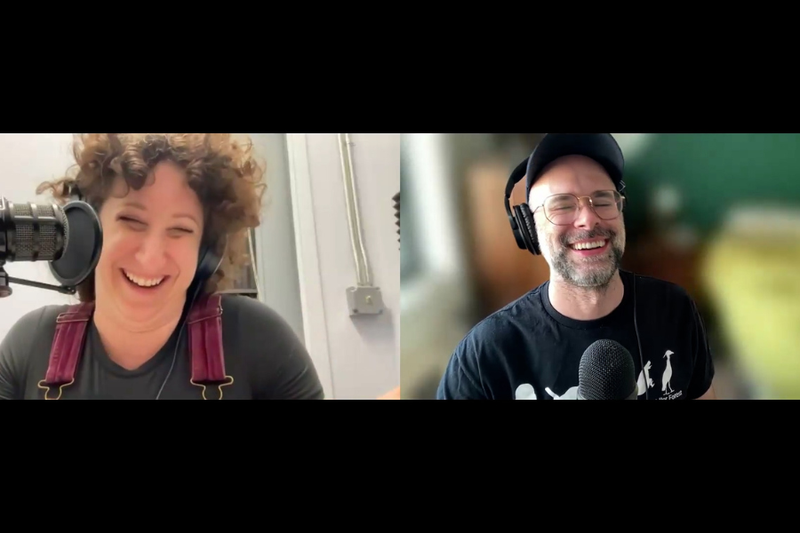
Alisa Rosenthal ( L ) and Asher Perlman ( R ) chat via Zoom.
Asher Perlman, Well, This is Me
Asher Perlman office hours information via Patreon
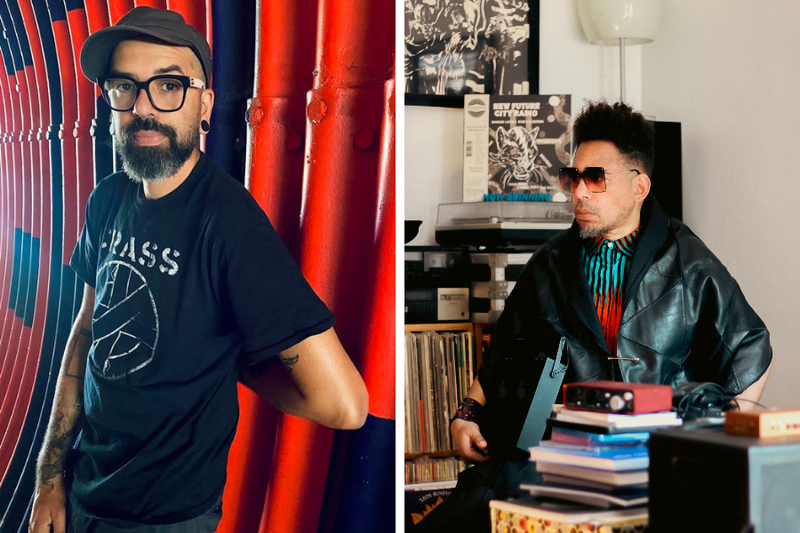
James Spooner ( L ) and Damon Locks ( R )
James Spooner, Black Punk Now
James Spooner, The High Desert
Recommended Listening
- Podcast
- April 4, 2023
Bob Odenkirk with Tim Meadows on Finding Your Comedy Voice
- Podcast
- April 3, 2024
Getting Schooled in Hip Hop with the Notorious Ph.D.

- Podcast
- September 7, 2023
Stacey Abrams on Writing, Ruth E. Carter on Costume Design
Become a Member
Being a member of the Chicago Humanities Festival is especially meaningful during this unprecedented and challenging time. Your support keeps CHF alive as we adapt to our new digital format, and ensures our programming is free, accessible, and open to anyone online.
Make a Donation
Member and donor support drives 100% of our free digital programming. These inspiring and vital conversations are possible because of people like you. Thank you!