Bob Odenkirk with Tim Meadows on Finding Your Comedy Voice
S1E1: Bob Odenkirk with Tim Meadows
Apple Podcasts • Spotify • Pandora • Overcast • Pocket Casts
What do you do if you’re too weird for stand-up, dream of being an action star, and are all around nice to be around? You have an incredible career in show biz like Bob Odenkirk. Opening up about the highs and lows of Hollywood with fellow SNL alum Tim Meadows, join two legends for a fun night out where topics include the ‘90s Chicago comedy scene, dads, and writing for Chris Farley.
Read the Transcript
BOB ODENKIRK: Part of me that delights in something that's just not going to work out.
[“We Got a Listen” bouncy and funky theme music plays]
ALISA ROSENTHAL: Hey all, what's going on? I'm Alisa Rosenthal with Chicago Humanities and thank you for tuning into Chicago Humanities Tapes. This is our premiere episode of our brand new culture-filled podcast, bringing you the best of our current season which is in motion as we speak along with the most relevant bits of our incredible archive dating back to 1991. Head over to Chicago Humanities [dot] org to see more about the very cool speakers we've got coming up. Awesome names including Stacey Abrams, Andy Cohen, Joan Baez - a really great season. Definitely check it out.
So what you're going to hear today is one of my favorite events from our spring 2022 season. It's Bob Odenkirk chatting with fellow Saturday Night Live alum and all around sweetheart to Chicago, Tim Meadows, about finding your voice in comedy. You probably know Bob Odenkirk best from AMC's Better Call Saul.
Jimmy (playing bagpipes): Oh, you could hear this through the door. I didn't realize. I'm sorry.
Clifford: What do you think you're doing?
Jimmy: I took your advice. I'm blowing off steam.
Clifford: Blowing off steam?
Jimmy: Yeah. Yeah. Like you and your guitar. You know, I got to say, you're right. I mean, it really helps with stress. I know I don't sound very good, but I'm just learning. I heard that the key is you have to keep this bag inflated.
Clifford: Stop that.
Odenkirk grew up in the Chicago suburb of Naperville, Illinois. He was one of a lot of kids and shares a lot about his upbringing and also just feeling like he didn't fit in in improv or stand up. There's a lot of really great Chicago comedy history when he talks about Del Close, producing at Second City. But he just felt too weird for standup, too weird for improv at this time when it was all really blowing up. He found himself drawn to classic solo performers like the one man shows of Bob Newhart, Eric Bogosian. He gives you lots of cool stuff to check out if this piques your interest.
You'll hear him talk about the memoir he's just released, Comedy Comedy Comedy Drama. He had already released his action movie called Nobody and had his life-altering experience with his heart attack. He's about to drop the sixth season of Better Call Saul. You know him, you love him. He's an Emmy winning writer, Golden Globe nominated actor, comedian and director. And. I just know you're going to love it. So enjoy.
[Audience applause.]
TIM MEADOWS: Here he is. Ladies, gentlemen, Bob Odenkirk. Hey, Bob. Thank you. All right.
BOB ODENKIRK: Thank you. Thank you. Thank you so much for being here tonight. Thank you.
TIM MEADOWS: So. Bob. Hi.
BOB ODENKIRK: Hey, buddy. How's it going?
TIM MEADOWS: It's going good. Well, let's talk about the book, should we? Or should we just. Yeah.
BOB ODENKIRK: Took forever to write this thing, so please, let's talk about it.
TIM MEADOWS: And so what made you decide to write a memoir? First of all, what made you think that anybody cared? I told Bob before we were having dinner, I said, I'm going to be really angry, mean on stage, so be prepared. I attack.
BOB ODENKIRK: A couple of things happened. I love show biz memoirs. I kind of read. I've read two that. No, I've read two Van Halen memoirs.
TIM MEADOWS: Two. Two Van Halen biographies?
BOB ODENKIRK: Well, memoirs, you know, pieces about them, about the band.
BOB ODENKIRK: But my point is, I love show biz memoirs. And so I don't have, you know, I just like reading them. So I thought, you know, I could write one maybe because I've done a lot of stuff. But also my assistant in the third season of Better Call Saul was a woman named Melissa Hyman, who's an improv actress from Albuquerque. And I had a a box of pictures that I was taking out of my as I was unpacking for the season to start the season. And I started showing her pictures of us backstage at Second City and Del and different shows, Saturday Night Live, me and Smigel and Conan O'Brien and Greg Daniels just at SNL. And I just thought, fuck, there's some stories in here that people like her would love to hear you tell.
I had had this interaction with Del Close does clap if you know who Del Close is. Maybe a little over half the audience. Dell was a director at Second City and a teacher. And when I ran into him on Wells Street when I was in college. He was he had just quit Second City the day before. It was the fifth time he quit, but it was actually it was still wasn't for good. He came back and came.
TIM MEADOWS: Back into the show. Yeah, but.
BOB ODENKIRK: It was for a long time and then he started creating the iO within the next two years and. Yeah. And he um, he, I said Can I interview you? And he talked to me and I talk a lot about this in the book and he talked to me for about 2 hours. And it was an inspiration to me to hear him ramble about his career. And I thought that inspired me so much, that interaction. Maybe I could do the same thing for some young people. You know, the business is such a strange thing to enter into. If you're from Naperville, where I'm from, or anywhere in the Midwest where you're not or you have no one in your family who's an actor, writer or anything, you know, a lot of things are a mystery, but that this business is a particular mystery. It's such a made up thing. Everything we do is just invented. And so, I don't know. Del talking and rambling through his career to me that day made me feel like it was a it was a realistic thing filled with, you know. Experiences that were intriguing. Some of them I'd heard of and knew about here. He had been an acting coach at Saturday Night Live and of course, Second City. I knew and he'd directed there for years and taught and some of them I'd never heard of. He was talking about off-Broadway show with Larry Hagman, the nervous set. He was talking about working with this traveling horror show movie thing. He was talking about working with Elaine May. He was ranging all over this crazy career, Get Smart, the committee, the work that they were doing there in San Francisco. And I didn't know of course, I never heard of the committee. I'd never heard of Elaine May. A lot of these things I didn't know the reference, but it was still and still walked out of there going, I've got to try this. That sounds exciting to me. And I also said to Dave Pasquesi who's here tonight, one of my cast members, mates from Second City, and maybe the great greatest improviser in this room. I bet I'll put money on that. And I was just telling him the other thing was. He made it seem possible, but I'd never. At the time, Dell was 49, but he looked like he was 70. But I'd never met an older person who was excited about what they were going to do next. Like who? He talked to me about the show. He was going to start doing at Crosscurrents with two other performers, and they were going to improvise and write and maybe do monologues, mix with sketches and use the newspaper and bring it to life. And and I just I remember looking at him as he's telling me this and thinking this. I've never seen anybody his age tell me what they were going to do in a way that was sounded like it might be cool or great or that they were excited about it. Every older person I knew was trying to play more golf or get as, I don't know, get drunk as quickly as they could as soon. And and that's it. And and so there was something about his excitement. And I just thought maybe I could borrow that interaction and build on it to it to write a book. And so. This is why I wrote it.
TIM MEADOWS: You did? It's great. I mean.
BOB ODENKIRK: And. Oh, by the way, it ends before the movie "Nobody" comes out and before my heart attack because it was supposed to be out a year ago. But the pandemic made us delay shooting the final season of Better Call Saul.
It's it finishes before that movie comes out, because that movie is such an uncertain endeavor. I mean, it really is a crazy roll of the dice that took so much work on my part and sacrifice to make, even though the chances of it. Fucking up everything and being not good are probably pretty high. But so I that's where I'm at when I wrote this book, right? I don't know if it's going to play for people. All I know is we killed ourselves to make it. It took me years to get it made. I had to suffer my wife's scowl every time I walked out of the house because she didn't want me to make an action movie. And she's proud of it now. But she doesn't like action movies, violence. Very upsetting to her. And so.
TIM MEADOWS: Well, I think I speak for, you know, probably most of America. Like when I saw that it was happening, I was like, what the fuck? Because, you know, I've known you for a long time. You are the I've never even seen you do something athletic in all the time I've known you. So when I saw scenes of you fighting, I was like, What is going on here?
BOB ODENKIRK: The character's not thinking it's funny that he's doing this. I really wanted to risk everything. Yeah. And say, you know, look, it's either going to be the hugest mistake I ever made or it might work out. Yeah. But the one thing that I would say, bridges how you know me and that movie. Is Better Call Saul and the character I play in that movie. And this was my pitch when I went out to pitch it is. Forget the comedy I've done because most people have never seen it. And but in Better Call Saul, which plays around the world, it's an earnest guy. He can be very funny, but there's a lot of scenes where he is laying his heart bare and he's getting pushed down, pushed down, pushed down, and he never quits. And that's an action lead, except there's no fighting. But otherwise, all that stuff I'm playing and that's connecting with people and who don't know Mr. Show and don't know the comedy I've done. That's how they know me. So for them, the only addition is the fighting, right.
TIM MEADOWS: And so it's a big addition, though.
BOB ODENKIRK: Yeah.
TIM MEADOWS: You know what I mean? It's I mean, and I'm not saying it's like, you know, I'm I'm on your side. I'm a fan, so don't you know. But yeah, but it was like it was surprising. And you did it. You did it. You you pulled it off. It wasn't as the movie went on. It wasn't like, oh, this is impossible that this guy could be doing this. Like, I bought into it. And I know how thin you are then you are, you know? But. But it was great to see.
BOB ODENKIRK: You should meet the guy who taught me how to do knife fighting he's smaller than me. And he'll. Yeah.
TIM MEADOWS: He'll cut.
BOB ODENKIRK: You. He'll take you down. And I should add in that Ben Greenberg, my editor, called me to say, do you want to write a memoir? So I had these thoughts and these experiences where I thought there's some stories to share with people. And so I also think some of the a lot of the comedy that I've done. In order for people to have a sense of it, I'd have to write this sooner than later because there's so much pop culture nowadays. Everything gets covered over with another hundred pounds of humor or whatever. Every day. Yeah. So I had to get to it.
TIM MEADOWS: Well, I'm glad you did. Let's talk about some of the early stuff. Do you mind?
BOB ODENKIRK: Anything, anything, anything.
TIM MEADOWS: Okay. Well, one of the things that I found interesting was about growing up, you growing up and like, we'd have had conversations over the years where we talked about our parents or whatever, but it's always very short. And I was very surprised by the relationship you had with your father and how you talked about it in the book. And the thing that I thought about, too, was that a lot of people in comedy come from including myself backgrounds, when you're going through it, you don't realize how dark or unhealthy it is and you don't learn that until you look back on it. So my question is. What was the. What is what is your sort of experience? You can relate it to, you know, your relationship with your father and how maybe it changed you. I'm speaking for myself, too, as the way I'm a father to my kids. You know what I'm saying?
BOB ODENKIRK: Yeah, well, I think I wanted to not be my dad. The opposite of my dad, which is what every generation does. Right. Like, just I'm going to give my kids the exact opposite, and then they go too far in that other direction. Right. Right. But, you know, I think my dad, which I talk about in the book, grew up in the Chicago area. Well, that's part of his childhood was in Louisiana. And he was a salesman who did business forms and had an office, I believe, in West Chicago. And he had one in Hinsdale. Kind of moved around a lot.
And if he hadn't been a drinker and a sloppy person as a person, I mean, he was just kind of irresponsible guy and kind of immature and. And he wasn't around much and. So I mean, it's all about as a dad, I just wanted to be there for my kids. As the second oldest of seven. I had little kids around me and I loved them and I thought they were awesome. And I knew I wanted to have kids in my life and I wanted to be there for them and give them attention and and laugh and be with them because they're funny as hell. It's the funnest thing ever. Yeah. And yeah. So it would be that it would just be to to be the opposite of my own father.
TIM MEADOWS: And when you were younger. I know I did. Was I, I became more entertaining for my mother and for my brothers and sisters. And like, I learned, like, just how.
BOB ODENKIRK: Many kids.
TIM MEADOWS: I had. The youngest of six.
BOB ODENKIRK: Oh, well, there you go. Yeah, I'm seven. Yeah, second oldest. And it's funny, Colbert. I was on Colbert the other day and he's 11. He's the youngest of 11. Yeah. Yeah. And well.
TIM MEADOWS: The more kids, the funnier you are.
BOB ODENKIRK: I didn't feel like I didn't feel like I didn't feel like I had to do it at all. I just I think, you know, comedy is a lot like.
TIM MEADOWS: I don't feel like I had to do it either. I think I naturally did it because I just wanted to, like, elevate the what was going on energy, you know what I mean? I wasn't I think it was a conscious effort.
BOB ODENKIRK: And I think that's what I did, too. And that's what really all the kids in our family did that I definitely did. And my brother Bill, who's a writer, wrote for The Simpsons for years, and now he and I are on a project together. Yeah, it was really about it. We all make each other laugh and goofed around a lot. Laughed and we're very silly laughs. Yeah, and silly, silly, silly. And because this thing that's around you, this energy that's around you, is so uncomfortable and you can't do anything about it. You can't solve the problems of the family, right? You don't even really know what they are. There's like something going on, but you don't know what it is. Yeah.
TIM MEADOWS: Okay, so let's talk about you. Okay. So you you got into comedy, you started doing some standup, but you didn't feel really. It was your thing at that time.
BOB ODENKIRK: Yeah, I never well, I never did. I mean, I love Steve Martin stand up. Right, because like I in my estimation, his standup was kind of like a sketch version of standup. Yeah, it was like conceptualized standup. So I love that there's something about sketch that I love and. But, but, you know, you and I both have good friends who love standup. Like, you know, it's their religion, right? And so we know lots of people like that. And that's never was me. And I guess I feel like standup feels more limited to me. And, you know, the first challenge with a standup act and I did a lot of standup in the Chicago area because the standup boom happened when I was 21 around there. And there were all these clubs, there were no club, you know, there was like four clubs, three or four, and then there were 14 within like a year. And then not only that, like every bar had a comedy night. Yeah. So you could make 20 bucks. 20 bucks, you know, every night, maybe 40 do two of them. And, and I could get booked as the opener and all weekend club and, and so I could write some jokes and waste 15 minutes of the audience's time and fuck yeah I'll do it and, but I could never hone my voice, which is I think the first thing you got to either naturally do or find your way to. And I just couldn't do it like I want to.
TIM MEADOWS: It's harder when you're doing conceptual stuff on. Yeah, yeah. It's harder to get the audience to know who you really are because you never really are being yourself. You're always just doing, you know, different.
BOB ODENKIRK: Well, I would mix it up. I would like talk about some thing in the real world that annoyed me or whatever. Then I would do a joke that was totally conceptual, like Steven Wright ish, and then I would do a character voice and just ramble in a character voice and it's just a mess. It's like, pick one thing and go there and stay there. Yeah, because that's what standup is. Yeah. And I couldn't do it. Yeah.
TIM MEADOWS: Um. Well, but you eventually took those things that you learned and started doing one man shows.
BOB ODENKIRK: Well, that was kind of a thought I had because I like Bob Newhart, and I recognized that he did sort of what I liked. I don't know if you've ever heard of a Bob Newhart comedy album, but his his comedy albums are little sketches that he monologues through. And, you know, they're very written, and some of them could be played as a sketch, I think. And so it's very interesting. He was very different from everybody else. I'm not really sure if anyone did anything act like him.
TIM MEADOWS: I don't think so.
BOB ODENKIRK: So it's very unique act. Yeah. And I liked that. And I also saw Eric Bogosian at the Etsy theater. Do you know who Eric Bogosian is? And he did a one man show called Sex, Drugs and Rock and Roll. That was solo pieces. It was just him on stage, the whole show. And he's doing characters that are kind of interconnected and. And I thought, there's something in between Bob Newhart and Eric Bogosian that I would like to do. So it's I'm alone on stage. It's more actorly than Bob Newhart, who just talks. But it's kind of like Newhart. It's dry. It exists for comedy's sake. Eric's stuff was funny, but it was a theater meant to be kind of more about more have more depth or more sensitive characterization. Mine was like, Let's be funny, find a joke, and then just beat the shit out of it till everyone's sick of it. And so, yeah, that's what I did. I did that show at the ETC and Joyce Sloan let me use the ETC theater for the summer, which is crazy because I wasn't a Second City person. I hadn't gone up through the ranks at I don't even know how she knew who I was, but Tom Gianas directed it. And so Tom was had a relationship over there at Second City, right? So he got us in there. But that was my show. That was like Newhart and Bogosian.
TIM MEADOWS: Yeah, it was really fun, too, man.
BOB ODENKIRK: It was called Half My Face Is A Clown. Yeah. And the picture was half my face painted as a clown. So if you like that, you would like the show.
TIM MEADOWS: I'm sure I wanted to talk about Second City and stuff. Um, and I mean, we both like, you know, uh, worked with Farley and got to know him. And one of the things you talk about in the book.
BOB ODENKIRK: I was surprised at how much I wrote about Chris.
TIM MEADOWS: You surprised how much you did write?
BOB ODENKIRK: How much I did write.
TIM MEADOWS: It obviously meant a lot. It did to you, man. And obviously, you know, Chris had an effect on everybody that that worked with him and stuff, and especially because he left us too soon. Also, like the story is sort of unfinished. You know what I mean? And so, like the things that we are sort of grabbing at and remembering, we. They're more precious now. You know what I'm saying?
BOB ODENKIRK: You know, listen, there's two things that I think I can attribute to me, having cared and thought and felt so much about Chris. One, my dad was an alcoholic, and when I finally understood what alcoholism was, my mom took me to Al-Anon meetings when I was around 11 and 12, and that was really great. It was really great to hear a name for what was going on and to hear other people tell stories that, Oh, that's like my dad, okay, oh, that's what's happening. But from that point on, from when I knew I always had a part of me that was really tender about people with alcohol issues when I was around them and I could sense it. I would almost start crying just. And I didn't even know him that well. I had a roommate in college and, and he was an alcoholic at the, you know, in college.
TIM MEADOWS: Mhm.
BOB ODENKIRK: And it really made me emotional just to be around him. Right. So I always had that. So when I got to know Chris and you didn't have to know him too long to understand what was happening on that side of the equation. You know, I was in that space when I was around him. But secondly. Chris. Shared a lot of his soul with the audience immediately, all the time, and with everybody around him. You did feel close to him very quickly. Yeah. And so. Yeah. It was those two things like. You know, I said it on Stern the other day, and it really just came to me when I was talking to him because Howard was like, we didn't really get to know Chris. And I said, I think you did.
TIM MEADOWS: Mm hmm.
BOB ODENKIRK: I mean, you saw him perform, even if you saw him in a few things you just saw.
TIM MEADOWS: Yeah. Yeah, I would say the same thing to people, too. Is it like he. He was. It was a much different. His public persona and his private persona were pretty much the same. It was, you know, a little bit more amped up in public.
BOB ODENKIRK: The Chris Farley show scene that. Yes. Smigel wrote on SNL. Yeah, that was Chris.
TIM MEADOWS: That's that was an aspect of him. Yeah. The humility and like because we used to give him shit about it because we used to say he was faking it when he would be like, Oh, what's it like being in the Beatles, Paul McCartney, you know? And you'd be like, Come on, man, don't. You don't have to act our way like we're all adults. But he he was genuinely was like being like, Wow, I can't believe I'm here, you know, but I wanted let's talk about it.
BOB ODENKIRK: Did you read the part about Chris?
TIM MEADOWS: Yes. Yeah.
BOB ODENKIRK: Was it what did you think?
TIM MEADOWS: I thought it was accurate.
BOB ODENKIRK: I mean, I think you are closer to him than I was.
TIM MEADOWS: Yeah. I mean, if the stories that you tell in the book, we all have those stories where it's like. I don't know what else to do with you, you know? Um, and I headed to where I was like, I love this dude, but I can't save him. I can't make him do what I want him to do because he's out of my control. Um, and it, it sort of hurt, you know? But on the other side, let's talk about Matt Foley. Yeah. Okay. Do you guys know this sketch? It's a sketch. It was called the motivational speaker. And it was actually a character that Chris would do in improv sets with the cast. And we all loved it, but he could never really figure out what the character was. And then Bob.
BOB ODENKIRK: I, we were improvising. It was a it was like an anti-drug speech that we were doing. We were doing a faculty at a high school, and I did a teacher or whatever it was based on a suggestion, I think. And Chris did Matt Foley as a coach. And well, I just went home that night and and I had been listening to Tony Robbins cassettes.
BOB ODENKIRK: But just I thought, what about a person who uses themselves as the negative example? Yeah. But only but in the present. Yeah. You want to be like me right now.
TIM MEADOWS: Let me tell you about my life right now.
BOB ODENKIRK: Right now. Yeah. And and then just another little detail, but it all just popped into my head. I'm from Naperville. There's a DuPage River, and when I was a kid, my mom would occasionally, as a treat, take us to Burger King and we would go over the river and the stoners from high school would hang out on the river bridge. And I just had this image of the guy pulling up with his van there and just that's where he's going to live now. And and that's all that came to my head. And Tim, I've written thousands of sketches and probably six or eight of them were done the way I wrote them the first time I wrote them. Right, because everything needs to be fixed and rewritten always. But there's a few Manson Lassie on Ben Stiller Show, the Great Philouza - Mr. Show. I mean, they stick in your head cause, like, never happens. Yeah. And Matt Foley was what I wrote down on the legal pad.
TIM MEADOWS: Head to the paper.
BOB ODENKIRK: Except for Smigel added breaking the table.
TIM MEADOWS: Oh on the show.
BOB ODENKIRK: We couldn't do that we couldn't do that at Second City. Right. But at Second City, it ended with Chris going, I'm going to go get my things. I'll be right back. Yes. And I guess I'm sick of living in a van down by the river. And then he leaves and the dad goes, run everybody hide.
TIM MEADOWS: Lock the doors. It's one of my favorite lines in that sketch was when you would say, kids have a seat. I have a motivational speaker. It's going to come out here and talk to you. He's been down in the basement drinking coffee for the last 4 hours. And I always felt that that line, especially on SNL, that it was sort of overlooked because when you brought the sketch to us, that was a really important note, was that you have to know that he's been in the basement drinking coffee for 4 hours and he's a little excited to get out here and perform for you was another line. And so we were all like, Oh, this is going to be fun, you know? And you've we've talked about this before, but like literally the funniest thing I got to see every fucking night was watching Farley do motivational speaker and sitting in the chair and watching him. We it was so much fun.
BOB ODENKIRK: My daughter asked me, What's the most fun you ever had in show business? Yeah, she was like seven or eight years old and I immediately said, I did this sketch with this guy. Yeah. And every time he did it, every night was the most fun I've ever had in show business.
TIM MEADOWS: It was just nuts. Yeah. He used to whip his glass, whip his and throw his glasses to the side like stage. He would grab me and pick me up because I was his son and he's like, Oh, we're going to be living together, me and you, buddy. Fucking rolling me around and, you know, in the air. And and it was just so he sweat, he would sweat every night. Like, you know, he knows the sketch. He knows where it is and the running order. He knows what he has to do to get ready for it. But he would fucking give you a 110% every fucking night, man. It was amazing.
BOB ODENKIRK: He's amazing. And how about this, Tim? That that feeling. That feeling. I remember standing there because I played the dad at Second City. I remember standing there and thinking. As the sketch is going on, there's how many people in Second City?
TIM MEADOWS: 300, something.
BOB ODENKIRK: Like 300 people went from. These are some funny young people, too. I love that guy for the rest of my life. Yeah. In 5 minutes.
TIM MEADOWS: Yeah. Yeah.
BOB ODENKIRK: And you just. You were there while that happened. Yeah. And you knew that everyone in that room was a Chris Farley fan for the rest of their lives.
TIM MEADOWS: And, you know, and we had a really great cast. We had a great show. And but yeah, I mean, it was obvious to everybody that, you know, he was just he was the main dude. Well, we I would love to keep jumping because you got such a long, you know, amazing career. Mr. Show. Garry Shandling Show. Yeah. You know, Breaking Bad. Better Call Saul. So it's all.
BOB ODENKIRK: In the book?
TIM MEADOWS: Yeah, it's all in the book. But we're going to take some questions now from the audience.
AUDIENCE MEMBER 1: I'm curious about your relationship with Chicago. Did you want to leave? Did you feel like you had to leave for your career? Would you ever come back?
BOB ODENKIRK: Well, I come back a lot because my mom passed away a few months ago, but she was here and my two sisters still live here. And, yeah, it was sad to say goodbye to her, but she had a great life. And so I do come back and I will continue to. And who knows? Maybe even live here again. My wife loves coming here, and she comes here more often than I do to scout talent. It was. The weird thing is that I didn't feel like a Chicagoan when I left here when I was 25 to go write at Saturday Night Live. And over the years, even though, like when I was in New York, I'd go to every Bears game at a sports bar and I get the MLB app and I watch every Cubs game that I can, which is almost every one. I just didn't feel like a Chicagoan when I left, I was like, I never understood that vibe. But maybe you do have to leave sometimes to feel that way. But over the years I've seen and felt like, well, fuck, yeah, I'm. I'm a Chicagoan for sure. Like, I don't know, it's meeting, I don't know, living in other cities, you know. And you, you go, That's where I'm from. That's how I see the world. And I and I love that place.
TIM MEADOWS: So, yeah, I feel like I'm an adopted Chicagoan.
BOB ODENKIRK: Well, you're from Detroit.
TIM MEADOWS: I'm from Detroit.
BOB ODENKIRK: It's not okay. It's in the sphere of influence.
TIM MEADOWS: Yeah, we share the gravity.
BOB ODENKIRK: The whatever.
TIM MEADOWS: We hated each other in basketball. It's not even like we got. I'm going to take one more question and then we're going to we have three more questions, but these are questions that Bob would like for you to ask him. So we're going to take one more question from someone with their own question.
AUDIENCE MEMBER 2: Yeah, it's me, Betsy Shepard. Hi, Bob and Tim.
TIM MEADOWS: Oh, hey, Betsy.
AUDIENCE MEMBER 2: I've known Bob since the eighties. I'd like you to tell them everybody about the comedy troupes you did with Conan and Smigel back in the day.
BOB ODENKIRK: Hi. Yeah. So when I was in my first year at Saturday Night Live, I wrote a lot with Robert Smigel. I really was, I think, hired to just help him and be his pal because we'd work together on the phone while he was there his first two years. And then Conan O'Brien and Greg Daniels got hired four shows after I got hired and we all connected and we were all right together. And then that season got abruptly ended by a writers strike. So we had some sketches we hadn't gotten on the air because we weren't getting much on the air. And we said, Let's go to Chicago and do a show at Victory Gardens called Happy, Happy, Good Show. And in that show was the Bears fans, the Superfans. And in the year 2000, and we did improv an improvisational puppet troupe with a Del character, and it was very inside, but it was fun to do, and it was a great, great, silly show that ran all summer. And and they also had the Nude Beach sketch in it, which later went to SNL when Matthew Broderick was there.
TIM MEADOWS: That's very cool. I was going to say, too, before you ask your question, here's.
AUDIENCE MEMBER 3: Hi Bob.
TIM MEADOWS: No, no, you got to read this question. You don't you're not asking questions. But hold on before you read it.
BOB ODENKIRK: I'm taking a chance on you asking me some crazy shit.
BOB ODENKIRK: Let's hear it. This. What do you want to ask me? Anything. Anything that's on that page. Yeah.
AUDIENCE MEMBER 3: I haven't read your book and I don't plan to, but I wanted to congratulate you on writing it. And ask simply this. My favorite kind of writing is when someone over uses cliched, cliched terms and phrases, or even just reuses words too often in close proximity. Does your book use this technique?
BOB ODENKIRK: Yes. Thank you for that question. Yes, that is exactly the technique that I use in the book.
TIM MEADOWS: All right. I need another question to ask you as you come here.
BOB ODENKIRK: A question I would love to have any other question.
AUDIENCE MEMBER 4: Hi, Bob.
BOB ODENKIRK: Hi.
AUDIENCE MEMBER 4: You are wonderful. My question for you is, do you hate writing or yourself more?
BOB ODENKIRK: Well, I'm I'm I'm going to give you an honest answer to that. Before my heart attack, I would have said myself, but I definitely hate writing more and I love writing, but I hate it more than myself because I think the heart attack made me think I'm very lucky and I should value this life that I have.
TIM MEADOWS: That's great. So. Thank you that. All right, one more question. One more question. The guy here with your hand up. Yes, you T-shirt. Come on up here. I told you I can be perfect.
AUDIENCE MEMBER 5: I'm a young person. I want to fail a lot at my favorite thing to do. Will your book show me how to do that? If so, could you crystallize your approach to repetitive failure so I could just skim the book? Also, can you recommend a good book to read?
BOB ODENKIRK: Okay, so you like to fail a lot at the thing you like best in the world? Yes. My book will show you how to do that. It'll give you a very specific program. If you follow it, you can achieve that. And can I recommend a good book to read? Kind of rude, but, uh. Olga Tokarczuk. Drive Your Plow Over the Bones of the Dead. Great book. Great book. Olga Tokarczuk. I'm not kidding. Fucking amazing. Thank you.
TIM MEADOWS: This is not his first time writing a book. He has another book that's called Load of Hooey. Okay. And would you like to preface?
BOB ODENKIRK: Yeah, I want to. I just wanted to end with something meaningful. And there's a poem in here that I wrote a few years ago that says a lot about who I am. And I thought I could read it to you to say goodnight to you tonight. I'll say thank you again for coming and for buying my book. I hope you enjoy it. Please share it with people around you.
It's a quick read, my memoir. But that's good because I want you to actually read the whole thing. And I want to thank my good friend TIM MEADOWS for hosting. Any any excuse to see my friend TIM MEADOWS. I will take I'll write a whole nother book just so I can sit and talk to this guy. The best. Okay. This is called a meaningful poem. The title of the poem is If I Had My Life to live over again. If I had my life to live over again. I dare to make more mistakes. I'd risk more. Go out on a limb. I'd take longer walks and feed the ducks in the park. I'd wear thicker socks and eat more ice cream. More ice cream and better brand of ice cream with a higher fat count. Gourmet ice cream? In fact, I would stick mostly to gelato. I would notice every bird and give it a name, and I'd write that name in a tiny notebook. But let me return to the issue of ice cream. I wouldn't confine myself to national brands. I would travel the countryside, eating the regional equivalent of premium ice cream. If I were eating ice cream with you. I would steal yours when you looked away. If you never looked away, I would badger you through the entire feast. Are you going to finish that? I'll finish that if you don't. Until you gave in. For you see, I have been one of those people who eats an entire box of light ice cream with fewer calories. Who orders three scoops of ice cream and says, Make one of them a sorbet. Who offers to share the death by chocolate dessert? I have even eaten the entire box of dietetic ice cream sandwiches in one sitting. What was I thinking? I should have just eaten the regular kind of ice cream sandwiches. I have even eaten popsicles when there was a Haagen-Dazs right nearby. I did that twice. Believe me, I remember. But if I had to do it all over again, I would eat even more. And I can't restate this enough. A higher fat count. In fact, forget that shit I said about walking in the park and naming birds. If I had my life to live over again, I would focus on the getting and eating of ice cream. Thank you, guys. Thanks for coming out tonight. I hope you like the book. Have a great evening. I'll see you again.
TIM MEADOWS: Bob Odenkirk, everybody let's hear it for Bob.
[Audience applause]
[“We Got a Listen” theme music plays]
ALISA ROSENTHAL: And that was Bob Odenkirk with Tim Meadows at the Chicago Humanities Spring Festival from 2022. I hope you enjoyed that one.
I had a lot of fun curating that for you. Big shout out to the team at Chicago Humanities. We've got excellent programmers and production staff who are just picking the coolest stuff for you to check out and making it sound great.
We'll be back in two weeks with a new episode. Oh, it's an exciting, it's a spicy one. We've got the really wonderful chat between international bestselling writer, Anand Giridharadas and political journalist David Corn on the big question, is the public still persuadable? Giridharadas talks about the book he recently wrote The Persuaders, all about the people you don't see who are persuading our government at the highest levels. And he also gives just awesome tips for people who are interested in progressive organizing. So if that is you, be sure to check this one out. It's a great chat.
For more than 30 years, Chicago Humanities has created experiences through culture, creativity and connection. Check out Chicago Humanities [dot] org to sign up for our email list, or to become a member for insider exclusives and perks. Chicago Humanities Tapes is produced and hosted by me, Alisa Rosenthal, with tons of support from the wonderful folks at Chicago Humanities. Be sure to rate, share and subscribe available wherever you stream your podcasts and our website, chicagohumanities.org/explore/podcast. Thanks for listening and as always, stay human.
SHOW NOTES
Watch the full conversation here.
CW: A light peppering of f-bombs throughout.
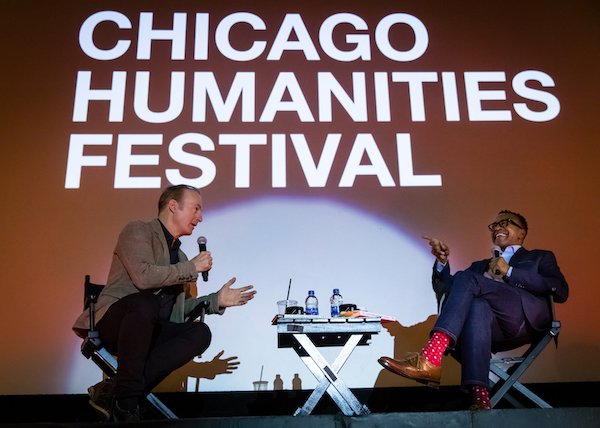
Bob Odenkirk ( L ) and Tim Meadows ( R )
Bob Odenkirk, Comedy Comedy Comedy Drama: A Memoir
Bob Odenkirk, A Load of Hooey
Original Matt Foley sketch at Second City with Chris Farley, Bob Odenkirk, and Tim Meadows
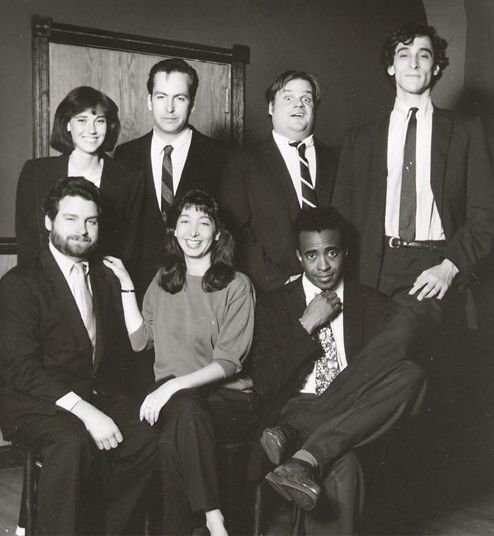
The Second City Cast 1989 ( Chicago Main Stage ); back row ( L to R ) - Jill Talley, Bob Odenkirk, Chris Farley, David Pasquesi; front - Tim O'Malley, Holly Wortell, Tim Meadows
Recommended Listening
- Podcast
- November 7, 2023
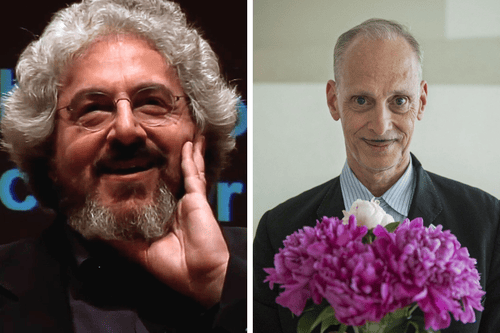
Life Advice from Your Film Dads: Harold Ramis (2009), John Waters (2022)

- Podcast
- September 7, 2023
Stacey Abrams on Writing, Ruth E. Carter on Costume Design
- Podcast
- February 6, 2024
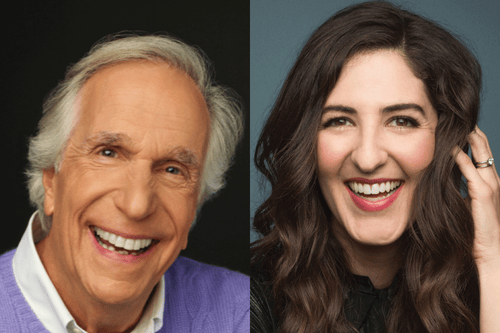
Henry Winkler: Lessons from a Real Sweetheart
Become a Member
Being a member of the Chicago Humanities Festival is especially meaningful during this unprecedented and challenging time. Your support keeps CHF alive as we adapt to our new digital format, and ensures our programming is free, accessible, and open to anyone online.
Make a Donation
Member and donor support drives 100% of our free digital programming. These inspiring and vital conversations are possible because of people like you. Thank you!