Marvel's Simu Liu on Acting, Abercrombie, and Family
S1E3: Simu Liu
Apple Podcasts • Spotify • Pandora • Overcast • Pocket Casts
Gain intimate access to the sold out evening with Simu Liu, the star of Marvel's first ever Asian superhero movie Shang-Chi and the Legend of the Ten Rings. Join Liu, who you may also know from the very bingeable Kim’s Convenience, for a conversation with Joanne Molinaro (aka “The Korean Vegan") at Chicago’s historic movie theater the Music Box, where topics include being an Abercrombie model, inspirational tips to keep going in your pursuit as an actor, and a thoughtful perspective on a difficult early family dynamic.
Read the Transcript
JOANNE MOLINARO: What made you decide to write a memoir?
SIMU LIU: Why - has anyone else ever had to fight for the love of their parents?
[Audience Laughter]
[“We Got a Listen” bouncy and funky theme music plays]
ALISA ROSENTHAL: Hey all, you’re listening to Chicago Humanities Tapes, the audio arm of Chicago’s live festival, creating experiences through culture, creativity, and connection. I’m Alisa Rosenthal, and I’ve been looking to our programs for the answers to humanity’s biggest questions - by picking the coolest conversations from our current season and diving back into our incredible archives dating back to 1990.
Our spring festival is currently underway! Head over to chicagohumanities.org to sign up for our email list and to learn more about our, dare I say, baller lineup - speakers like Stacey Abrams, Andy Cohen, Kid Koala, Gigi Gorgeous with Gottmik, Joan Baez, and Stacey Abrams - all right around the corner. And you can be right there in the room for their inspiring stories and new perspectives.
Today, oh today is a treat dear listeners. We’re landing square in the front row of Simu Liu’s sold out conversation at Chicago’s historic movie theater the Music Box, as he’s interviewed by Joanne Molinaro aka “The Korean Vegan.” Liu, the star of Marvel’s first ever Asian superhero movie Shang-Chi and the Legend of the Ten Rings, and who you might also recognize from the very bingeable Kim’s Convenience, brings warmth and a lot of energy to his conversation with Molinaro, who went viral on TikTok for her recipe videos and stories of her Korean immigrant experience. Buckle up for an audience that cannot keep their collective minds together, and I’ll see you on the other side.
[Audience applause.]
SIMU LIU: Hello.
JOANNE MOLINARO: Hi everyone.
SIMU LIU: Oh, my God. There's so many of you.
JOANNE MOLINARO: We're all here to see you.
SIMU LIU: They're here to see us, Joanne. Nobody here wanted to go to the Cubs game instead. No.
JOANNE MOLINARO: No. Really? No.
SIMU LIU: I mean, I guess. I mean, sure. I would have chosen the sports games. I mean, myself.
JOANNE MOLINARO: Well, it's so great to see you guys. I hope you're ready to have a good time. You guys ready to have a good time? Yes.
JOANNE MOLINARO: Yes, awesome. Let's do it.
SIMU LIU: Let's do it. You look thoroughly ready for a cross-examination by the way Joanne. I don't know. I don't know how many you guys know this, but Joanne is is is a lawyer.
JOANNE MOLINARO: I am. I am. I'm a lawyer. Absolutely. First of all, welcome to Chicago.
SIMU LIU: Thank you so much. It's so good to be here.
JOANNE MOLINARO: Let's show him how much we love him. God, it's so great to see everyone. I didn't know there were this many Asian people in Chi. And so I know there's - and we welcome we welcome everybody it just so we're clear but it definitely surprised me.
JOANNE MOLINARO: We're here for you. We're here for you Simu.
SIMU LIU: Heck yeah.
JOANNE MOLINARO: When you're talking about Simu, he's the kind of guy where you look at him and you're like, It's so unfair that God gave one person all this talent. And, you know, we see now we got a list of accolades and you probably have done enough to write like 15 memoirs, but you're only 33. What made you decide to write a memoir?
SIMU LIU: Why has anyone else ever had to fight for the love of their parents? It's partially that, right? It's like it's like the moment I realized that I made The New York Times. Maybe you have a similar experience, Joanna, but it's like as soon as you made the list, you were just I was just like, Oh, maybe now my parents will love me. Come on.
JOANNE MOLINARO: You know, became a marvel superhero. But when you made the list.
SIMU LIU: Yeah, but I mean, it's the it's the prestige. Is that. No, I mean, I knew I had a story that I wanted to tell. Right. And it wasn't necessarily a story about me so much as it was a story about my family, about, you know, intergenerational conflict, but then ultimately reconciliation. And then a story about immigrants who who come to this new country with nothing in their pockets except just hopes and dreams of building a better life. Um, I wanted to tell that story, and I wanted to tell it at a, at a point in my life where, you know, people like you and I could read it, people who are younger than us can read it and not be like, Oh, this guy's totally out of touch, you know, because I could easily have written a memoir like age 55 or 60, and it would have been like, Hello, fellow kids. Like back when I was your age, before the metaverse existed, and everyone just had implants and, you know, whatever.
JOANNE MOLINARO: Is that where we're headed?
SIMU LIU: That's right. Yes. Yes, that's where we're headed. Before the age of NFT, years before Bitcoin ruled the world, there was a time where. Yeah, so I mean, I think there's just something really, really valuable about, about having kind of a relatable tone. I mean, for those of you guys who have read the book, you'll know there's it's chock full of like nerdy references to Star Wars and Harry Potter and things that, you know, like boy bands in the nineties, like things that I grew up with.
JOANNE MOLINARO: We have two Gryffindors on stage by the way, two Gryffindors.
SIMU LIU: Oh yeah. From Pottermore dot com.
JOANNE MOLINARO: Oh absolutely. Yeah. Yeah. Yes it is the undeniable.
SIMU LIU: I was worried that I would be a Slytherin by the way.
JOANNE MOLINARO: I actually kind of wanted to be a little bit.
SIMU LIU: Like, well, yeah, they get a bad rap in the movies, but I feel like Slyther like the defining characteristic of Slytherins are like they're very ambitious and they're cunning, which are all good, you know, good things. But anyway. Gryffindor so, but yeah, yeah. I thought it was very important for me to, to come out with this book at this point in my life. This is the story that I wanted to tell. And I think it's it was very much a full circle moment when, you know, I found out that I was cast in Shang-Chi because, you know, my parents I was I was 32 years of oh, God, I got to do math. I was 30 years old, failed accountant guys, I was I was 30 years old when I was cast in Shang-Chi. And and my parents were 30 when they first, you know, came across the ocean to Canada for the first time. And so there's just like such a beautiful parallel about our lives and the points at our lives that we were at when we decided to put it all on the line, and we're finally rewarded with it. And so, yeah, it's the book is very much about just, you know, two generations of dreamers who who, you know, looked off into the horizon, set a goal and then, you know, gave themselves permission to to pursue it.
JOANNE MOLINARO: You mentioned two generations of Dreamers, but there are actually three generations represented in your book. And I think my two favorite people in your book are yéye and năinai. I don't know if I'm pronouncing that correctly, but your grandparents and you talk about how they created this beautiful cocoon of love for you between the age of when you were born and five. Can you remember specifically like what they did for you to make you feel so loved and safe?
SIMU LIU: Shortly after I was born, I was born in Harbin, China, and shortly after I was born, my parents left me to go to Canada to to pursue their postgraduate studies. And it just didn't quite seem feasible at the time to have a kid and have a full course load and to, you know, build a life like it. Just, you know, it didn't make sense. And meanwhile, my grandparents were just there they're retired, they're ready. So my grandparents raised me until I was four and a half. And then one day my dad showed up and was like, Hi, I'm your dad. And I'm here to take you to your new life in Canada and with you know, I'm sure for him it was like a very happy ending moment because it was like, you know, our family's finally going to be together. But in my mind, I was like, I already have a family. And that family was my yéye and my năinai and I and, and like you mentioned, Joanne, you know, all of my memories of, you know, my early childhood up until I was four and a half. I mean, there weren't many, obviously, but but from what I do remember, little bits and pieces, um, they were just so loving and so patient with me. I mean, I remember, you know, I just remember, you know, my, my grandma, năinai. And I was obsessed with covering me in blankets. And no matter what I would like, no matter how many blankets I had, it was never enough. And she always just would find a way to like, in the middle of the night, wrap me in another layer. And I was just like literally cocooned in like just mountains of blankets. And that was just the kind of care that she approached, you know, you know, raising a child with. And she was a pediatrician as well. So, you know, that was kind of her her entire life was was taking care of children. Um, my my yéye I was a chemistry professor and was just like a very academic person who would sit me down, even though I was three years old and would try to, like, lecture at me, not in a not in a not in a bad way. But just as you know, I remember him trying to describe to me like the the importance of keeping your word. There was something that at three I had no concept of. Right. But I just remember, you know, he would sit me down and he would say, now Simu. If you make a promise, that means that you that means you have to do something. It means you give me your word. And if you break your word, that means that, you know, I can't I can't trust you next time. And I was like, Well, I don't want that. And so the context is whenever we would like go to the street markets near our house, I would always find something that I wanted to, whether it was like a popsicle or like a, you know, like a children's book or something. And when I didn't get it, I had this tendency to throw, like, really bad tantrums, you.
JOANNE MOLINARO: No.
SIMU LIU: Like, I would like. I would, like, lie on the floor and like, like, it's not cute, but my, my grandpa was like, so next time I take you like, you have to, otherwise I'm not going to take you. But you have to promise not to, not to throw a tantrum. And that was that was how he taught me the importance of keeping your word. So, um, you know, and he was never like he never raised his voice, was always patient. And just every night we and I'm maybe a little embarrassed to admit this, but we all slept in the same bed every night. And and I just I never wanted to be anywhere else. I never wanted to be around anyone else. And when my dad came, it was like a big shock to all of us, to me. And, you know, he was like, well, first we have to get him to stop sleeping with his grandparents. And I just like adamantly refused because they were my they were everything to me, you know? They were.
JOANNE MOLINARO: They were your cocoon. Yeah, yeah, yeah. Well, you don't have to be embarrassed. I slept with my grandmother until I was probably eight years old, so I imagine they were probably quite a few of us who did that. I love that memory of your grandfather explaining to you the social contract that you call it and you actually talk about it throughout the book. You kind of go back to that memory about how it sort of reframed the way that you interacted with people. Maybe it got you off the floor from, you know, those temper tantrums, but it was clearly something that kind of stuck inside of you. What do you think that that memory means about the kind of man that you wanted to be from that lesson?
SIMU LIU: Oh, man, that's heavy. I mean, I think I always wanted to be the kind of man that my my grandpa was. I think I looked up to him, and I admired him in every possible way. He seemed, you know, all knowing and endlessly patient and. Accommodating of others to like a fault. I mean, he said he would say one thing to me over and over again and he would say, you know, it doesn't you know, it doesn't matter. The way that people treat me, I'll always give them a smile. I'll always treat them with a smile no matter what. And it was frustrating at times, too, because I was like, you shouldn't my my grandpa once got scammed, like, pretty badly on the street. So I was like, yeah, maybe not like everybody, but but certainly I think he he set just such a high standard of, of the person, you know, the person that I wanted to I wanted to grow up to be. And then, you know, you know, kind of by contrast to that, it was like when I arrived in Canada and then all of a sudden had to spend time with this entirely new family. Basically with my mom and dad, I kind of found that their parenting style was very different. They were very temperamental. They wouldn't hesitate to lash out, to say hurtful words. You know, sometimes things would get physical, but I'm sure we'll get into that.
JOANNE MOLINARO: Yeah, well, I mean, I think that's so interesting because when you read the book, it's almost like you sort of realize after the fact, well, this little boy, he was told, these are your parents, welcome to your parents. You're supposed to love your parents. But in actuality, they were kind of strangers, right? You really only knew of them through maybe pictures. And what you learned on the other side of things. In retrospect, how do you think your parents felt about you? There's like this little boy who's supposed to be their son. They're supposed to love their son, but also their son, sort of a stranger.
SIMU LIU: Yeah. Well, I mean, for most parents, you know, just just by just by raising a child, you kind of learn by doing like it's kind of a trial and error. I mean, I don't know. I don't have kids, but it's a trial and error of like navigating every single day, watching your child grow and learn new things. And and, you know, there's kind of an exciting process that comes with that. And I feel like for my parents, you know, they they for better or for worse, skipped, like, you know, three, almost four years of my development. And then, you know, also they were kind of, I think, growing quite accustomed to this lifestyle of just like the two of them. And then all of a sudden it's like, boom, you know, no like training, no class, no application process. It was just like, you now have a son and he's four and a half. And here you go. And so I think, you know, again, what on paper probably felt like a happy ending because it was finally the family unit coming together again in this in this new place. You know, Canada we're home finally. So what probably started as a happy ending quickly became, you know, the reality of it setting in is like, I'm responsible for this kid. Like, I don't know what to do. Like, there's, you know, one of the first, like, weeks that I was I was in Canada and I write about this in the book, but I was taking a nap and my mom needed to do groceries. And she was like, please don't, please don't throw my mom in jail. But she was like she was like, I need to.
JOANNE MOLINARO: This is all confidential.
SIMU LIU: I need to step out and do groceries. And Simu's sleeping. So I think I'm just going to and so she just kind of went and she figured that I would be asleep and she could just, like, sneak off. And obviously, that's not how children work. And I kind of woke up like I would say pretty much almost immediately. I was I remember being panicked. I was looking around the house. My parents are nowhere to be found. So it was cold. It was like in the middle of winter. So I did the only thing that I thought I, you know, that I could think of, which is to put on all of my snow pants and snow gear and my mitts. And like I was, I was literally going to go out looking for them. And, you know, obviously I was very scared, but I was sitting at the top of the steps looking at the door, and I was crying. And it was at that point that my mom came through the door and she was like, oh, my God, I effed up. So so, you know, a very much a rude awakening for for her. But also, you know, kind of understandable given that she just had no idea what she was, what she was doing. So I think that's the first piece. And then the second piece is that, you know, when you are when you were around your child every single day and you're watching the ways that they develop, I feel like, you know, you're able to kind of you maybe take more accountability for the person that they've become. You've watched them grow every step of the way. So you can kind of see where where all of their kind of little mannerisms and idiosyncrasies come from. And it's a little bit different when someone just kind of plops in front of you and then it's like, you know, I just, like, feel my parents oftentimes being like, why is he like this? Like, why is he so, you know, why is he so shy? I was very shy when I was little. Why is he so shy? Why won't he talk or what is he? You know, I was I was like kind of clumsy with my hands. I mean, I still am, but I was. And, you know, it's just like, why are they why is he so clumsy? And it was I just kind of constantly felt myself being judged, which is, you know, obviously not a not a healthy environment to grow up in.
JOANNE MOLINARO: Now, you talk about being judged and you also are keen about your parents feeling enormous pressure at the arrival of a brand new baby on their doorstep. But I think, you know, you write in your book, I was the perfect baby. I was the torch bearer of my family name and per government policy at the time, the only child. My tiny shoulders would bear the weight of their combined hopes, dreams and ambitions. And I know there are probably so many of you who are sitting here today who can attest to the same feeling of pressure from immigrant parents. And I know your parents went through quite a lot, you know, not just when you first arrived, but throughout your childhood. When can you pinpoint the time, like in your past, when you're like, oh, wow, I feel all the pressure on my shoulders all of a sudden?
SIMU LIU: Yeah, it kind of I mean, I think it started right away with with school. It was like, you know, my parents were academics. They were, you know, they were a part of a very kind of legendary class in in China during the Cultural Revolution. Basically, for ten years, universities were shuttered in China. And this was per government policy. It was like so so basically when people graduated from high school in China between 1966 and 1976, the vast majority of them just went off to work in the fields. And it was a policy called Shàngshān Xiàxiāng Yùndòng or up the up the mountains and down the countryside. And and so it was kind of like it was a loss of hope for an entire generation of Chinese youth who otherwise would have had the opportunities to go to college and receive training in different fields. And in 1976, the college admission was finally reinstated. It was when Chairman Mao passed away, and as his successor was like, no, this is kind of messed up. We need people to go to college and get educations. And then my parents were part of that first class back, but you can imagine the backlog of ten years worth of applicants. So they were basically competing against ten years worth of of of people who, you know, missed out on the chance to go to college. And, of course, their only spots that the number of spots never changed. So basically what I'm trying to say is that the success that they. Achieved was very much due to their academic achievement. Right. And their academic success was the key to their socioeconomic mobility. It was because they were able to go to university that they were able to subsequently get jobs as engineers. And then, you know, after working for a number of years, that's when they got the opportunity to leave the country to pursue further education. And so it makes total sense that they would kind of pass those values on to their next of kin or me basically just me shouldering. Yeah, shouldering all of that and the expectations. And then, you know, compounded, of course, with this idea of like this immigrant anxiety, which I've just kind of really started to kind of tap into these last few years, just thinking about how my parents must have felt coming over, not having any sort of support system, not having anybody to call if they couldn't make, you know, an electricity payment or, you know, if they lost their job like there really was nothing. And to top it all off too like, you know, they left their jobs in China as well. So they very much burned that bridge. They cut off their support system abroad. So there was really just, you know, nothing. And so you can imagine why our parents and why people of that generation are so hard working, you know, that there would be because there was no alternative. The alternative was was just to be destitute or to be out on the streets. And so and, you know, for us in our generation, we kind of bore the weight of all of that expectation, right? Because the expectation was that they're working and they're sacrificing so that their kids can have every possible opportunity to succeed in all the ways that they did and more. And yeah, I felt it pretty much from the get go. It was like I remember the first time I was graded, it was like first grade and you know, and my parents and there were very, very clear they were like, you know, when we were when we were your age, we were at the top of the class. So you have to be the top of your class. And I was like, okay. And then I was for a bit which which I think, you know, satiated them and made them proud. But then, you know, a crazy thing happened. I went through puberty. And I started I started to like want other things in life. I like, you know, it's like it's like, you know, when you go through puberty and before before that point, everyone's just kind of friends with everyone in class, like you remember your second grade. There's like, there's no cool kids when you're seven years old. Everyone's just kind of everyone's just kind of cool or not cool or whatever. But then but then, you know, you're but then you're nads drop or the equivalent or the equivalent for that. And, and then it's like all of a sudden these hierarchies start to develop, right? Like, maybe like fourth or fifth grade. You're like, Oh, there's cool kids and I'm not cool kids. I am nowhere near cool kids. And then so for me, I was like, well, I like, I want, I wanted that, you know, I wanted to be cool and I wanted to play sports and I want to do those things. And, you know, as as so many people want to do, I feel like it's the most normal thing in the world. But to my parents, to many of our parents, it was blasphemy. Right. And that's where kind of that's really where the root of all of our struggles and our and our disagreements kind of came from.
JOANNE MOLINARO: I think that one of the funny things about kind of your journey is that there's this constant push and pull between rebelling from your parents and saying, No, I'm not going to do what you want me to do. But then always sort of undergirding that is this kind of desire to please them and to make them proud of you. I thought it was funny how many of you had had your parents tell you you're going to be a lawyer, a doctor or pharmacist or accountant? Yeah, I've had that conversation too. And one of the really interesting things that you write is that your parents didn't want you to become a doctor or a lawyer, but they wanted you to be someone who changed and shaped the world. So they had these, like, impossible dreams for you. Right. They got to ask you, I really hope that it is dead serious. Is that why you were so determined to work for Abercrombie? So that you could change the world. I have to believe that's why.
SIMU LIU: Joanne. That was not the question that I expected to come out of that.
JOANNE MOLINARO: That's what lawyers do. They surprise.
SIMU LIU: Wow. The art of misdirection, folks. You guys remember Abercrombie and Fitch, right? I mean, it's start, I feel like. Well, first of all, I feel very old because it's like Abercrombie and Fitch has like come into fashion, gone out of fashion, and now I feel like it's come back into fashion. Right? I'm seeing some nods from Gen Z. They're like, Yeah, Abercrombie is cool now. Okay, cool. Yeah. I mean, yeah. Back in my day it was like very much the it was very much like the shirtless dudes outside the store. It was like, Hey, what's up? We try on our jeans and yeah, I remember, I remember that was like the coolest thing in the world to me. Like, I was like that. I want that job. I need that job. I'm not sure why. I think part of it was this, you know, part of it was, you know, growing up Asian. I mean, so many of us know, like, to to grow up Asian American or Asian Canadian oftentimes is to be invisible. And, you know, what is more visible than being shirtless and lubed up in a in a mall? And coercing people to go inside Abercrombie and Fitch. So I guess a part of me just really craved that, that attention and that admiration, I guess. And so and here's the thing, too. It's like you, you know, very, very often or I would say it was very unlikely that you applied for a job at Abercrombie, much more like most people got scouted by Abercrombie you guys know? Yeah, I'm seeing nods in the audience. Maybe some of you have been. Has anyone been scouted by an Abercrombie? Oh, my God. Yeah. Oh, yeah. You look definitely. Ma'am. Ma'am, you look like you would be. Yes. Abercrombie material for sure. So I would like I would like, you know, as a teenager, I would like go into the stores and just be, like hanging out. Oh me, no, I don't. I'm just looking and and I never got scouted one single time. And eventually I got so desperate that I did decide to take matters into my own hands. And I and I walked in with a resume and I applied for a job the old fashioned way. Did a group interview. Um, and then I got the job, and then I became a model at Abercrombie and Fitch.
JOANNE MOLINARO: Amazing. Amazing. Thank you. But in all seriousness, I mean, you talk a lot about in the book about Asian representation or the lack thereof or the misrepresentation of of particularly the Asian man in Hollywood and elsewhere. And I think that, you know, you in your funny way, you know, approaching that job at Abercrombie was maybe your first time of really trying to disrupt that stereotype. But what was it like when you landed the role for Shang-Chi, I mean, kind of take yourself back to when you were a little boy. You talk about how your parents are constantly dropping you off of the theater and leaving you there for hours. What do you think it would have meant to little Simu to see a movie like Shanghai? Seeing someone like you on the big screen.
SIMU LIU: I mean, I think I think it would have been pretty cool because I can count on my hand the number of times I saw myself on a screen when I was a kid. Right. Yellow Power Ranger. Shout out to Trini. May she rest in peace. Um. Short Round. Very happy that he's making a comeback. Um, and then, you know, like. Like kind of, you know, Jackie Chan, Jet Li. But but the thing about Jackie Chan was like, he always played these characters, these kind of fish out of water, man from the east kind of characters. And, you know, that wasn't necessarily us, right? Like we were we're from here, like we speak we speak English. And so as much as I think we celebrated in Jackie's success and in Jet's success and in Bruce Lee's success, it was always there's always a little bit of a distance. So I think it would have been it would have meant the world to me to have seen somebody, not even necessarily a superhero, but to just be able to turn on the TV and to see someone like me reflected on screen. I think that would have I think that would have made me feel like I was more a part of the world that I was in. You know, there was I don't know if you guys felt this way, but growing up, you just never felt like TV or media or culture was like a was like a participatory event for us. Like, we were always kind of just on the sidelines. And to see Shang-Chi is like to know that, no, we're not on the sidelines. We are in there. We're a piece we're a piece of this puzzle. We're an integral piece. And we and we kind of deserve to we deserve to be there. You know, and I can remember very clearly one. I remember very clearly the first time I saw my story reflected on stage was when I watched the stage play version of Kim's Convenience. It was the winter before I was cast in the show. For those of you don't know, Kim's Convenience was at first it was a it was a Toronto Fringe Festival play. And it was incredible, you know. It spoke about intergenerational turmoil and, you know, shouldering parental expectations. And I remember sitting there in the audience after curtain call and I was bawling my eyes out. And I was just like having this epiphany moment where I was like, I didn't know art could do that. You know, like to me up until that point, every play that I saw was like Shakespeare. It was like, okay, I can appreciate what this is, you know? But there's a distance. There's like it's people talking in funny costumes. And Kim's convenience was like it. It opened my heart and it just, like, poured the contents all out there. And I was watching I was watching these characters, but I was watching myself. I was watching the conversations that I wish I could have with my parents. And it just felt like that place saw me so clearly. And, you know, it's like I never felt seen before. And I held on to that feeling because I was like, there's there's so many of us who have never felt that way before. And you know what? I hope that our show did what I hope that our movie did was it helped, you know, at least hopefully in some small way, you know, instill that feeling in you all, you know, watching and feeling like, oh, wow, this this movie sees me or this show sees me. And I think there's something very, very powerful about about that.
JOANNE MOLINARO: I think one of the things that Kim's Convenience did very well, which you just touched upon, is this interation or intergenerational struggle. Right. But in your book, you're very candid about kind of a very tough situation at home. Right? You come from this cocoon of love to what you call a shattering of safety. And there were times where things did get physically violent with you. And, you know, it's amazing because I know having read through the end of the book and having seen pictures of your mom, she's so proud of you. She's so proud of the book. I understand you had to revisit some of these harder times in your past with your parents and maybe talk through some of these issues. How much of the writing process has facilitated kind of a healing for you and your parents?
SIMU LIU: It's been it's been incredible. You know, not only not only for for all of our kind of willingness to explore those tough times, but also just for me to be able to sit down and really go year by year and to to learn my parents story. You know, I feel like so often we hear these little anecdotes that our parents kind of throw at us from time to time. And, like, we're not always ready to hear them. Like, you know, we're like brushing our teeth or we're like on our way, you know, we're, like, trying to do our homework, like, yeah, yeah, yeah, I get it. I get it. But, you know, to actually sit down and go and to say, you know, I had a few kind of big, you know, overarching questions, right? I wanted to know what it was that compelled them to leave their kind of place of safety and to venture out. And, you know, where did you first get the idea to come to Canada? Where did that even, you know, like for people growing up in China in the sixties and seventies like where where do you even get that idea? How do you and then like who told you what to do, how you know, what motivated you to, you know, what was the driving force behind it? What were your what were your ambitions? What were your dreams? What were your anxieties? You know, was it everything that you thought it would be? Would you do it again? Like there was just so many, so many question marks for me and just to sit down and to really talk to them and and, you know, for a moment they just took it felt like I was talking to an equal, you know, because they were talking about things that they were, you know, thinking when they were in their twenties, in their early thirties. And it just, you know, it brought us, I think, to just like a level a level field where I could look across and see my my equal, somebody that I saw myself in versus, you know, our parents sometimes, you know that they're they're our parents.
JOANNE MOLINARO: Yeah, they are. They are at the end of the day. Yeah, yeah, yeah. Well, we have I could talk to you for hours. But I definitely wanted to save room for our pre submitted audience Q and A questions because these are really good. So are you ready for them?
SIMU LIU: Yeah. Yeah.
JOANNE MOLINARO: So this one is actually one that I wanted to get to, so I'm really glad. Rashica asks, How did you build the strength, determination and resolve to follow through in turning your dreams and passions into reality as someone figuring out what they want to do next in life, aimlessness feels like the greatest challenge.
SIMU LIU: Yeah, I feel that so much. And to be honest, I mean, I wish I could tell you that I had this master plan all along, but I didn't. It happened very, very accidentally. I mean, I've been very candid about it on social media. So if you haven't heard yet, I was an accountant at one point. I worked for a big four firm, Deloitte. Did someone just say eff Deloitte? There are children here, sir. I'm looking at one in the front row right now is a very sweet boy, and it looks like he's going to be a great accountant one day. So, you know, you. Um I uh, yeah, so I lasted about eight months. It was, it was some of the most miserable days of my life. And then one day I was, I was laid off and I did not expect to be laid off. Even though I was looking back, I was like, now that that may that made sense. I was very bad at my job. But but it took it took that rock bottom moment for me. And then just kind of like that aimlessness that you described that led me to say, you know what, screw it. What's something that I want to do right now? And I went on Craigslist naturally, and I and I typed I was just like TV and film jobs in Toronto. Guys, don't do this today. It's a very different world out there. I would not recommend it for anyone. If you if you want to get started in your acting career, there's many resources that do not go on Craigslist. I didn't know any better. I went on Craigslist somehow wound up on the set of Pacific Rim as an extra. I was I was doing little like little music videos and really all it was was things to pass the time until eventually I would, you know, find my way back into the workplace. But I was just having so much fun and one thing led to another, led to another. And then before I knew it, I had an agent. And then before I knew it, I would booked like a national commercial. I had a speaking role on a TV show. And then, you know, I remember the TV show was Nikita. Nikita for the CW. Some people watched it. Yeah, but I had a I had a scene with Shane West from A Walk to -
JOANNE MOLINARO: So Jealous.
SIMU LIU: Shane West. From A Walk to Remember that's like the product, that's like Ryan.
JOANNE MOLINARO: I love that movie.
SIMU LIU: Ryan Gosling in The Notebook, but before he was OG and I remember I was so nervous and I got to set and I'm getting miked for the first time and I see Shane and he's so friendly. And then I'm just like, I had this epiphany of like. I'm surrounded by people who made this their entire job. And that's frickin incredible. And so I after that, I was like, why can't why should this just be a hobby for me? If Shane West can do it?
JOANNE MOLINARO: Hell, yes.
SIMU LIU: Maybe I can do it, too.
JOANNE MOLINARO: Yes, you can.
SIMU LIU: And honestly, that's that's how it started. But would I have had the courage to leave my job on my on my own. I don't think so. So that's, you know, that's why it's so important for me to be sitting here and and, you know, giving some sort of advice out, because I don't want each and every one of you to have to wait to be fired from your jobs to finally give yourself permission to pursue your dreams. It shouldn't be that. And, you know, aimlessness can be a really good thing. You know, it means that you're in a reflective period in your life where, you know, not everything is sure. You know, it's way better to be unsure than to be on a ship that has sailed. And you're pretty sure you don't want to go where the ship is taking you and you're just stuck. You know, you're going 9 to 5 and you're, you know, all engines forward. And, you know, I guess ships don't have engines. You know, you get the you get the analogy. I mean, that's a that's a way worse position to be in. Trust me, I've been there. But I would say if you're feeling aimless, then, you know, you need to you need to taste, like you need to give yourself the time and space to kind of try different things. And, you know, being unsure is not an excuse to just be inactive. Like, you don't waste time by trying things and realizing that you don't like it, you know? And and I would say you got to really look inward because I truly believe that there's. There's something within all of us that. We're not always ready to admit to ourselves is our passion or our dream. Sometimes we're afraid of judgment from the world. We're afraid of what our parents will think. We're afraid of what our loved ones will think, what our friends will think. And so we just like we eat that dream before it ever gets out, you know? Movie star. What the hell? Like who? You know, are you on crack? But it. It took that rock bottom moment where I was like, Well, what else do I have to lose? What else do you know? And that was the kind of first time that it came out. And what ended up happening was I discovered not only the power in articulating your dream and giving yourself permission to pursue that dream, but also I discovered a new version of myself kind of coming out this this version of me that was, you know, I was always like a slacker. I was always like, do the bare minimum, like, you know, minimum viable product. What's the what's the minimum cutoff? Alright I'm gonna hit that. And I became somebody who, like, burst out of bed every day with this, like, passion and this excitement and, like, going on Craigslist. You know, I remember I would like get up every morning and do my Craigslist rounds. I had like three or four websites that I would check and be like, which student film can I get myself on? And it sounds crazy and hilarious looking back, but that truly was I mean, that was like the highlight of my day was like seeing all the parts, I mean all the parts that were out there for me, there weren't that many, but it was it was just it's been such an amazing journey. And even if I hadn't, you know, gotten this role of Shang-Chi or Kim's Convenience, I mean, I'd still be there. You know, I'd be happy, I'd be working. I'd probably be in a little bit of credit card debt, like, let's be real. But I would be in Toronto, I'd be workshopping, I'd be, you know, writing plays for Toronto theaters. I'd be finding some sort of fulfillment at what I did and that brings me a lot of joy, is, you know, knowing that it wasn't about reaching this destination of getting here, the odds is the odds are this is so crazy, crazy low. But but, you know, finding that fulfillment in the every day is has been just the best.
JOANNE MOLINARO: So amazing. Amazing. So I this is actually a question that I really am interested in, because you write in the book at some point that looking back, particularly in college, you realized you were just a young, anxious, insecure boy who had been told too many times that he wasn't good enough, and all you wanted was to have people like you. So Allie Lee, she asks, How do you handle imposter syndrome? How has it shown up in your career? It's a tough one.
SIMU LIU: Yeah. I was at the Oscars. Impostor, sir, when I. When I tell you this is why I feel like nobody here should have imposter syndrome. Because until you are on a red carpet with Bradley Cooper and friggin Denzel Washington and you're asked to somehow you're there like now and now you you didn't. And nobody has the right to feel like an imposter, right? You all deserve to be where you are. You all deserve to belong. Me? Not so much. No, I'm still working on that. I recently. This is great. Don't clap for this. I recently got named one of Time's 100 most influential people in the world. No, don't clap. Well deserved. But it's. I mean, talk about imposter syndrome. Like, who else is on that list? Zendaya's on that list. The CEO of Apple is on that list. Pete Davidson is. I'm okay. Yeah. I mean, there's some incredible people on that list. And then there's like me. I made one movie. Um, but I have thought long and hard about it. And, you know, I try, you know, as much as I can. I like, you know, an acting teacher. It's a very, very. His name's Matthew Harrison. You know, taught me once that insecurity. And, you know, low self-esteem is is very closely related to having high self-esteem. They're both the same thing, which is making it about you. It's about holding a mirror to yourself and being fixated on that image, whether it's positive or it's negative. It's still the action is the same, right? The insecurity. When you're feeling insecure, you can't see what's out in the world because there's a mirror in front of you reflecting yourself back. And so every person that you talk to, you can't fully engage with them because you're just so worried about yourself. And so I would say the best advice that I got was from that same acting teacher was to find a way to get that mirror out of the way so that you can focus on what you're actually looking at and focus on being present. And so for me, you know, I know that representation has been such a big part of my life, has been a, you know, I want to continue to use my platform in my career to further opportunities for people who look like us, to further our stories and our perspectives. And that is more important than anything to do with me making the list or feeling like an imposter. I just try to get it out of the way. I'm I'm on a list as a as a as a representative of an idea, and that idea is valuable to me. And so if I am the temporary steward of this idea, if I if I am just, you know, the brief vessel through which this idea and this message is is delivered, then I accept that.
JOANNE MOLINARO: How many of you all agree with me that Simu is absolutely good enough and he should be on every list. Every frickin list? Yes, absolutely. So this is a very high level proprietary question and it may be very tough for you to answer, but Caitlin and Caroline. So this is a duo team. Team question. Want to know what is your usual boba tea order and what sweetness percentage do you get? These are very important.
SIMU LIU: Controversial. I feel like. Is that. Is that the Asian version of asking pine about pineapple on pizza? It is, isn't it? People take their boba orders very seriously. I've worked my way down to, like, 30%. I could do a 30%. Sometimes I like to treat myself, sometimes a little bit higher. 50, maybe. 70 too sweet too sweet. I love you guys don't have Boba Guys in Chicago, but you guys, for anyone familiar with Boba Guys and anyone had a Boba Guys? Yeah, Boba Guys. Delicious strawberry matcha latte. That's my favorite. If there's no Boba Guys, I love a jasmine milk tea jasmine milk tea. 30% sweet. Um, and then, you know, once in a while, if I'm, you know, sometimes you don't like the milky ness. I love. I love a lychee green. Lychee green. Yeah. Yes.
JOANNE MOLINARO: Good. Everyone take notes.
SIMU LIU: The crowd approves. Very good.
JOANNE MOLINARO: That's good. So I'm going to give you one last one. Okay. Perfect way to wrap it up. Perfect. What are your biggest wishes for 2022?
SIMU LIU: Wow. My biggest wishes for 2022. Um. I've kind of been pretty back to back in my in my career. I shot Shang-Chi. We debut the movie. I've shot kind of three other movies back to back to back since then. Four, actually, and which is awesome. Being booked and busy is great, but um.
JOANNE MOLINARO: Very un-slackerish I might add.
SIMU LIU: But I'm also realizing that there has to be more to life and you have to, you know, you have to fight for time for yourself. So I'm really excited to, to be able to do that, to take a little bit of time. I just bought a house. All right. Not the one on Selling Sunset. I just want to be very clear that one was way too expensive for me. But I did. I am a homeowner now and I've never I've spent less than two months in this house in my in the entire ten months that I've owned it. So I would really love to, like, be in my actual house and and to just kind of stop, smell the roses, read books that are not my own and and kind of fulfill, you know, fulfill myself. And that sounds wrong. I'm sorry, too. You get what I mean? To find fulfillment outside of. Outside of work. Um. Oh, boy.
JOANNE MOLINARO: What a way to end. Well, everyone, let's give a big.
SIMU LIU: Thank you so much, everybody. Our guys have been so great. Thank you.
[Audience applause.]
ALISA ROSENTHAL: That was Simu Liu with Joanne Molinaro live at the Chicago Humanities Spring Festival from 2022. Check out the show notes for links to their books and social media, as well as a transcript for accessibility. We’ll be back in two weeks with the flawless Jessica Lange, on maintaining an artistic practice and a look back through her career with Chicago theater critic Chris Jones.
For more than 30 years, Chicago Humanities has created experiences through culture, creativity, and connection. Check out chicagohumanities.org to sign up for our email list, or to become a member for insider exclusives and perks – plus you’ll help us support all this incredible programming. Chicago Humanities Tapes is produced and hosted by me, Alisa Rosenthal. Be sure to rate, share, and subscribe, available wherever you stream your podcasts and our website. Thanks for listening, and as always, stay human!
SHOW NOTES
Watch the full conversation here.
CW: Playfully PG
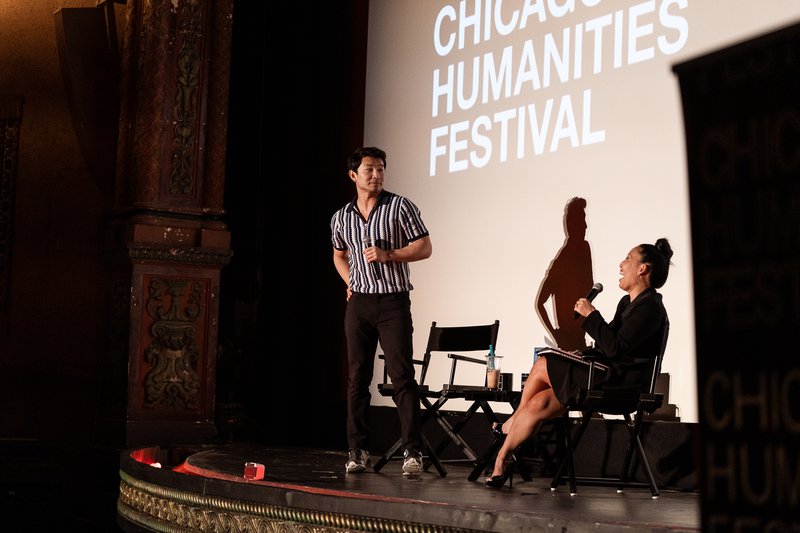
Simu Liu ( L ) and Joanne Molinaro ( R )
Simu Liu, We Were Dreamers: An Immigrant Superhero Origin Story
Joanne Molinaro, TheKoreanVegan.com
TikTok @thekoreanvegan
Recommended Listening
- Podcast
- March 19, 2024
Lin-Manuel Miranda Shares the Secrets to Making Great Art
- Podcast
- October 24, 2023
Halloween Special: Morticians, Witches, and Ghost Stories
- Podcast
- April 4, 2023
Bob Odenkirk with Tim Meadows on Finding Your Comedy Voice
Become a Member
Being a member of the Chicago Humanities Festival is especially meaningful during this unprecedented and challenging time. Your support keeps CHF alive as we adapt to our new digital format, and ensures our programming is free, accessible, and open to anyone online.
Make a Donation
Member and donor support drives 100% of our free digital programming. These inspiring and vital conversations are possible because of people like you. Thank you!