Selma Blair: MS, Writing, and Parmesan Cheese
S1E6: Selma Blair
Apple Podcasts • Spotify • Pandora • Overcast • Pocket Casts
Join actress Selma Blair (Legally Blonde, Cruel Intentions) and filmmaker Rachel Fleit (Bama Rush) for an inspiring and honest conversation about living with multiple sclerosis, crafting your story into a writing, and those funny and defining moments from childhood such as Blair’s “Parmesan Cheese Incident.”
Read the Transcript
SELMA BLAIR: I think everyone should do a documentary and write a book because because you realize some of your self-worth or some of your obstacles or challenges in the way you treat other people or the way you process things, or just keep reading books or read mine.
[Laughter]
[“We Got a Listen” bouncy and funky theme music plays]
ALISA ROSENTHAL: Hey all, what’s going on. You’re checking out Chicago Humanities Tapes right now, the audio arm of the live spring and fall festivals from Chicago Humanities. Today’s episode is just such a bottle of joy - it’s a conversation with the actress Selma Blair, who you might recognize as the movie darling of the late ‘90s and early 2000’s movie darling with performances in films such as Legally Blonde and a personal favorite of mine - Cruel Intentions. With just the most awesome energetic openness, she speaks of her experience of living with multiple sclerosis, and navigating life with her quintessential dark sense of humor. She chats with the filmmaker Rachel Fleit - whose documentaries include Introducing, Selma Blair and the new release Bama Rush available on Max, and she is also a proud advocate of people living with Alopecia. Recorded live at Chicago’s Field Museum in spring 2022, please enjoy Selma Blair with Rachel Fleit.
[Applause]
RACHEL FLEIT: This is so exciting. First of all, and thank you for having me and Selma here today. It's a lot to be back in Chicago, because for those of you who have seen our film, "Introducing Selma Blair," we filmed most of the film here, just, like, at Northwestern, as Selma was undergoing her stem cell transplant. So my first question today is: Selma, how does it feel to be back in Chicago and just can you tell us how you're feeling today in general?
SELMA BLAIR: Thank you, Rachel. I'm—I love being back here. I—this is all the scene of the crime—was all a very supportive place. And I must say I'm doing really well. I halted progression after the stem cell. It was, you know, a very—it was a particularly aggressive case that no other disease modifier—I couldn't tolerate. And, and so while I'm doing very well, I do have things I didn't take into account when I was going into it, which is fine because I am—I did what I set out to do. But I have, you know, real blocks with speech that I still wonder and try and figure out. They are intermittent like tics and Tourette's ish things. And my balance is off and I get tired and I'm really doing this as a disclaimer. If I whined around and know I'll come back and I'm fine, or I'm fine with someone saying "let's rein it in". Because I have, I have, I have some differences, but I'm really open about it. I assume a lot of people have stuff they're dealing with. Okay, enough about me. Go ahead.
RACHEL FLEIT: So one of the things that I've been thinking about is I, I spent over 50 hours interviewing Selma Blair and I never once prepared a list of questions. It was often just me and Selma and a cinematographer and like a sound person sort of lurking in the background. And so it's quite—it's quite an experience to be talking with her, with all of you here. But you're so friendly and so lovely.
SELMA BLAIR: We don't know that yet.
RACHEL FLEIT: No, they stood. They stood up.
SELMA BLAIR: I mean, what? Oh, right. You stood up. That is a huge effort. Thank you. Yes.
RACHEL FLEIT: I wanted to just first start, you know, with that sort of simple question of, first of all, writing is so painful. And like, I watched you endure so much physical and emotional pain. And so what inspired you to write this book? Like, why—how did this book come to be?
SELMA BLAIR: It's perfect that I'm sitting here with my beloved Rachel, who really was a huge start of the process of taking stock and meeting myself and my life with the documentary. And when I got stem cell, I was really in a much better place to want to drop things that didn't serve me. And I don't think I even knew what they were. You know, I just—it's all muddled in and you hold things and you don't realize things hurt, and oversensitivity or not. I mean, I was just really starting to get a balance. And I knew I wanted to write a book with some of the same stories I had heard or told myself. And it was an extension really, of the documentary. Like you said, truth is contagious, honesty is contagious. And there are rare times, you know, it's very rare, if you're honest, that it's going to be anything too horrible. I mean, if you go into something with a real honest connection, it made it easier and unburdened. And so things were uncovered. You always said, you know, like Anne Lamott, I think it was, you know, bird by bird. Thank you for giving me that book. It was brutal. I hated writing a book. I love a book. I want to be a writer. That's all I really ever wanted to be. It was so painful because I got out of practice since college and then I didn't know my process because I had just finished stem cell. So I was foggy and I couldn't use my hands in tandem. I can use a hand and I can use a hand but you put them together. [Gesture expressing pain.] I mean, that's real. And I'm not making fun of I get, you know, some spasticity. I didn't realize all this as we went to write, as I went to write the book. And so I wrote on a yellow legal pad. I veered; continue.
RACHEL FLEIT: Yeah, totally. I had to stop writing myself during the pandemic because I found it to be too painful. It was. It was too much. It's like you dredge up these memories. And I really think that, um—
SELMA BLAIR: Yes, the COVID of it made it painful. I had fantasies. I'd be with the editor, the writer. I didn't know a writing process for a real book, not just the ones I had written in my journals my whole life.
RACHEL FLEIT: Yeah.
SELMA BLAIR: So it was derailed by COVID, which is fine. So it was painful. You know, it's hard.
RACHEL FLEIT: So painful. And the thing that I—there's a—the memories that you dredge up when you're writing, you know, there's the memories of your childhood that I think are just always kind of playing in your head. And then there are these memories, I think, that are dredged up by the writing process. But there's a part of the book where you describe your feeling of shame when your sister, Lizzie, told your mother that you had eaten the spaghetti with the sauce and the cheese not yet mixed in. And that was like a real like, no, no, like she didn't stir the cheese, mom. She ate it without it being mixed in. And how much shame that evoked in you and—
SELMA BLAIR: Undid me. The Parmesan cheese incident undid me. I was a little girl.
RACHEL FLEIT: The Parmesan cheese incident undid you. And I was like, That was such a vivid memory. And I was wondering as I was reading, like, what are the things that are just super accessible and available to you? And what surprised you in terms of like the memories that you dredged up in this process in that you might want to share with us?
SELMA BLAIR: There was a Parmesan cheese incident that was hard to talk about. It was minor insults could be devastating to my sensitive and not really understanding human kind of mind. And so when my person would say I did something wrong at the age of five or six, or four, or whatever I was then, I thought I was dying. I thought that simple thing is this big. A No no is a no no can get. And I went away and hid and my sister now has since sent me a text apologizing for her. She was a year older, but it was like that already was my mindset that I was going to be punished, in trouble, did something wrong. It was in me. So I was already aware going into this book for the first time, wow, I might have been. I was really scared. I don't think I realized how afraid I was really just born. But I did—the things that make bigger headlines to people, those might have been easier, but those are headlines. Like I kind of processed a little bit, but the little—the minor slights that were so big and heartbreaking, they're kind of hard to undo why that hurts you so much. But I know there's other people that, whole parts of their lives might have been thwarted by a very simple trespass by someone else.
RACHEL FLEIT: The book is so vivid in its explanations of, like, your exploits in Hollywood and things like that. But that salacious stuff is not, in my mind, as interesting as the way you describe your family life and your the other sort of vulnerable parts of this book, which I wanted to talk about. But I wanted to know sort of in seeing the film and like seeing this sort of, my version of your story, like, was there a moment that you decided like, you know what, I can start to talk about these other things, right? There's other topics in the book that do not make it into the film. And so can you tell us a little bit about that experience and also just how it feels to have that out there now?
SELMA BLAIR: In this room, it feels safe to have it out there. In other rooms, not so much. And it is something that I see now as an older, wiser person than I once was, that you keep having to find your people that might, might be helped or you might be helped by their presence. And that has happened hugely. When I really knew I was done drinking after a public humiliation and I didn't know how I'd recover, but I knew I had to. There was no question I would be sober from drinking and never touch it and that I would be a mother and get my shit together better. And then it was hard when I quit drinking, but I still felt the same way that I had. I didn't know about the MS, you know? I didn't. But at least now I had people to talk about it and help clarify things. I am on track. Maybe more than I think I am. Guide me back. You're doing good. Okay, but where were we? Oh, safe rooms. But it is. I really did want to be a writer. This is a writer book for me. And the first one. And because what books did for me as someone that was a bit misunderstood, I was very popular in ways. But also people always talk behind my back way before I ever became an actress, I was always the oddball girl in school. And I was very destabilized by expecting people to be unkind. So you just listen to the people that are mature enough to deal with you. You know, when you're very overwhelmed, it was very hard for me to see the forest through the trees, blah, blah, blah. And now it's, you know, how to figure out how to connect with some people. So they don't feel like that because I was a good person and I want to be a great mom.
RACHEL FLEIT: Yeah. Thanks. You are a really great mom. There's so much in in that. And I also just think like something we talked about so much was how much you coming out with MS was an opportunity for you to be of service to the world. And it's a really beautiful and very, you know, I, I don't love the word brave because I feel like it's courageous, but I think it's necessary. You know, like you said, the power of storytelling.
SELMA BLAIR: Right. I think the power of storytelling, obviously, I read—I mean, if someone said, if you could rob anything, steal as much as you want, even since I was little. Excuse me. Even when I was little, it was a bookstore. You're never I mean, you're saved if you have a book, whether you're at the DMV or your heart is breaking, I mean, it is an instant companion. And if writing is great, then, oh, my God. The comfort that can be found. And I'm not putting myself in that necessarily, nor am I cutting myself down, but I'm saying it's been a bigger salve and savior. And I think when I did come out with the MS, which I didn't think of—I didn't know about MS, I just knew my body was really challenged. I didn't know if I would be a wheelchair user or lose speech or not swallow at that time. And none of that was horrible to me. It was just, I don't know how to do these things, you know, I don't know how to get around. And I'm doing really well. I'm really, really talking. But I'm saying there's people that I have found. You've found—you find your touchstones to go to the next spot. And I do hope that this book somehow is something for the Little Selmas out there that just thought they were way too past being helped because of shame. I had a lot of shame.
RACHEL FLEIT: It absolutely is going to help people. And I think that like, just being—one of the things that we talk a lot about is the truth. You know, like Selma set the bar very high in terms of her vulnerability and the generosity that she gave me and our audience members when we made this film. And so I just feel very excited to be in Chicago as an Oprah Winfrey fan and get to say this, which is, Can we see the clip?
SELMA BLAIR: [Recording plays] "Like say, I say it so much now. It's annoying. It's my motto, but we have a long time to be dead. And now I just want to help other people feel better. And if I represent in some way people with an illness or like speech problem or movement disorder, then, you know, more you take even without my comfort dog. [Selma's speech slows] Now, the fatigue happens. And then the—and then—that's—then my [tongue clicks]. [Selma takes a breath] Well this is what happ—this is what happens. That I don't want people to see. That once I get really uncomfortable, but I'm not uncomfortable with you or anything. It's the MS. That's what people don't understand. And I better if I'm brought in. [Selma takes a breath] [tongue clicking] And then the [Selma chuckles breathlessly] I gotta laugh. Look at how I'm dressed. And I'm taking away my stimulus. I shut my eyes. Cause there's only so much. And it happens that fast. [Tongue click] [Pause while soft piano music plays from clip] And I think: everything in me has some shame right now. And in the beginning when I got MS it was like this all the time. [Selma trying to get a word out] [Selma lets out a defeated groan] Oh, I don't have anything more.”
[Applause]
RACHEL FLEIT: I just wanted to take a moment and just reflect back to you about what's happening here. And it's just it really hit me. It's very emotional to watch this and to know what we have been through together and to now have read "Mean Baby" and to know your feelings of unworthiness and that you didn't belong, that you felt unwanted. And I just want to, you know, hold the space, as we say, for the fact that all of these people came out today to see you in person, that there are millions of people who, you know, follow your various platforms and went to see your movie. And now millions of people are going to read your book and that, um—
SELMA BLAIR: Thank you. It truly is, though. I mean, this isn't my therapy, although it is in part. I have a therapist, don't worry—I also cry. I cry. I have pseudobulbar affect. You all probably do, too. I realize we all, I think, have had a little frontal brain damage that causes some some impossible crying or laughing. But I take my medicine. It would have been worse. But I think, one, I cried because I'm still kind of like that. And I think I thought it would be all gone. And that was it. That was a complicated feeling. After stem cell thinking, I'm kind of cured, but what's there is there, and it is all okay. But I know I get frustrated and it takes an effort. It just takes an effort, you know, for all of us that have something that's a burden. But it is for everyone. It is. I so appreciate support because I think people that lifelong have felt that they were excess baggage, that they shouldn't be there, that they that they didn't help other people enough. You know, my my grief at myself not helping people in my life is worse than my grief for myself.
RACHEL FLEIT: You're helping so many people now.
SELMA BLAIR: It's my hope because we are connected and we need each other. And I'm sorry that this is my tone of voice. I don't mean to make it into this emotional thing; pretend there are not this. But I realize more and more as I get older when we all go through things. I mean, I just couldn't do it as a kid because I didn't have a support system, because I didn't know how to find it and I isolated. And I know that's an issue for a lot of people. This is an emotional time, of course, because I'm kind of meeting it all and and I just—and I'm still okay. I'm laughing, I'm laughing, and I thank you. My life is all wrapped up in that and how to not be sorry and how to be stronger and how to have the conversations. So this process in front of you all so sorry. Heehee.
RACHEL FLEIT: Well, I think you you know, there's so much to say I guess the thing that I'm thinking about right now that I want to just have you touch upon, too. Well, we'll start with one thing is your mother passed away while we were filming this movie, and you were really—I watched you experience a lot of grief when we were going out in the world with the film and seeing sort of my small interpretation of your relationship with her and now reading the book, it is just I mean, it's stunning the way you just—there's many, many, many pages about dear beloved Molly. There's so much there. And it's really exciting for me as someone who knows you so well. And also to have only scratched the surface about your relationship with your mother, to get to know her so well in this book, which is amazing. And I mean, just to your sense of humor, I'm not going to go on. But Selma asks her mother what's for dinner? And her mother said, Poison. And I just like, I can't get it out of my head. It's so you. And so I wanted to know if you could tell us sort of how you, in writing this book, were able to either experience some of your grieving, to experience how you were so much like your mom?
SELMA BLAIR: I am so much like her. My mother, oh, she was fabulous and did so many things. She was—her sense of humor is mine. And I see she was very critical and could be unkind. Absolutely. But could be loyal and wonderful and all these things. But I was, as she said, like, mom, why aren't there pictures of you? And she'll say, oh, you were totally abused and neglected. You were the fourth that was a lawyer. I don't know what to do. You're my favorite now. Does that help? Sorry. You still pay attention. So there was like, love and communication. But, you know, it was just—it was very real. And I was a kid, and now I find I probably do this to my son, so I am already buying him pens and paper so he can write his memoir of his critical mother. And I said, he said, you are critical. And I said, I'm critical because you're acting like an idiot, you know, And that's my mother. I've done it. I'm an asshole. His book will be "Mean Mommy." And I love him more than anything, and he will embarrass me.
RACHEL FLEIT: You said in the book you were born terrified. And I keep thinking about that because I think of you now after reading this and after spending at least 50 plus hours—I think it was more than 50 hours. But those were the ones that were captured on film. You are like—I see you now as you are deeply sensitive and at the same time so strong, such a cancer, the crab, you know, the heart outside and the soft inside. But June 23rd is her birthday. You should send wishes.
SELMA BLAIR: Oh, for sure. Send presents.
RACHEL FLEIT: But um so with this in the book, you talk so much about the darkness. Right? And but you also talk about the joy. And in writing as this, like, therapeutic modality, we learn so much about ourselves. And I want to know just in this final moment before we turn it over to the AUDIENCE MEMBER, like what have you learned from like the film coming out, from this book about to be coming out, from the adoration? Like, where is your self compassion? Do you still feel afraid? Tell us, Selma.
SELMA BLAIR: I do not feel afraid all the time. I don't. It's a miracle. It's really a miracle. I mean, I was in shock, I think my whole life. Just being born! Just in shock. The fear was very real. Just being born, no one's fault. And I think that is why I have no choice to be as honest, to say no or be an oversharer or whatever. I have to know the right rooms. But, you know, because that's the only way I found help. There are great people and there are great people who've gone through it, and there are great writers and writers and directors and creative people that understand a process sometimes even if it's not their own, that someone, however they deal with things, you know, if they're really trying to find a process to heal. You know, they're welcoming and encouraging. And that is very new to me. And I—and I need it as a person, as so many do, I imagine. I don't feel I'm special at all. I don't feel—I'm just another person that's kind of getting their balance a bit more and letting go of a lot of things that for good or not, we're very happy for, for any reason or not, we're just made how we are.
RACHEL FLEIT: When we were filming, Selma would often talk for a long time and she would say to me, "Am I boring you?" And I find you to be the least boring person I've ever met in my entire life. So I guess the one thing I just want to end with is that you often talk in the book about feeling misunderstood, and I just really feel after reading it, I think it's so clear who you are and I understand you and I think you know that. But I think so many people are going to have this gift of getting to understand who you are and to also see themselves in you. And you are a beautiful gift to us all.
SELMA BLAIR: So embarrassing. But lovely. But I love you. Thank you. No, I think everyone should do a documentary and write a book because because you realize some of your self-worth or some of your obstacles or challenges in the way you treat other people or the way you process things, or just keep reading books or read mine. But no, I mean, I'm not a guru. I'm a person going through it. But like Carrie Fisher, like friends of mine that really put things on the table and and change things for whole generations of ways of seeing things without such a stigma as very huge to me. And, and, and this there are things I realized of my own self worth that we all should have without being a raging narcissist thinking you're the center of the world and so important. Yes, I have self-worth and yes, I hope I have self-worth, you know, in regards to people and learning to write.
RACHEL FLEIT: Well, thank thank you for talking with me today. And I think there probably are questions. I'm so excited to hear.
AUDIENCE MEMBER 1: Hi, Selma. My question for you. Hi, sweetie. Oh.
SELMA BLAIR: Yes. I love you.
AUDIENCE MEMBER 1: I'm gonna hug you so hard after.
SELMA BLAIR: Yay! I hope you don't have COVID.
AUDIENCE MEMBER 1: My question for you is: what was your favorite part about writing the book? I know a lot of topics in it aren't easy, or they're not, you know, the most fun and exciting. But what was fun for you to write?
SELMA BLAIR: Mm hmm. I mean, there are those moments of those hours where things come easily and you're sitting there, and before you know it, things are clear and you have 20 pages down that really connect with you and say, Wow, I really I really feel this is a truth and it's easy to write. And those moments were kind of far between for me. But they happened and I may, you know, but when those happened, what a relief. And I hadn't been in the practice in a long time. I wrote in high school, I wrote in college, I've kept journals and would refer to there was too much information all over the place, like, you know, is hard to contain. But when I did have those moments—and then talking to you in the Hamptons —Keah Brown wrote a book, it's wonderful. Um. Heeheehee. "Disabled and Cute."
AUDIENCE MEMBER 1: Love you!
SELMA BLAIR: Love you. So cute. But it was like really taking back your narrative of the things that were said about you and then realizing, when Keah wrote a book and has some physical challenges. And I was like, Did you have that? And just as I've grown into this body, a great part of this book was I actually had trouble writing it because I didn't talk about MS that much in this book or my issues with it. But it was actually there every day as I was trying to write because I couldn't use a computer. I still can't. I just go blind and dizzy. It's like the focus. Maybe one day I will, obviously, but I couldn't. And I would longhand write on a yellow legal pad my notes section and send it to Troy or my book agent or, you know, send it to the people that could be like, okay, I got it because I would like just burn something by accident because I'm writing something—like I've thrown four pairs of glasses away because they were in a hand, or I meant to throw something else at, you know, just that supreme aging, MS, whatever, women, menopause, chemo, it's a lot! So that's happening in the book. So that was also the worst thing but the favorite because the people that supported me and took that time in COVID to type for me. My book agent typed my book. That was huge support that I would have never expected, but I had to ask like, what will I do? And and the road rose up to meet me. And those times when I cried and was like, I'm not enough. I am an idiot. I can't write this. I'm putting in the notes—I need this—I'm, I need organization. So I need this—I thought I needed it to be perfect. And it was very far from perfect. And—and it worked. They did it with me. I wrote it, but they made sure that the things that it needed could happen. It was a revelation. Just like when I see people—Jamie-Lynn Sigler with MS on a set and she has to run and so they put her in a process trailer. She's an actress. She can act like she can run. And those things are—the more they open up people's minds to people that have challenges that it's harder to get around in the world we're used to, the easier it is to practice it for other people for sure. Sorry.
AUDIENCE MEMBER 2: Hi, my name is Lindsay. It's—super, super excited to listen to you. I feel, like, beyond blessed. So I guess my question is: I had trauma as a child, adolescent, adult. I was diagnosed with MS May 30th, 2017. So when you came out and started talking about it, it was amazing. So when I was diagnosed, it scared the hell out of me. I now have a 15 month old son. Obviously there are days I'm extremely pissed off and I'm not happy. How do you like, continue to stay strong around your son and not let him—?
SELMA BLAIR: Oh, I made some mistakes. I made some mistakes. And thank God he can take it. And it's okay. You know, you're obviously a person with huge love and kindness. You can tell, and going through something. And I think you really—your child just really wants your love. You know, I did have a horrible, horrible time of wanting to check out with that big drunk that I did in front of my child when I relapsed. He doesn't remember it. But the fact that it happened and I did it and it is memorable scarred me. I thought, I did it. I did the worst thing you can do. My child saw me out of control. You know, and it's not. I was honest and I acknowledged that he saw this and it's all—there's there's a million trespasses we make on people. But your child's is not your same situation. Go gentle. Go gentle on yourself.
AUDIENCE MEMBER 3: Hi, Selma. My name is Cecelia from Chicago. I was diagnosed with MS in 2003 when I was 20, and I just went through stem cell in 2018. And from just a lot of what I've learned and what I've learned from everything you've been sharing is you—your journey, you seem to get a little bit more connected with yourself. And that's what I feel like I've experienced. When I had that transplant, because I've been through like seven different meds, transplant, diet. What's healed me is connecting to me. And that message, I think, is the most powerful message that can be heard.
SELMA BLAIR: And connections are so great. We have an incredible opportunity to buy some real estate of time with him stopping this progression. And it really did for me. I don't have any new lesions or anything. It did take longer than he said for it to go down. Like, you know, I still after stem cells, still had active, um, flare, but it was going down. My patience level was very low so I didn't understand. I thought it would be gone, but forgot that this body has been building a long time: its stresses, its secrets, its traumas, its hurts, its falls. And so there'd be times I would call Dr. Burke after, like, "I'm panicking," he was like, "drink more water, drink more water, like, get the chemo out. There's a lot of things happening." But we did. And it is interesting. And Troy had said to me, it's so interesting: when you do HSCT for autoimmune, lupus, um, that tightness one—project, like, not perjuria. Oh well—what—I'm sorry. Anyhow connective tissue disorders, lupus, MS, autoimmune stuff that can get really, really hard to function—that you use it from what's inside us: autologous bone marrow transplant. And it's just a cool writerly thing to realize like, it is in us, it's just deep hidden by the stuff that we haven't been affected by, in a way, that's how I thought of it. Not saying you have to—think of it my way! No, but it was, it was interesting: the stem cell, like, everything came from my own bone marrow, and healed me and that it was deep inside the places that are just our human selves, that haven't been scared or hurt or whatever it is. I don't know. But I'm so glad that you are feeling you know, you're feeling this connection, too, because I really don't—I think I disassociated almost my entire life.
AUDIENCE MEMBER 3: Same. Same. You mentioned the shame, like when you have then an illness on top of all the stuff you have inside? That shame—like even, I just went on a date last night and I actually took this with me for the first time—
SELMA BLAIR: Yay! You got your stick! And how did your date respond to that?
AUDIENCE MEMBER 3: He was totally nice, totally cool. The whole thing was that like, I'm okay, I'm comfortable in myself.
SELMA BLAIR: That's all it is with people I find. Yeah, not all, but you know, it's a big thing. Or things they're just not used to seeing, or voice differences that happen in me. You know, they'll be people that judge it. Like, is she faking? Is she making fun of me? Because it comes in and out. There's a lot of things you can't control what people think. But I do find when I'm like, excuse me, it will keep happening, probably. But, you know, and then it's calmer. People just want to be comfortable. People just want to be comfortable with the people they're friends with. And a lot of times there's a lot of boundaries they don't understand. So, yes, the more we're comfortable with ourselves, the more it's comfortable all around, I do feel.
AUDIENCE MEMBER 3: Thank you for being fierce wearing your heels. I love it.
SELMA BLAIR: This was stupid. Stupid, stupid. But I had fun. I fall. But guess what: I was like, to the people, I was like, I lose my balance and to the—you know, this is is a real service dog, despite what I've let him do, I If anyone could ruin a service dog, it's me. It's so messed up. Twice here, I've heard people go, "that's a service dog?" And I'm like, uh huh? Because he'll like, go to, like, say hi to people which is such a no. We're oversharers, me and Scout. But yeah, I fell on him today and it was so cushy, and I did say to the trainer, like, why is he so big? He's tripping me. She's like, "it's so you can fall on him and it's fine." I was like, check. But then falling in heels and a skirt, I was like, Oh, that's a whole different pair. Like on a dog, like akimbo, like legs up. But it is—make it—the ground is very close when you have a dog this big.
RACHEL FLEIT: I'm sad to say that that's all the time we have. But, um, Mean Baby is out May 17th. Tell your friends it is the best read and I can't wait for you all to enjoy it. Thank you, Selma Blair.
[Applause]
ALISA ROSENTHAL: That was Selma Blair and Rachel Fleit at the Chicago Humanities Spring Festival in 2022. I’ve linked to her book and film as well as some other resources in the show notes, available at chicagohumanities.org, where you’ll also find a link to the full transcript and YouTube video with real time captioning.
For more programs just like this one, check out our website for our calendar and sign up for our email list to be the first to know when your favorite speaker is coming to town. As our first podcast season is winding down, be sure to check out some of my other favorite episodes this year, including the actress Jessica Lange on picking up a new pursuit in photography and the chef Kwame Onwuachi on the tastiest sounding recipes from West Africa and the American South.
Chicago Humanities creates experiences through culture, creativity, and connection. Chicago Humanities Tapes is produced and hosted by me, Alisa Rosenthal, with help from the great team over at Chicago Humanities. Make sure to rate, share, and subscribe, available wherever you stream your podcasts or direct from chicagohumanities.org. We’ll be back in two weeks with another brand new episode for you. But in the meantime, stay human.
[Theme music fades out]
SHOW NOTES:
Watch the full conversation here.
CW: Language, references to self-harm and sexual assault, alcoholism, and a very good dog on stage.
If you or someone you know is struggling or in crisis, help is available.
Call or text 988 or chat 988 lifeline.org.
![Alt-text: Selma Blair fiercely walks a hallway holding her big blond dog’s leash, saying hi to a line of adoring masked fans.]](https://assets.chicagohumanities.org/uploads/images/8_Blair_Kindler.width-800.jpg)
Selma Blair ( L ) and her security dog work the book signing and photo op line after her event at the Chicago Humanities Spring Festival at the Field Museum in 2022.
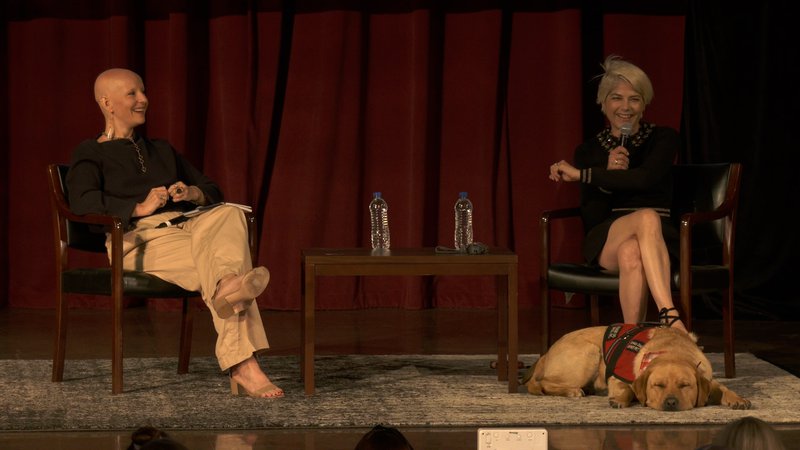
Rachel Fleit ( L ), Selma Blair ( R ), and her security dog on stage at the Chicago Humanities Spring Festival at the Field Museum in 2022.
Selma Blair, Mean Baby: A Memoir of Growing Up
Watch Introducing, Selma Blair
Keah Brown, The Pretty One: On Life, Pop Culture, Disability, and Other Reasons to Fall in Love with Me
Recommended Listening
- Podcast
- May 16, 2023
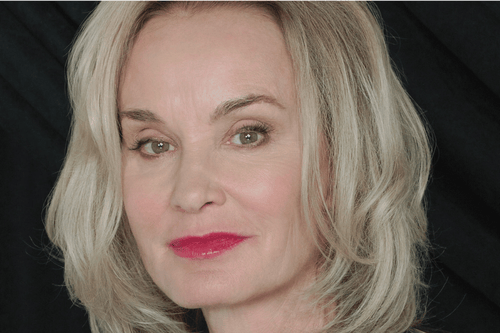
Jessica Lange Captures Truth in Photos
- Podcast
- February 20, 2024
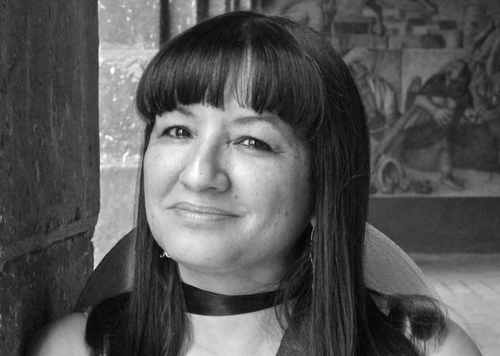
Throwing Poems into Lake Michigan with Sandra Cisneros
- Podcast
- October 24, 2023
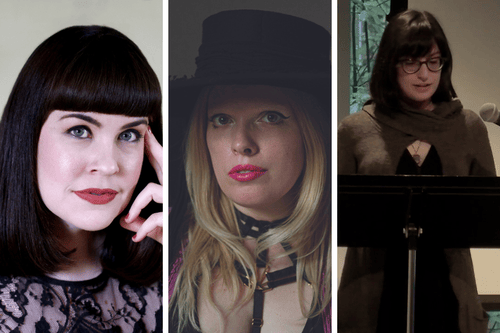
Halloween Special: Morticians, Witches, and Ghost Stories
Become a Member
Being a member of the Chicago Humanities Festival is especially meaningful during this unprecedented and challenging time. Your support keeps CHF alive as we adapt to our new digital format, and ensures our programming is free, accessible, and open to anyone online.
Make a Donation
Member and donor support drives 100% of our free digital programming. These inspiring and vital conversations are possible because of people like you. Thank you!