Playlist: What does data help us know, and what does it conceal?
Rapid technological change in recent decades has created a new kind of data renaissance. We now live in a world where mountains of data are collected, tracked, stored, and shared–often without our knowing it–for commercial gain, research, journalism, policymaking, artistic purposes, and beyond. Some believe we’re experiencing a new “techno-utopia,” marked by the democratization of knowledge, while others fear a dystopian future triggered by data’s misuse by corporations, government and legal institutions, and other machines of power. As with any source of power, data must be recognized as a double-edged sword. What does data render visible and invisible? What story does data tell and is the narrative biased? What, in essence, is data? How can data help deepen our understanding of the world, and in what ways is it inadequate?
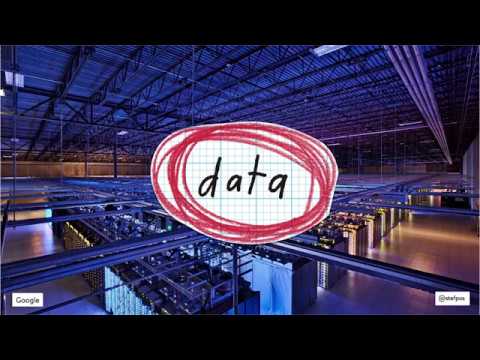
“Data is the starting point for conversation.” - Stefanie Posavec
Designer Stefanie Posavec (Graphic! Festival 2018) defines data as “raw material for creative projects,” that, when condensed into visual representations, makes visible the “hidden structure” of the whole.
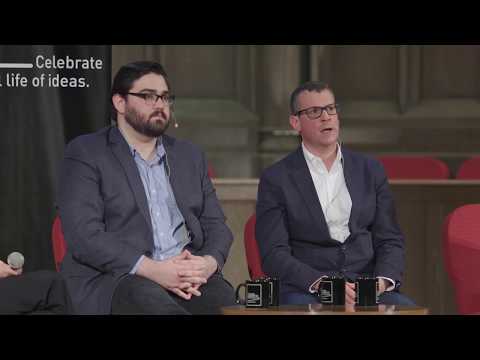
While Posavec sees data as an “in-between” medium (constantly evolving), new media artist and researcher Mimi Onuoha (Graphic! Festival 2018) explains how data often categorizes as “illegible” people and places who identify as “in-between,” thus revealing the power structures of our “machine driven world.”
“In a moment like now, where we have computers everywhere...what is the powerful idea that is packaged within them? What is the thing we prioritize? And the answer, I would say, is data.” - Mimi Onuoha
Like Onuoha, Jonathon Berlin, Data and Graphic Editor at the Chicago Tribune (Graphic! Festival 2018), recognizes the importance of seeing oneself in data, noting that it is the job of modern journalists to transform data as a “plain old number” into a data visualization with “humanity and context.”
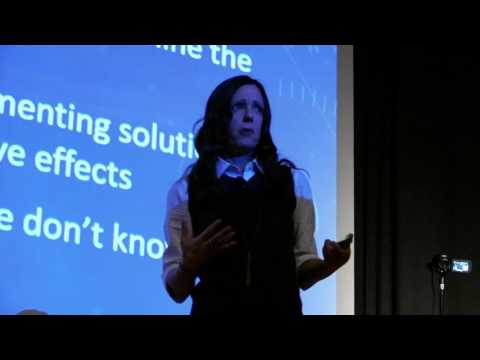
Concerned by the “epidemic of impatience,” public policy analyst Dana Weiner (Belief Festival 2017) offers data as the solution to reactionary policies that disregard trends in favor of statistical outliers. Still, Weiner is hopeful for the future of data in the “age of immediacy:”
“I kinda think that data is the answer to everything.” - Dana Weiner
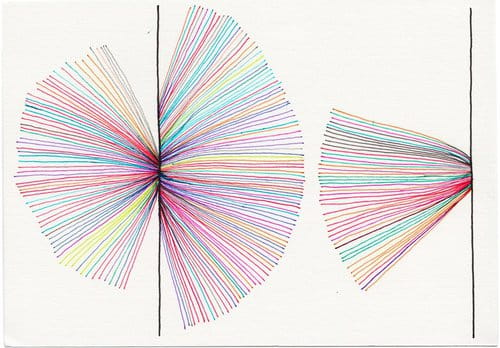
Header illustration by Stefanie Posavec
Become a Member
Being a member of the Chicago Humanities Festival is especially meaningful during this unprecedented and challenging time. Your support keeps CHF alive as we adapt to our new digital format, and ensures our programming is free, accessible, and open to anyone online.
Make a Donation
Member and donor support drives 100% of our free digital programming. These inspiring and vital conversations are possible because of people like you. Thank you!