Playlist: Natalie Moore at CHF
“[Journalists are here to] afflict the comfortable, comfort the afflicted, be a voice for the voiceless, raise hell, [and] be a watchdog.” —Natalie Moore
Natalie Moore is a reporter on race, class, and communities for WBEZ Chicago and author of The South Side: A Portrait of Chicago and American Segregation. As a longtime festival friend, Moore has appeared on CHF stages many times as a presenter, interviewer, and moderator. We’re revisiting some of Moore’s CHF programs—from her conversation with Eve Ewing, Nikole Hannah Jones, and Michelle Duster on the legacy of Chicago reporter and civil rights icon Ida B. Wells, to her interviews with Ta-Nehisi Coates.
Moore sits down with fashionista, pop culture expert, and academic Tanisha C. Ford to discuss the power of fashion.
Natalie Moore: "Fashion can be written off as frivolous, but...clothes are never just garments...What has the power of fashion been for you?"
Tanisha Ford: For Black girls and for non-binary femmes, gender-nonconforming folks, fashion has never been frivolous for us...Fashion is definitely a part of our politics. It’s the way we resist racialized and gender stereotyping, it’s the way we push back against a society that sees our bodies as always already criminal...There is power in this act of getting dressed, which we all do everyday…[Fashion is] a way to have complex conversations about race, gender, class, and sexuality. Our bodies are billboards where we communicate who we are to the world.
Moore moderates a panel on the legacy of journalist and civil rights activist Ida B. Wells with Wells’s great-granddaughter, the author Michelle Duster; poet and sociologist Eve Ewing; and journalist Nikole Hannah-Jones.
Natalie Moore: "There’s are so many threads of [Ida B. Wells’s] life to talk about, but let’s talk about her as this Black feminist icon."
Eve Ewing: It’s frustrating to think about the fact that one of the reasons why this moment of [Ida B. Wells's] legacy is bubbling back up is because she was actually intentionally erased from the narrative by virtue of being a Black woman who insisted on both of those identities...It’s really important for us to uplift her existence at that intersection...and to make sure that as we look around in our contemporary moment that we don’t allow other people to be erased in the same way.
Nicole Hannah-Jones: Black women are constantly erased...We always get this question, “Why do you think people don’t know about [Ida B. Wells]?” It’s because she is a Black woman...You still see Black women struggling to be heard...When Black women are advocating, they’re advocating for everyone. We are the perfectors of this democracy and yet we never get credit for that work.
Moore interviews Ta-Nehisi Coates about Coates’s debut novel The Water Dancer.
Natalie Moore: "Two frequent criticisms of you, that I don’t necessarily think are fair, are that you exclude Black women from your work and that you’re hopelessly hopeless. Did you think about that when you were writing [The Water Dancer]?"
Ta-Nehisi Coates: I thought about the first and not the second. I don’t really care about the second; I care a lot more about the first. If you’re a public figure and you get criticism for something, there’s a deep temptation to immediately attack the people that are criticizing you. And one of the hardest things to do, especially if you feel like it’s unfair, is to take a second…Take a moment and think about, even amidst what you feel to be unfair, is there any sort of lesson for you to take from it?...You hope you get it right, and you don’t hope you get it right just so that people won’t criticize you. You hope you get it right for yourself. You hope that you feel a different way about it...I could contrast that with the hope/hopeless thing…That’s people that need to go to church and are expecting church out of a book...or therapy out of a book…I’m doing something else...This is not uplift[ing].
Natalie Moore: This book feels different than your journalism when you’re looking at, for lack of a better word, hope. It has a different emotional feeling than, “Yeah, white supremacy ain’t going nowhere, folks.”
Moore and Coates discuss his book Between the World and Me.
Natalie Moore: "Let’s talk a little bit about Chicago. You write about it extensively in 'The Case for Reparations' and Chicago is a character in Between the World and Me."
Ta-Nehisi Coates: People think of Harlem as the capital of Black America, but it really is Chicago...When I went to write about housing [in Chicago for “The Case for Reparations”], finding out what happened was not difficult at all. It was so easy to find out what happened here that it made you wonder why people weren’t doing anything about it. It wasn’t hidden...It was right there, the history of redlining in this city, how the Projects came to be...When you see it [so clearly] you begin to wonder why there is such a debate about racism in America. It’s right there...it’s in the history books, you can actually see what happened...There are people very much alive, a whole generation of people here in Chicago right now that deserve reparations and they’re alive, you don’t have to go back to slavery...The policy is right now.
Moore and Juan Salgado, founder and CEO of Instituto del Progreso Latino, talk about Chicago’s south and west side communities.
Natalie Moore: Until we address segregation we are going to continue to be a city of inequities...There are so many people in communities, folks all over the south side and all over the city in general who are doing the work...Yes, it can seem intractable and no, this is not going to go away in a generation, but there’s a lot of low hanging fruit that’s out there. We don’t talk about segregation enough as a city or as a region.
Moore, Northeastern professor Lance Williams, and a youth organizer from Project Orange Tree explore the question: How violent is Chicago?
Natalie Moore: There is humanity in all of these [Chicago] neighborhoods...It’s worth reminding people, when you are only getting these sound bites, that these are people who are going to work, who want things for their children...Violence is an element of some of these neighborhoods...We’re often spoon fed that “no one is doing anything in these neighborhoods,”...but there are lots of people doing work and that story doesn’t get told...There’s breadth...in these neighborhoods and a lot of economic diversity. Everything isn’t hopeless or doom and gloom. Unfortunately, that’s really how the south side at large is presented to the masses.
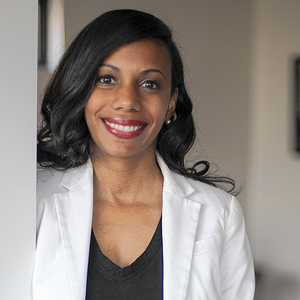
Natalie Moore is the author of The South Side: A Portrait of Chicago and American Segregation. She is the South Side bureau reporter for WBEZ. Before joining WBEZ, she covered Detroit City Council for Detroit News. She worked as an education reporter for the St. Paul Pioneer Press and a reporter for the Associated Press in Jerusalem.
Header image credit: Ben Gonzales
Become a Member
Being a member of the Chicago Humanities Festival is especially meaningful during this unprecedented and challenging time. Your support keeps CHF alive as we adapt to our new digital format, and ensures our programming is free, accessible, and open to anyone online.
Make a Donation
Member and donor support drives 100% of our free digital programming. These inspiring and vital conversations are possible because of people like you. Thank you!