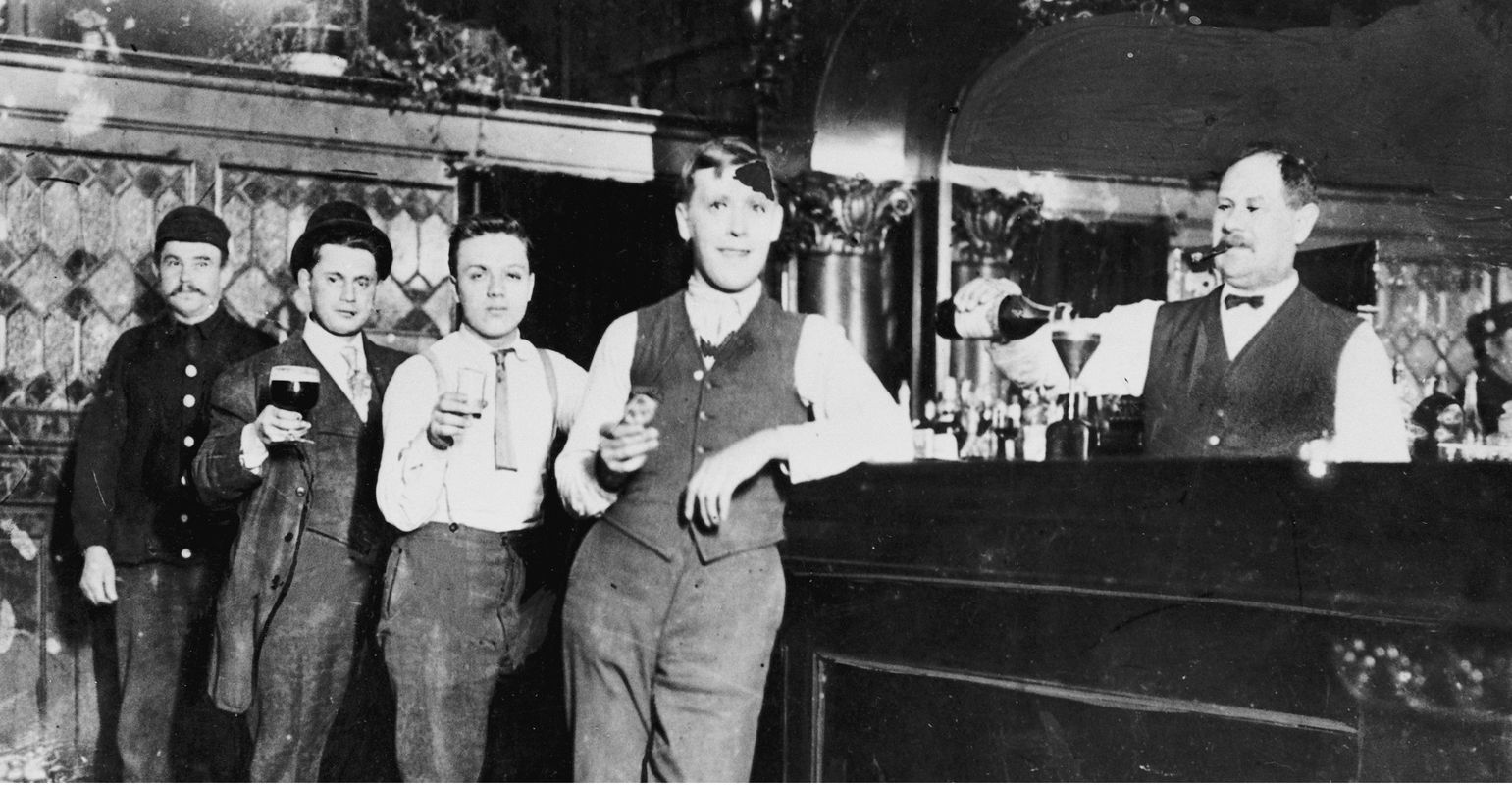
We spoke with Chicago Brewseum founder Liz Garibay in preparation for her conversation with Theresa McCulla and Alison Cuddy about the surprising role everyone’s favorite malt beverage has played in the history of the Windy City.
CHF: The history of Chicago, the "City of the Big Shoulders," that’s the history of the “Hog Butcher for the World, Tool Maker, Stacker of Wheat” (Carl Sandburg) — and of Brewers of Beer, you argue. Can you explain?
Liz Garibay: The beer industry was essential to Chicago’s economy and growth. It provided jobs to a myriad of immigrants– in both the breweries that made the beverage and the taverns that served it. The industry also fueled innovation in other sectors and pushed scientists, engineers, and inventors to new limits.
The German immigrant to Chicago John Ewald Siebel, for example, founded his Zymotechnic Institute here in 1872. In these laboratories, Siebel helped pioneer new methods of lager brewing that many brewers still use. In 1901, he founded a brewing school that bears his name to this day.
The beer industry also helped spur developments in refrigeration. Previously, the tons of ice required for brewing were cut from Lake Michigan and stored in insulated warehouses. But when mechanical refrigeration revolutionized the industry, Chicago was at the forefront. Developed in Germany, the first Linde ice machine in the United States was installed at Wacker & Birk Brewing and Malting Company in Chicago around 1881. Manufacturers like Kroeschell Brothers, Boyle Ice Machine Company, and others sprang up to advance brewing technology and fill demand. Refrigerated railcars first appeared in the meatpacking industry, but brewers quickly adapted them for their own use. Both inventions changed the way beer was brewed and how it was distributed.
There were also developments in other sectors in which beer played a crucial role. The Western Brewer, a popular brewing trade journal, began publishing in 1876 and made the city a hub for historical, technological, business, and political news about beer. I can tell you that this particular journal, which ran until 1920, is an incredible resource for us today.
The industry also left a notable mark on architecture: During the late 19th century, Chicago was a beer force and breweries were expanding and becoming more abundant. Chicago-based architects designed not only local breweries, but also designed half the breweries in the country.
“The beer industry was essential to Chicago’s economy and growth. It provided jobs to a myriad of immigrants– in both the breweries that made the beverage and the taverns that served it.”
CHF: Is there a particular style of beer that is key in Chicago’s history?
Liz Garibay: Lager. Prior to the 1840s, Americans were drinking British style beers - ales, porters and stouts. It was our heritage after all. We also didn’t have the proper yeast to make lagers. That yeast gets introduced into the United States in the 1840s and eventually makes its way to Chicago later in the decade. In 1847, John Huck opens the very first lager brewery. By the 1850s, lager is king. And this was, of course, related to our German heritage, although Germans were making ales, porters, and stouts in the city mostly because that’s what the market demanded.
CHF: To raise awareness of this history, you founded the Chicago Brewseum, currently a special exhibition at the Field Museum. What can visitors expect?
Liz Garibay: The Chicago Brewseum is actually not just an exhibition but a 501c3 non-profit organization. Our goal is to one day be a brick and mortar museum dedicated to telling the global story of beer. Our exhibition at the Field Museum is called Brewing Up Chicago: How Beer Transformed a City and focuses on how the history of the city and the history of beer in the city are intertwined and how immigrants were vilified by anti-immigrant politicians and the leaders of the temperance movement. Their battle was tough but they persevered and helped build a great American city.
CHF: How did the visitors respond so far?
Liz Garibay: We’ve had fantastic attendance and visitors seem to come to understand that beer played such a significant role in various aspects of our city’s history. It’s the exact aha moment we were looking for.
CHF: Have beer aficionados in other cities shown interest in starting their own Brewseums?
Liz Garibay: I’ve heard of a couple of other beer museums popping up, but my understanding is that they are all for-profit entities and headed by exactly that–beer aficionados and business folks. Our team is made up of beer historians, academics, authors, museum professionals, and pioneers in beer making. Our main goal is to be a part of the local, regional, and national cultural landscape which is why you see so many events or experiences that are rooted in cultural collaboration, like the Field Museum and the upcoming partnership with the Smithsonian’s National Museum of American History.
CHF: What’s next for the Chicago Brewseum, once the special exhibition at the Field Museum closes?
Liz Garibay: I’m happy to say that the exhibition has been extended. But we have so much going on between now and then. We have an ongoing project called the Beer History + Culture Project that allows us to co-create and co-host programs and events with cultural institutions around the city and the nation. We’re hosting a weekend of events in Seattle in September 2019 and are collaborating with the world-renowned Pilchuck Glass School for a month-long exhibition on historic beer vessels. In October 2019, we’re hosting the first ever Beer History + Culture Summit in partnership with the Smithsonian’s National Museum of American History. This, too, involves an array of partners, including the Chicago Humanities Festival. 2020 is looking to be just as exciting. We’ll be in other cities hosting similar events and then, hopefully, there will be an announcement about our future location!
It’s crazy to think that I started working on this in 2013. We became official in 2014, went public in 2016, opened an exhibition in 2018, and here we are hosting important conversations and events with an array of wonderful partners. It’s been a fast and furious journey, and I find myself in awe at how far we’ve come in just five short years.

You can also learn more from Liz about Chicago's beer history by checking out History on Tap!
HEADER PHOTO CREDIT: Chicago History Museum, ICHi-01691
Watch Liz Garbay and Theresa McCulla's powerful program.
Become a Member
Being a member of the Chicago Humanities Festival is especially meaningful during this unprecedented and challenging time. Your support keeps CHF alive as we adapt to our new digital format, and ensures our programming is free, accessible, and open to anyone online.
Make a Donation
Member and donor support drives 100% of our free digital programming. These inspiring and vital conversations are possible because of people like you. Thank you!