Hitler’s Hidden Soldiers in America: Q+A with Journalist Debbie Cenziper
Former members of a World War II killing force lived undetected in the United States for decades. The Pulitzer Prize-winning investigative journalist Debbie Cenziper documents the search for these war criminals in her book Citizen 865. We spoke with her about this stunning case and the state of investigative journalism today.
“In a country that had sacrificed so much to defeat Hitler and save the Jews of Europe, how was it possible that Hitler’s helpers were living in America’s cities and suburbs?”
CHF: After World War II, many Nazi war criminals famously fled to South America to hide from justice. In your new book Citizen 865: The Hunt for Hitler’s Hidden Soldiers in America, you document the search for several of them who found their way to the United States. How was this possible?
Debbie Cenziper: That’s exactly the question that led to this book.
First, some background. Citizen 865 is a story about a little-known killing force in occupied Poland that helped the Nazi regime murder 1.7 million Polish Jews in fewer than 20 months. In the tiny Polish village of Trawniki, the SS set up a school for mass murder and then recruited and armed thousands of foot soldiers who would eventually go on to do the dirtiest jobs in the Holocaust.
It’s important to know that these men were not members of the Nazi Party. Many were Soviet POWs. There were Ukrainians, Latvians, Lithuanians, and Poles. They emigrated to the United States by lying about their activities and whereabouts during the war. Many said they were fleeing Communism.
Since American investigators had little information about the training camp at Trawniki, few questions were asked. More than a dozen Trawniki men slipped into the United States on the same military ships that brought over Jewish survivors. They spent decades hiding in plain sight until historians and federal prosecutors at the U.S. Department of Justice tracked them down and worked to remove them from American soil.
CHF: Talk a little bit more about the Department of Justice officials that searched for the Trawniki men. What motivated them in their work?
Debbie Cenziper: A small group of historians and federal prosecutors spent years chasing Nazi collaborators in the United States, essentially immersed in some of the darkest moments in modern history. Imagine spending hours interviewing witnesses and survivors, or worse, the men responsible for mass murder.
What motivated their work? Year after year, the team scrambled to hold these collaborators accountable for their crimes, not only for those who had perished in the world but also for those who had survived, and for the benefit of a world that too often finds itself in the exact same place more than seventy years later, forced to explain bigotry, hate, and mass murder.
"How many people complicit in the work of the Nazi regime went on to live their lives in peace, never identified, never questioned, never called to account? It's a devastating thought."
CHF: How did you first become interested in researching this case?
Debbie Cenziper: I am a longtime investigative reporter and spent more than a decade on staff at The Washington Post. But I had never heard of the Office of Special Investigations and was surprised to learn that federal authorities were still pursuing Nazi perpetrators so many years after the end of the war.
In a country that had sacrificed so much to defeat Hitler and save the Jews of Europe, how was it possible that Hitler’s helpers were living in America’s cities and suburbs?
I was particularly drawn to the work of historians, likely because I’m a classic investigative reporter. The historians at the Office of Special Investigations discovered lost Nazi war records and rosters that were kept for years in dusty archives behind the Iron Curtain. That’s when the cases against so-called Trawniki men really took shape.
By then, however, suspects and witnesses were growing older. The team had to race against time to find these men and remove them from U.S. soil.
CHF: What were you able to learn from your research? Were there any surprising revelations?
Debbie Cenziper: First, the scope of the operation at the Trawniki training camp has never been part of mainstream discussions about the Holocaust. I was intrigued by the camp itself – how SS leaders managed to recruit, convert, and train five thousand men from across Eastern Europe, including Red Army soldiers.
I was also struck by basic math. Tens of thousands of people helped to murder the Jews of occupied Poland – the SS didn’t have the manpower to do it alone. How many people complicit in the work of the Nazi regime went on to live their lives in peace, never identified, never questioned, never called to account?
I found it to be a devastating thought.
CHF: You frequently hear that media companies are less and less willing to pay their reporters to conduct extensive research projects. Content has to be abundant and rolled out speedily. What obstacles do investigative journalists encounter in a changing media landscape?
Debbie Cenziper: That’s a big question. First, I’d say that investigative reporting is thriving. Major media outlets, including The Washington Post, are growing their investigative teams because it’s the right thing to do and because readers respond to revelatory work that breaks ground and holds powerful people accountable.
Investigative reporters have always fought the clock. It takes time to do this kind of reporting and pressure to produce can be intense. But the work matters, and readers thank us in the best way possible – they keep reading.
CHF: Do you have any advice for future reporters trying to make it in the field of investigative journalism?
Debbie Cenziper: Dig into subjects that matter most to you. I’ve always been drawn to social justice issues, stories about affordable housing, mental health care, public schools, policies that affect disenfranchised communities. Ask questions and listen to the answers. Don’t stop when you hit a dead end. Focus on quality writing as much as quality reporting. Above all else, check your facts and then check them again. At the end of the day, nothing matters more.
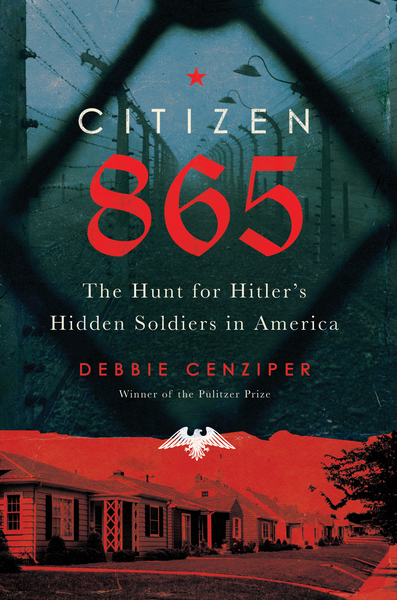
Learn more about Citizen 865: The Hunt for Hitler’s Hidden Soldiers in America
HEADER PHOTO CREDIT: HOLOCAUST MEMORIAL, BERLIN | MICHAEL FOUSERT
Watch Debbie Cenziper's powerful program.
Become a Member
Being a member of the Chicago Humanities Festival is especially meaningful during this unprecedented and challenging time. Your support keeps CHF alive as we adapt to our new digital format, and ensures our programming is free, accessible, and open to anyone online.
Make a Donation
Member and donor support drives 100% of our free digital programming. These inspiring and vital conversations are possible because of people like you. Thank you!