The Great Lakes: Literary Lakescapes
The Great Lakes have inspired many writers, some of whom use the Lakes as the setting for their poems, stories, and novels. Many others draw on their time and experiences on the shores of the Lakes.
On writing about the Great Lakes region—its lands, waters, peoples, and cultures—author Richard Hathaway reflects, “Together this confluence of landscape, peoples…[has produced] a wonderfully rich and vibrant literary tradition.”
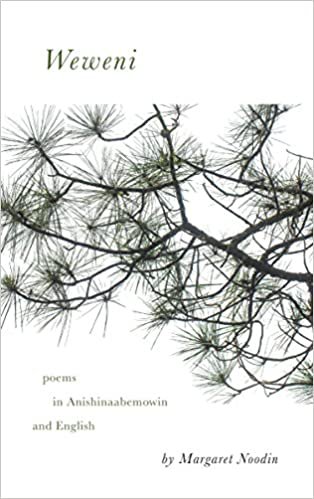
Weweni: Poems in Anishinaabemowin and English by Margaret Noodin
In Weweni: Poems in Anishinaabemowin and English, American poet, Anishinaabemowin language teacher, and Professor of English and American Indian Studies at the University of Wisconsin-Milwaukee Margaret Noodin writes first in the in the Modern Anishinaabemowin double-vowel orthography and then translates the poems to English. The images she creates are drawn from nature – the trees, the water, the land, the sky – that surround her native Wisconsin.
Image description: The book cover of Weweni displays a white background with sparse evergreen bows branching across the page.
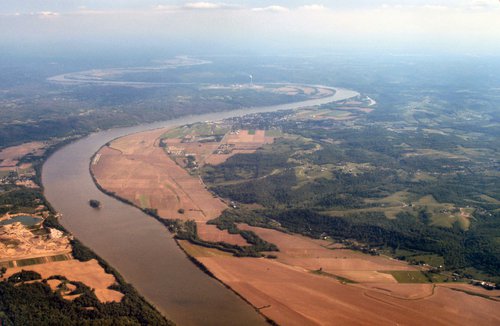
“Of Waterways and Runaways: Reflections on the Great Lakes in Underground Railroad History” by Tiya Miles
The Great Lakes were and continue to be a cultural resource for indigenous peoples of the United States and Canada. The Lakes were also a critical resource for another cultural phenomenon: the Underground Railroad. In her essay “Of Waterways and Runaways: Reflections on the Great Lakes in Underground Railroad History,” Harvard University historian Tiya Miles, traces the role of Midwest waters as vital places that made escape from slavery possible. “Waterways,” she observes, “were especially pivotal to Underground Railroad history, and movement to and across those waters highlights the remarkable bravery, determination, and resourcefulness of escaping slaves as well as their Indian allies.
Image credit: University of Michigan. Image description: an areal view of a whining river.

The Storyteller Magazine
Today, the Great Lakes continue to inspire African American writers and storytellers. The Great Lakes Black Authors (GLBA), founded in 2018, is a regional conference for writers and reading enthusiasts to celebrate the literary contributions of African American authors. GLBA publishes The Storyteller Magazine, every issue of which highlights prolific storytellers from around the country while engaging topics that celebrate African American culture and the written word.
Image credit: Great Lakes Black Authors Expo & Writing Conference: The Storyteller Magazine. Description: Image of the Black author Naleighna Kai on the cover of The Storyteller Magazine.
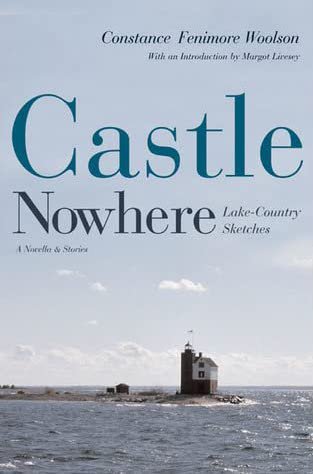
Castle Nowhere: Lake-Country Sketches by Constance Fenimore Woolson
The vastness, danger, and mystery of the Great Lakes even inspired new literary subgenres. Constance Fenimore Woolson traveled the Great Lakes extensively in the 1850s and was one of the pioneers of regional fiction for the area. Her sensual descriptions of the Great Lakes and intense attention to the ambiguities and tensions of human connection characterize her novels and stories, including Castle Nowhere, the first Gothic work set in the Midwest.
Image description: The book cover of Castle Nowhere, depicting a lakescape with blue sky and waters, and a tall building situated on a narrow piece of land that juts out into the water.
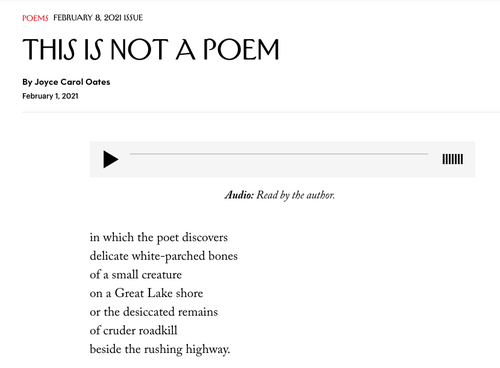
“This Is Not a Poem” by Joyce Carol Oates
Many successful authors have written works set on or around the Great Lakes, Joyce Carol Oates among them. Oates draws on memories of the Lakes and the Midwest for the settings and characters of her novels and poems. In “This is Not a Poem," Oates evokes the overwhelming grandness of the Great Lakes, the violence and tumult of its cities and towns, and the rare moments of quiet life on their shores.
Image credit: The New Yorker. Description: A photo of Joyce Carol Oates's "This Is Not a Poem" on the New Yorker's website.
For more information click here to check out our Great Lakes Cultural Resource Guide!
[Hero image description: The banner image at the top of the web page is a photograph of a book laying open on a wooden pier. Beyond the pier is a lake reflecting the blues, pinks, and whites of a cloudy sunset. Across the pier, on the lake's opposite shore, is a grove of trees, also reflected in the water. Image credit: Unsplash].
Become a Member
Being a member of the Chicago Humanities Festival is especially meaningful during this unprecedented and challenging time. Your support keeps CHF alive as we adapt to our new digital format, and ensures our programming is free, accessible, and open to anyone online.
Make a Donation
Member and donor support drives 100% of our free digital programming. These inspiring and vital conversations are possible because of people like you. Thank you!