Presenter Q&A: Geoffrey Stone's Guide to the Warren Court
In Democracy and Equality, legal expert Geoffrey Stone and his co-author David Strauss argue that while the Chief Justice Earl Warren's tenure on the Supreme Court resulted in visionary and sometimes highly controversial legal and societal transformations, its rulings fell well within the central goals of the Framers of our Constitution.
We asked Stone to tell us why he decided to write a book about the Warren Court and why Chief Justice Earl Warren's vision is still relevant today.
"For more than half-a century the Warren Court has been demonized by political conservatives with accusations of rampant and irresponsible judicial activism...It was time to set the record straight."
Stone: We just marked the 50th anniversary of the end of the Warren Court, and that naturally led my co-author and colleague, David Strauss, and me to the judgment that this is an appropriate time to reflect on the contributions and legacy of the Warren Court. Beyond that, though, for more than half-a century the Warren Court has been demonized by political conservatives with accusations of rampant and irresponsible judicial activism, and claims that the justices of the Warren Court abused their authority in order to impose their political values on the nation in the guise of constitutional interpretation. Our view is that those criticisms are unfounded and dangerous to our understanding of the core responsibilities of the Supreme Court in our democratic system. It was time to set the record straight.
"The central responsibility of the Supreme Court in our governmental system is to provide a check on majoritarian abuse."
The title of our book is Democracy and Equality: The Enduring Constitutional Vision of the Warren Court. That is the title for a reason. The central responsibility of the Supreme Court in our governmental system is to provide a check on majoritarian abuse. The whole point of having rights guaranteed in our Constitution — whether it is freedom of speech, freedom of the press, freedom of religion, freedom from unreasonable searches and seizures, right to the assistance of counsel in criminal cases, or the right to equal protection of the laws, to cite just a few examples — is because the Framers embraced, but also distrusted, democracy.
"Democracy is fundamentally about rule by the majority."
Democracy is fundamentally about rule by the majority, and although that is generally a sensible and, indeed, admirable system, it is also one that presents important dangers. The two most obvious dangers are: First, that majorities, if left to their own devices, will often act in ways that are hostile, or at least indifferent, to the interests of minorities, whether the minority is Black people, gay people, women, non-citizens, persons accused of crimes, political minorities, religious minorities, etc. Justices with life tenure are often necessary to check those destructive and unjust instincts and to protect the rights of “outsiders.” And second, that once majorities gain control of the political system they will be tempted to re-design that system in order to preserve and guarantee their continued dominance. They will do this with poll taxes, gerrymandering, literacy tests, campaign finance rules that benefit them, etc. A core responsibility of the Supreme Court in our democracy is to protect us against those predictable but destructive temptations.
More than any other other Supreme Court in our history, the Warren Court understood the centrality of this responsibility. Beginning with Brown v. Board of Education, the Warren Court aggressively addressed the deeply-rooted challenge of racism in our society. It also aggressively protected the rights of religious minorities (for example, in its decision holding school prayer unconstitutional), the rights of persons accused of crime (for example in decisions dealing with such issues as the right to counsel, the privilege against compelled self-incrimination, and the freedom from unreasonable searches and seizures), and the need for a fair and balanced democratic system (for example in decisions prohibiting malapportionment, insisting on “one person/one vote," and outlawing poll taxes). In these and many other decisions, the Warren Court brought to life the most fundamental guarantees of democracy and equality in our nation. That legacy needs to be understood and celebrated.
"The Warren Court brought to life the most fundamental guarantees of democracy and equality in our nation."
This is especially true at a time when the Supreme Court is controlled by a majority of justices who hold views that are utterly antithetical to those of the justices of the Warren Court and whose decisions on issues like campaign finance, affirmative action, gerrymandering, and guns impose upon our nation a set of values that derive, not from the core values of our Constitution, but from the policies and preferences of the Republican Party. It is time to remember what the Supreme Court can -- and should be -- in our free and democratic society.
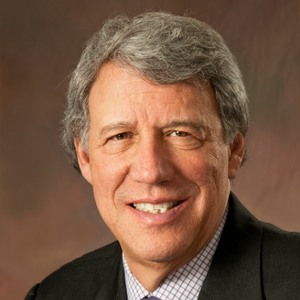
Geoffrey R. Stone is the Edward H. Levi Distinguished Service Professor at the University of Chicago. Stone is the author or co-author of many award-winning books on constitutional law, including The Free Speech Century, Sex and the Constitution, War and Liberty, and most recently Democracy and Equality. Stone is an editor of the Supreme Court Review, a former chair of the Board of the American Constitution Society, a Fellow of the American Academy of Arts and Sciences, and a Member of the American Philosophical Society, the American Law Institute, and the National Advisory Council of the American Civil Liberties Union.
Header image credit: Unsplash
Become a Member
Being a member of the Chicago Humanities Festival is especially meaningful during this unprecedented and challenging time. Your support keeps CHF alive as we adapt to our new digital format, and ensures our programming is free, accessible, and open to anyone online.
Make a Donation
Member and donor support drives 100% of our free digital programming. These inspiring and vital conversations are possible because of people like you. Thank you!