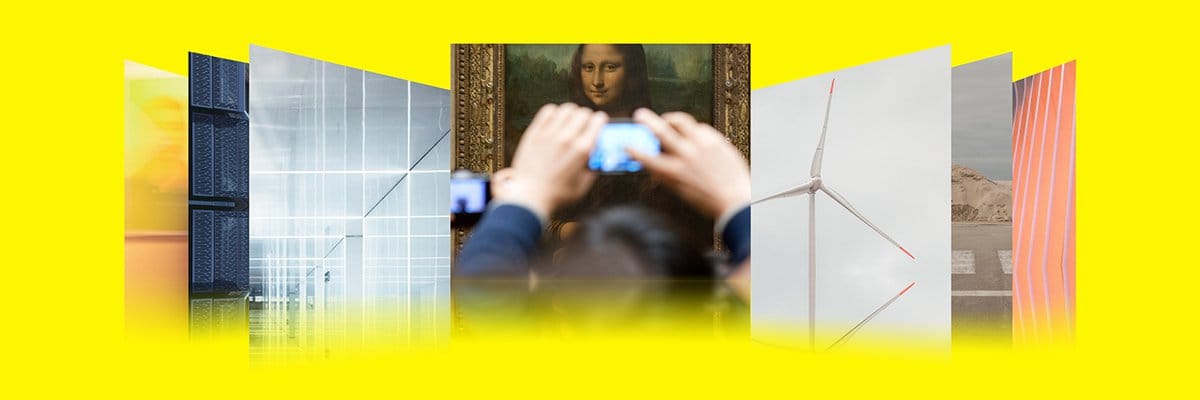
We are visual creatures living in graphic times. Join us all year to learn what it means.
Our world has become increasingly visual in ways that are fundamentally changing what we experience and even what we think. We communicate through photographs, videos, emojis, and Instagram “stories.” The selfie is the new memoir, mobile phones our printing press, and illustrated lectures and live drawings are in vogue. Infographics and data visualizations help government, the media, and business explain the mountains of information we produce daily: from economic trends to migration patterns, from the impact of social media to our use of language. Design thinking is the go-to approach for complex issues, from infrastructure projects to health care. Screens—massive and hand-held—mesmerize us all.
Our highly graphic moment has welcomed exciting possibilities and introduced grim realities. We have immediate, unmediated access to events across the world—from the tragic to the transcendent. Ever-more-frequently we are exposed to the extremes of contemporary culture. Graphic language, graphic violence, graphic sexuality, even graphic politics are increasingly the norm. Some worry that the net effects of this overload is a coarsening of our culture and behaviors: it is all just too much, too often and very, very loud.
Graphic! will consider our rapidly evolving visual society, charting its expressions, potentials, and limits. We’ll look at how the graphic is redefining communication and reshaping business and technology. We’ll celebrate new explorations across the graphic arts: from painting and photography, to videography and typography. We’ll examine the extremes of our moment, as well as efforts to push back against the bare-it-all mindset of graphic culture. And, we’ll seek to understand what impact all of this is having on our brains, our communities, and our global conversations.
Creative Chicago: An Interview Marathon with Hans Ulrich Obrist
Jill Lepore: These Truths
Doris Kearns Goodwin: Leadership in Turbulent Times
Camille Paglia: Provocations
David Grann: White Darkness
Become a Member
Being a member of the Chicago Humanities Festival is especially meaningful during this unprecedented and challenging time. Your support keeps CHF alive as we adapt to our new digital format, and ensures our programming is free, accessible, and open to anyone online.
Make a Donation
Member and donor support drives 100% of our free digital programming. These inspiring and vital conversations are possible because of people like you. Thank you!